

The Thai stock market has recently faced many challenges and volatility, leading many investors to wonder, "When will Thai stocks finally experience growth?"

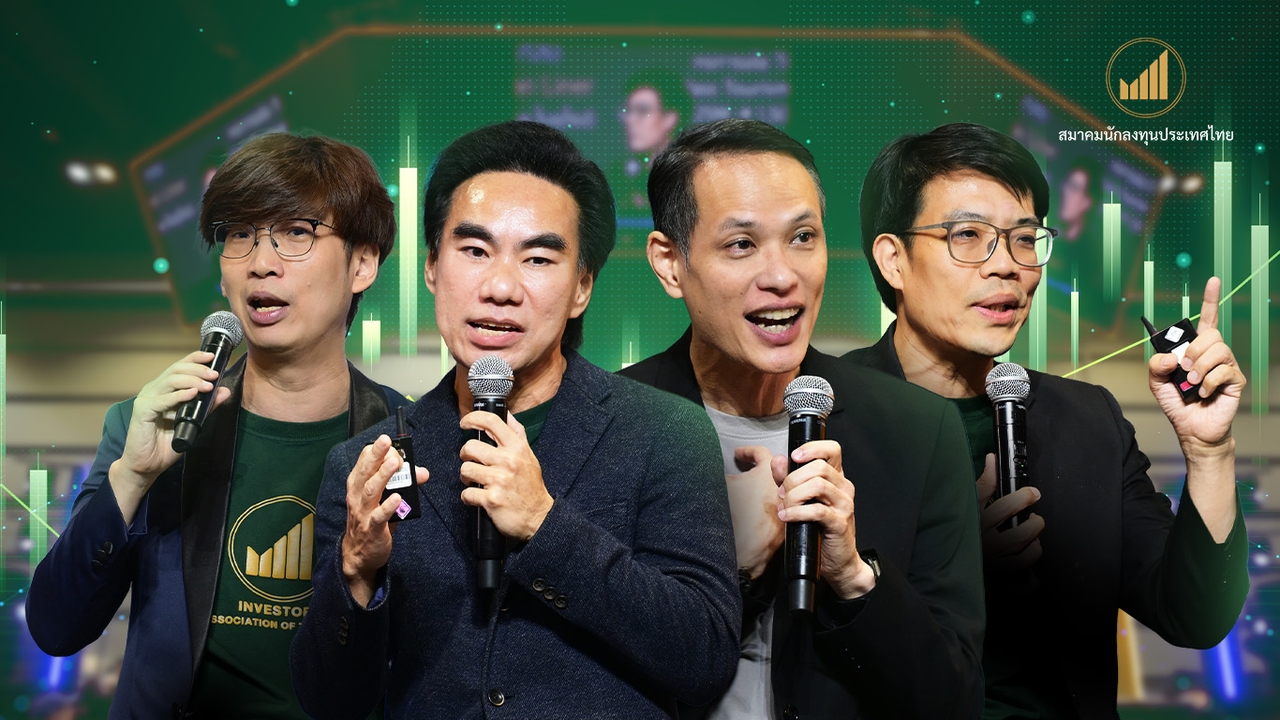
At the SET in the City 2026 event, during a seminar hosted by the Thailand Investors Association, four leading gurus and stock market experts gathered to outline the short- and long-term investment directions in Thailand.
They shared a consensus that this year could be a "golden year" for investment across various Thai industries, benefiting from the mega-trend known as the "AI Super Cycle."
Thailand directly benefits from the geopolitical tensions between China and the United States, which have sparked the China Plus One trend, resulting in the relocation of investment bases like Data Centers to other countries, including Thailand.
The Thai government has announced a “National Semiconductor Policy” aiming for Thailand to be able to design its own chips by 2050. This policy is expected to attract investment worth as much as 2.5 trillion baht and develop more than 200,000 professionals in this industry.

Boonchu Juramongkol, Director and Treasurer of the Thailand Investors Association, added that Thailand's infrastructure can support Data Center establishment, with stable electricity supply, water resources, and 5G internet networks. With these elements, the relocation of AI bases to Thailand is an inevitable global pivot.
He identified three Thai business sectors set to benefit from Data Centers:

Suthon Singhasithangkul, Director and Head of Foreign Investment at the Thailand Investors Association, provided an in-depth view focusing on real estate, industrial estates, and investment strategies in the AI era.
He illustrated that over the past 30 years, most Thai billionaires have accumulated wealth through land ownership, but currently, purchasing real estate, especially residential properties, carries high risks.
However, crises often present opportunities for certain businesses to continue growing, such as hotels with low occupancy rates that can be restructured, real estate in Phuket—especially vacation homes benefiting from foreigners buying to escape war zones—and commercial properties in provinces with high potential.
Regarding industrial estates amid the Data Center trend, Suthon noted that not all estates can sell land because global companies establishing Data Centers require more than just vacant land; they seek land with Board of Investment (BOI) promotion approval and, most importantly, fully ready water and electricity infrastructure.
Therefore, the key strategy is cautious investment. He recommends looking at certain industrial estate stocks that, although their prices may have dropped, offer dividend yields of 10-12% annually, which serve as a solid risk buffer.
Tiwa Chinthadapong, President of the Thailand Investors Association, presented an investment perspective focusing on the tourism, medical, and wellness industries, viewing these as Thailand’s main drivers that will continue to grow amid technological waves, because ultimately, people use wealth to buy a better life.
The railway era gave rise to the world's first organized tours.
The electricity era allowed people to work longer, have more disposable income, and seek spas or mineral baths to relieve stress.
The internet era gave birth to social media, where people share travel lifestyles, leading to massive travel growth.
In the AI era, technology enables people to work from anywhere, which will cause the tourism industry to grow exponentially.

Regarding physical and mental wellness, Tiwa said that although AI enhances work efficiency, it also brings accumulated stress from rapid changes. Seeking places that can restore body and mind, such as Thailand, has thus become a destination for tourists worldwide.
. Kavee Chukijkasem, Chief Investment Officer of Pi Securities Public Company Limited, added that the overall Thai stock market offers an average dividend yield around 10%, among the highest in the region, maintaining attractiveness for selective group investments.
The reality of the "technology wave."

Kavee compared the AI trend to past technology history, noting that every technology experiences extreme hype leading to bubbles and company failures. However, the key point is that technology remains with us. This means while stock price bubbles may burst, AI technology will certainly become the world’s new infrastructure. Investors must watch carefully and invest cautiously based on their individual goals.
Follow the Facebook page Thairath Money at this link: https://www.facebook.com/ThairathMoney