

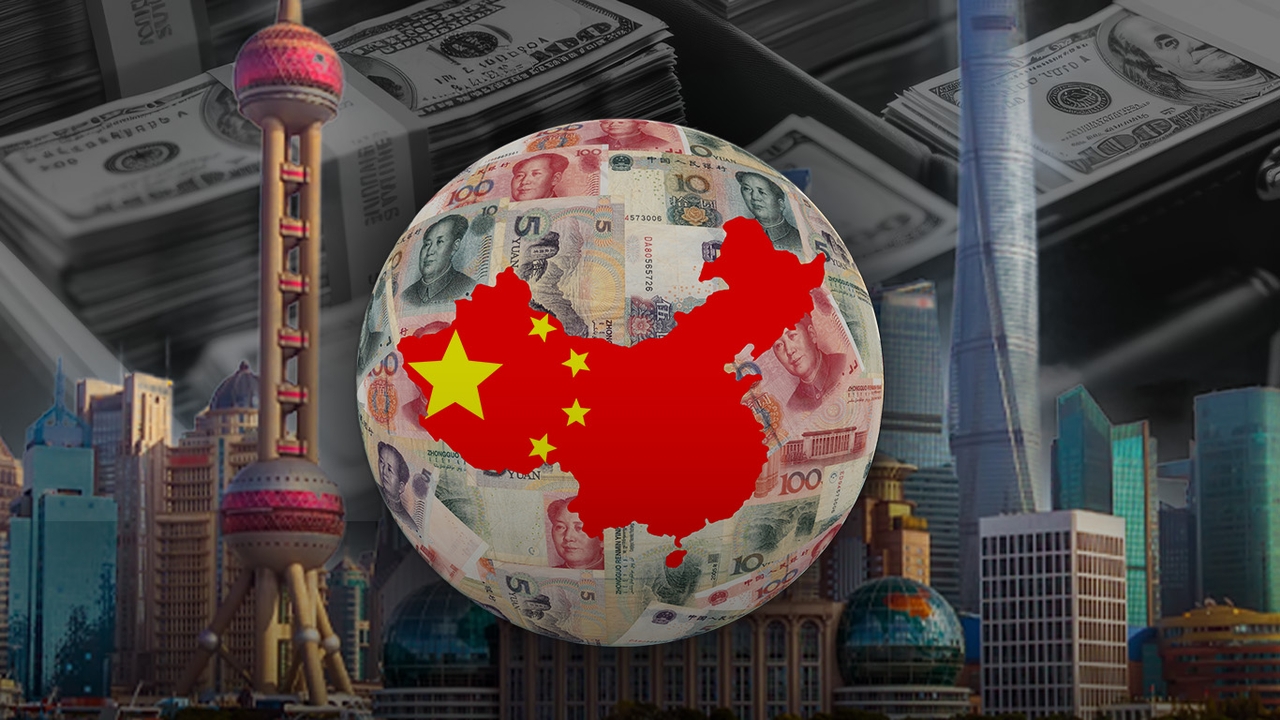
The role of the U.S. dollar as the center of the global financial system is increasingly challenged, as many economists and international finance experts agree that the world is gradually moving toward a "Multipolar Currency System"—a financial system where multiple major currencies share roles instead of relying solely on the dollar as in the past.
A key driver is the expanding role of the "yuan," increasingly used in international trade, commodity payments, and cross-border investments, while many countries seek alternatives to reduce risks from dependence on a single currency amid rising geopolitical and global economic volatility.
This raises an important question: as the world moves toward a new financial order where the dollar, euro, and yuan share greater roles, how will this change impact Thai investors and businesses?
Although many still believe the yuan cannot replace the dollar as long as China tightly controls capital flows and has not fully liberalized its capital account,
recently Zhu Min, former IMF Deputy Managing Director, challenged this belief, stating, “It is not necessary.” The yuan does not need full free convertibility before rising to a leading global role because the IMF has already included the yuan in its basket of major reserve currencies (SDR) at 12.48%, reflecting clear worldwide acceptance.
So where does China’s confidence come from that it can promote the yuan to global status? The answer lies in China’s real economy...
It is evident that since China is a major buyer and producer (accounting for nearly one-third of global industrial output), it has enough power to tell its trading partners, “From now on, payments for goods and energy should be made in yuan.”
Beyond trade, another strong accelerator is geopolitical conflict and uncertainty in strategic locations like the Strait of Hormuz. This has shown many countries that relying solely on the U.S. dollar in the oil trade (Petrodollar) is fragile and risky.
This is why many countries are turning to "alternative currencies" for paying for oil and commodities.
Experts like Marc Uzan, Executive Director of the Reinventing Bretton Woods Committee, predict the global financial system is heading toward a "Multipolar Currency System"—a system consisting of multiple major currencies.
From now on, no single currency will monopolize; instead, the U.S. dollar, euro, and yuan will share roles, along with key regional currencies. This diversification will help enhance long-term stability in the global financial system.
How is China responding to this?
To become a global currency, a financial market must be "deep" and liquid. Recently, China's Ministry of Finance plans to enter the global market by issuing yuan-denominated government bonds in Hong Kong (Offshore RMB Bonds) worth up to 84 billion yuan by 2026, providing a new option for global investors seeking safe assets to preserve value.
What does this mean for investors?
Global investors are watching the Multipolar Currency System not because they believe the yuan will topple the dollar overnight, but because changes in the world’s major currencies typically affect capital flows, safe assets, and long-term investment returns.
In the past, when the dollar centered the global financial system, most capital flowed into dollar-denominated assets like U.S. government bonds, stocks, or dollar deposits, enabling the U.S. to continuously attract global capital. But if the world moves toward a more multipolar system, this picture may gradually change.
Central banks worldwide might diversify their foreign reserves into other currencies more, institutional investors may increase allocations in yuan or euro assets, and bond and capital markets in various countries will play larger roles competing to attract global capital.
Thailand's Department of International Trade Promotion (DITP) offers a relevant perspective: although the yuan is growing well, in the short term, the U.S. dollar still holds structural advantages as the main global currency. The dollar’s declining role will occur gradually, not in a sudden collapse.
For Thailand, China is the top trading partner, receiving key exports such as fresh fruit, rubber, chemicals, and processed agricultural products.
DITP's recommendations for Thai businesspeople and investors include:
Ultimately, in a decentralizing financial world, those who adapt and remain flexible will survive and seize opportunities first.
Source: Department of International Trade Promotion
Follow economic and government policy updates with ThairathMoney athttps://www.thairath.co.th/money/economics/thai_economics
Follow the Facebook page: Thairath Money at the link belowhttps://www.facebook.com/ThairathMoney