

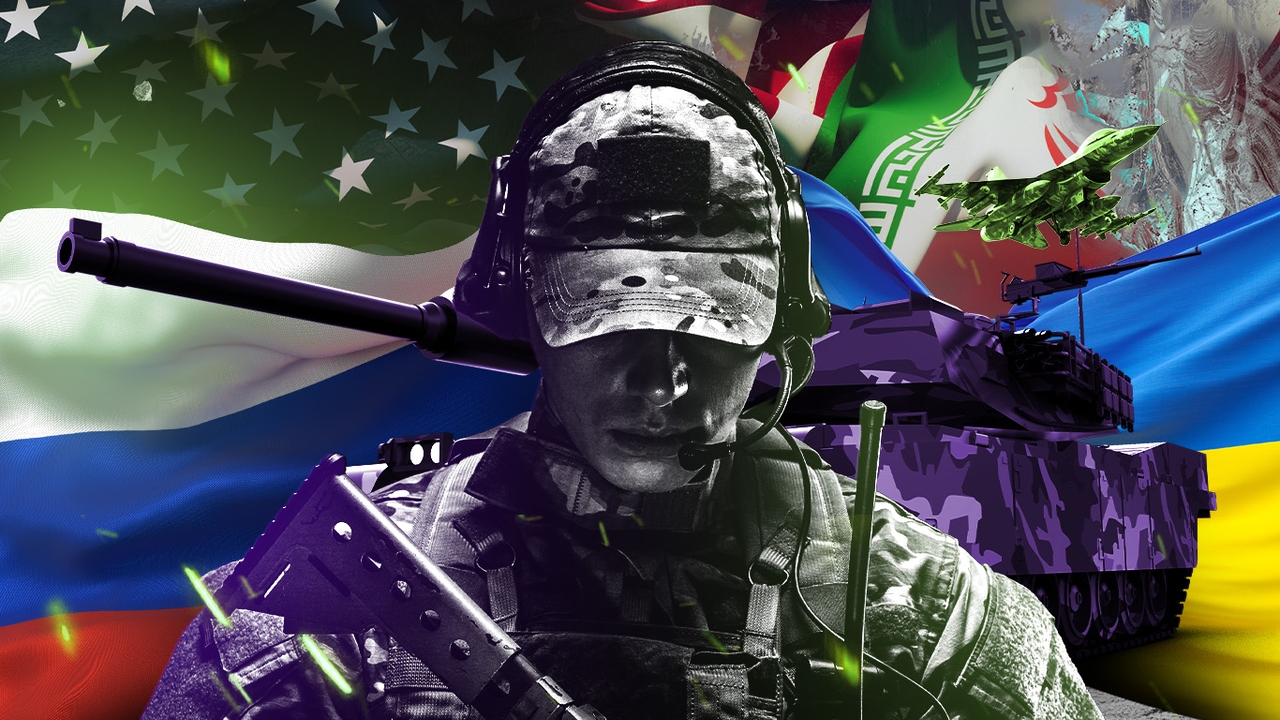
Global stock markets have become cautious again as simultaneous geopolitical conflicts erupt in both the Middle East and Eastern Europe, turning into key risk factors closely watched by investors worldwide.
If the situation escalates, the impact may extend beyond international security to shake the global economy through energy prices, inflation, and central banks' monetary policies.
The first market response is the surge of Brent crude oil prices back above $90 per barrel amid concerns that the U.S.-Iran conflict could disrupt oil transport through the "Strait of Hormuz," while Russia continues its attacks on key Ukrainian cities, indicating no short-term end to both wars.
Rising energy prices could trigger a renewed acceleration of inflation, despite recent signs of inflation slowing in many countries.
This puts central banks, particularly the European Central Bank (ECB), in a difficult position balancing economic support with inflation control, potentially delaying expected interest rate cuts.
Amid growing uncertainty, investment funds are moving out of higher-risk assets, notably growth and technology stocks, toward sectors that may benefit from higher energy prices and increased security budgets.
Research from Asia Plus Securities noted that global stock markets have entered a risk-off mode following simultaneous conflicts: Iran's attack on U.S. bases in the Middle East and Russia's intensified assault on Kyiv, raising risks for energy prices and inflation.
This week's ECB meeting faces a dilemma between supporting the economy and controlling inflation, likely causing volatility in growth stocks as markets adjust expectations for interest rate cuts while oil prices remain above $90 per barrel.
Therefore, they recommend strategies focused on hedging against energy price volatility, including stocks benefiting from oil prices and geopolitical risks such as:
And defense industry stocks such as Raytheon Technologies, Lockheed Martin, and Northrop Grumman—major U.S. weapons and defense system manufacturers—as well as Palantir Technologies, a developer of intelligence and AI software for security agencies, and Rocket Lab, a space technology company serving U.S. government and defense clients.
Meanwhile, DAO Securities (Thailand) stated that the global stock market environment is complex and uncertain, mostly positive but clouded by unclear factors, especially the Middle East and Russia-Ukraine conflicts, which negatively affect overall investment sentiment.
Additionally, Iran's attack on U.S. bases has pushed crude oil prices higher, directly benefiting upstream energy and oil refinery stocks through increased price spreads and inventory.
However, the Thai stock market has benefited from rising oil prices and a rotation out of technology stocks toward new investment avenues. The recommended investment strategy during such times is “Selective Buy,” focusing on stocks benefiting from the wars and continuing fund inflows into the Thai market.
For example, the escalating U.S.-Iran conflict continues to benefit oil producers and refiners, with top stocks including PTTEP and refiners like TOP and SPRC.
Read more stock and investment news with Thairath Money at
Follow the Facebook page Thairath Money at this link