

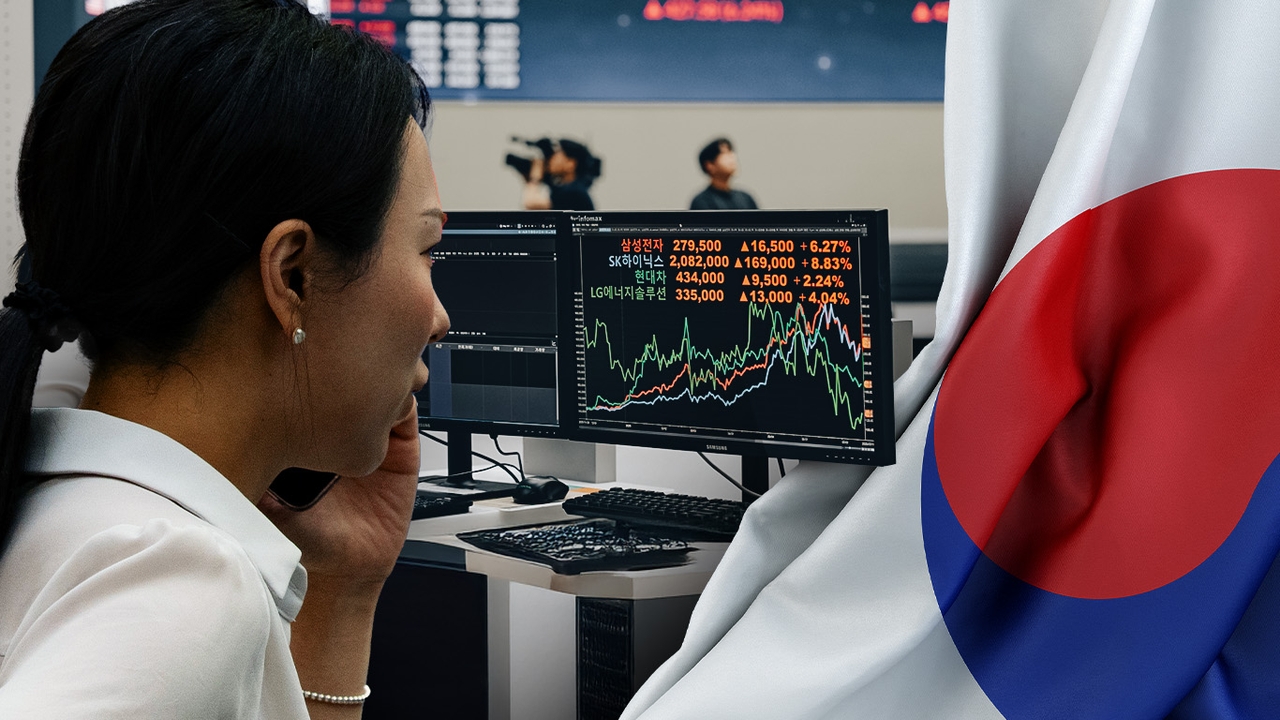
South Korea's stock market recently reflected both "hope" and "fear" among investors within just a few days.
After heavy selling pressure, the KOSPI index plunged nearly 17% over three trading days amid concerns that Chinese memory chip makers would compete with giants like Samsung Electronics and SK Hynix.
On 31 Jul, the market rebounded strongly by over 16%, driven by buying in semiconductor stocks and a positive atmosphere from the U.S. stock market.
Although the index recovered quickly, the damage incurred along the way cannot be fully undone because many investors using margin accounts faced margin calls and some were forced to sell before the market could rebound.
This event is not just about South Korea's stock market; it serves as a case study highlighting the "dark side of leverage" and emphasizes that in investing, the real risk may not be the loss from stock prices but losing the ability to decide whether to "hold" or "sell" on one's own terms.
So, what can Thai investors learn from this? Here are 10 key points that South Korea's portfolio crisis reveals to global capital markets about another side of investing.
1. Leverage increases profit opportunities but also magnifies losses.
A common factor among heavily affected investors was the use of margin accounts or leveraged products. When stock prices fell, losses grew faster than with cash investments. When collateral value dropped below required levels, some investors faced margin calls and were forced to sell, even if they believed the market might recover later.
2. Good stocks don't always mean good investments.
This correction affected major companies like Samsung Electronics and SK Hynix, showing that even fundamentally strong companies can lead to losses if purchased at prices exceeding intrinsic value or when stocks already reflect high market expectations. Valuation is as important as company selection.
3. Investment trends can drive buying but also create risks.
Before the correction, semiconductor and AI stocks attracted global investor interest with continuous inflows. However, when confidence shifted, buying pressure quickly turned into selling. Investors entering late in the cycle suffered the most.
4. Diversification remains a valid principle across all market cycles.
This event highlighted the risks of concentrated investments—holding few stocks, focusing on one industry, or a single country market. When negative factors hit simultaneously, portfolios suffered fully, unlike diversified portfolios that can reduce volatility somewhat.
5. Leveraged ETFs are not designed for long-term holding.
Leveraged ETFs, which aim to multiply index returns, gained popularity in rising markets due to higher returns than benchmarks. However, because they rebalance daily, long-term returns may differ from expectations, especially during volatile periods. They are better suited for short-term investing.
6. Forced selling can accelerate market corrections beyond normal levels.
When stock prices decline, margin users face calls to add collateral. If unable to do so, brokers enforce forced sales per contracts, adding selling pressure and pushing prices down further. This mechanism caused the rapid correction in this cycle.
7. Retail investors can significantly influence markets both upward and downward.
In this round, strong buying came from retail investors focused on AI and semiconductor themes, driving prices up. When sentiment shifted, these same investors became major sellers, showing that retail behavior today can impact market direction more than before.
8. Market cycles persist despite changes in investment themes.
Even though AI and semiconductors are long-term growth industries, stock prices do not always move in line with business growth. Markets still experience periods of over-optimism and corrections back toward fundamentals.
9. Portfolio allocation is as important as stock selection.
South Korea's event reinforces that dividing portfolios between stable core assets and speculative, theme-based investments can limit losses. If some investments underperform, the overall financial goals remain intact.
10. Risk assessment should precede return expectations.
In rising markets, many investors focus more on profit opportunities than on how much loss they can endure if markets turn. This event shows that long-term survival depends less on achieving the highest returns each cycle and more on managing risk through volatile periods.
Clearly, the stock market never guarantees profits for everyone but offers opportunities to those who manage risk and stay in the game. Ultimately, investing is not about who gets rich fastest but about surviving long enough to grow through every market cycle.
Source: investing