

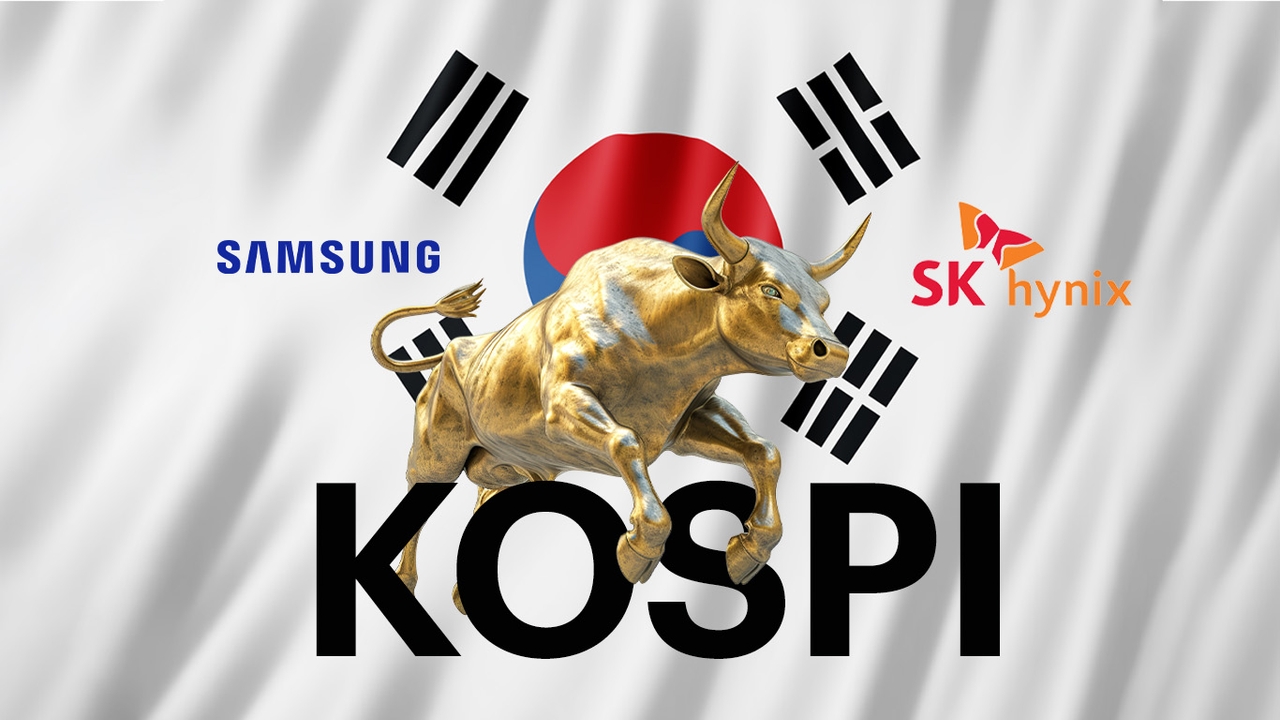
South Korea's stock market surged strongly on the morning of Thursday, 13 August, with the KOSPI index rising as much as 4.8%. Analysts interpret this as a sign that the Korean market is entering a "bull market" phase, driven by a swift rebound in global technology and AI stocks, reversing the impact of last month's most severe sell-off in history.
The KOSPI index has rebounded approximately 22% from its low on 30 July, largely supported by major Korean memory chip manufacturers Samsung Electronics and SK Hynix, whose stock prices both increased by more than 5%.
However, despite KOSPI's over 60% rise since the start of the year, mainly fueled by retail investors, the index still sits about 24% below its late June peak. In July, KOSPI dropped 22%, marking its steepest monthly decline since the global financial crisis.

Investment sentiment in technology and hardware stocks has revived in both South Korea and globally, as major tech companies have released earnings reports showing that AI investments remain substantial, prompting investors to resume buying technology and chip stocks.
In recent months, many markets worldwide, especially South Korea, faced heavy sell-offs due to forced liquidations by investors using leverage to speculate on chip stocks, leading to trading halts on some shares and wiping out billions of dollars of retail investor wealth.
. The South Korean government responded by implementing regulations to control leveraged ETFs on individual stocks. . Investors themselves began reducing margin debt, lowering borrowed funds for investing. This contributed to greater market stability.
According to Bloomberg, the South Korean stock market previously dropped excessively below fundamentals during the leveraged sell-off. The current rebound is a natural correction as buying and selling pressures begin to balance. However, sustained upward momentum may remain elusive until clearer developments emerge regarding AI investments and the direction of US interest rates.
Additionally, US inflation reports released Wednesday showed that inflation remains moderate and not hotter than expected, which provided further support to the market. This eased worries that the US Federal Reserve might accelerate interest rate hikes soon, benefiting chip manufacturers listed on US exchanges and positively influencing Korean chip stocks as well.
Meanwhile, investors also anticipate that Samsung Electronics and SK Hynix may soon announce plans to increase shareholder returns, which has boosted confidence in these two companies' stocks recently.
Related articles:
Foreign investors remain the main sellers in South Korea's stock market, with over $100 billion flowing out this year after the market's strong rally led to expensive valuations and excessive investment concentration. Nevertheless, some foreign investors have started returning to the market, as heavy previous sell-offs have brought stock prices and valuations to more attractive levels.
Another factor that pressured Korean memory chip stocks was rising competition from China, causing investors to be cautious about growth prospects for these stocks. However, in the short term, chip demand is expected to remain strong, especially driven by new AI applications and increased daily consumer AI usage, which is pushing chip demand higher.
Source:Bloomberg
Follow the Facebook page: Thairath Money at this link –https://www.facebook.com/ThairathMoney