

When starting to invest, whether with an initial sum of 1,000,000 baht or 5,000,000 baht, the first question most people ask is, "Which fund should I buy?" or "Which one is trending right now?"
However, from the perspective of a professional strategist and investment manager, the most important point is not immediately choosing assets but rather asking ourselves, "What is the purpose of this investment?"
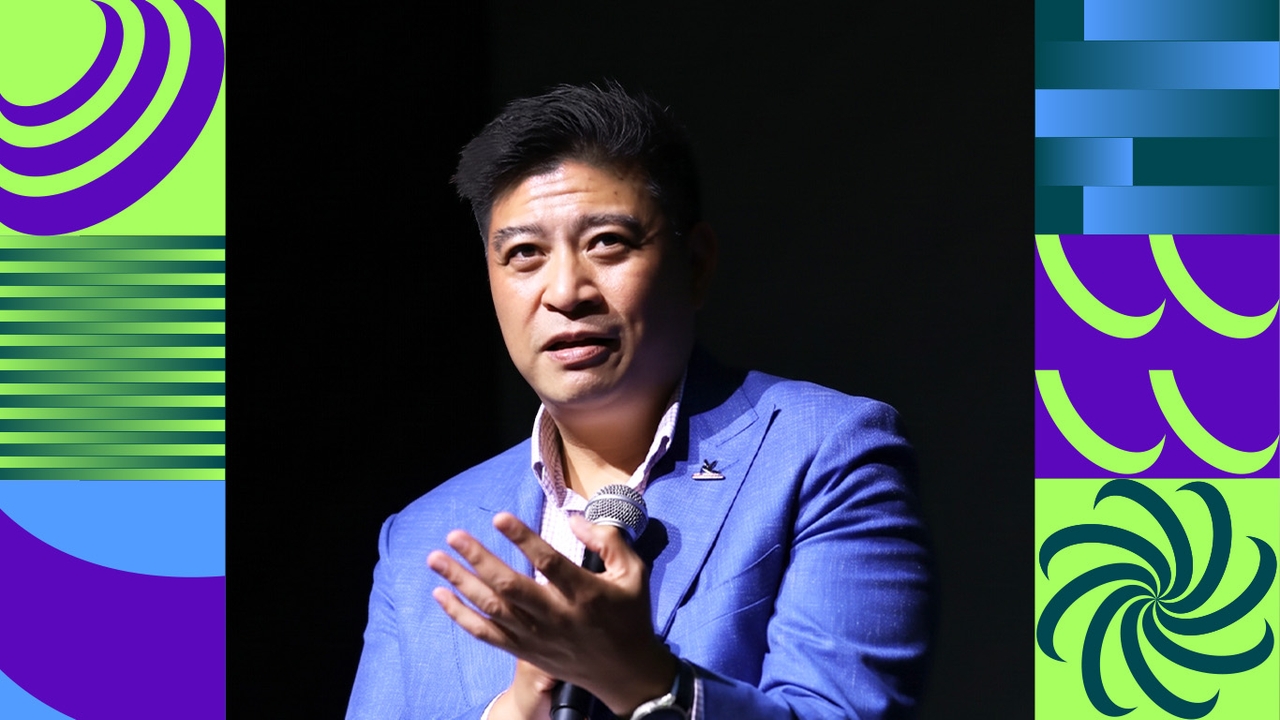
Dr. Tripol Phumivusana, K WEALTH CIO, Kasikornbank. He observed that most people face the problem of getting "stuck" with assets, and the main reason is not because they don't know how to buy, but because they "don't know how to sell," due to a lack of clear goals and limits from the start.
Therefore, if we have a clear goal, for example, wanting to buy a condominium priced at 5,000,000 baht with a 20% down payment amounting to 1,000,000 baht, and currently have 300,000 baht, we can calculate backwards how much return the 300,000 baht must generate over 5 years to grow to 1,000,000 baht.
Once the goal is clear, the next important step is to assess how much risk, both "upside" and "downside," we can tolerate.
Many investors claim in risk assessments that they can accept risk levels as high as 8, but in reality, when their portfolio declines just 3%-5%, they begin to feel shaken and hesitate to make decisions, whether buying more or implementing stop loss/cut loss. The reluctance to sell to cut losses, thinking "no sale means no loss," becomes a mental trap because, in accounting and investment terms, the true cost basis is yesterday’s price. If an asset is in a prolonged downtrend, holding on without a goal only leads to missed opportunities.
With nearly 30 years of investment experience, CIO Dr. Tripol shared an interesting case study of a foreign fund manager who posted outstanding results for three consecutive years (including strong quarterly performance) by predicting earnings of major companies. The strategy involved buying stocks expected to perform well and shorting those expected to perform poorly, occurring four times a year around earnings announcements.
Despite impressive past performance, the professional CIO chose "not to invest" in that fund, reasoning that the strategy relied on noisy factors and consistent accurate predictions were very difficult. For example, a global tech stock like Apple is followed by over 500 analysts, so a fund manager trying to beat the market with limited information consistently is unlikely.
Eventually, that fund collapsed within 3-4 years. This lesson shows that assets or strategies yielding flashy short-term returns may not provide long-term sustainability.
For general investors who cannot analyze financial statements or management themselves, choosing a fund manager is a good option. Professionals select based on three key criteria:
People (Fund Manager) – The manager should be expert, deeply knowledgeable, and have a clear investment philosophy.
Process (Investment Process) – There should be a clear, robust, and consistent management system to achieve target results.
Performance (Consistent Results) – Returns should align with the stated strategy. If tech stocks fall but the tech fund does not, it may indicate the manager is deviating from the planned strategy.
In today’s world, AI plays a major role in gathering data, summarizing news, and aiding analysis. However, investors must be cautious about data accuracy, as the market contains much fake news. AI’s decisions improve with accurate databases, so using AI requires deep understanding and caution.
Moreover, comparing today’s AI enthusiasm, Dr. Tripol illustrated historical parallels, such as the railroad construction 200 years ago, the expansion of the US electrical grid, and cable laying. Every time a new technology emerges, markets tend to experience periods of overinvestment. Therefore, combining experience with advisors or fund managers helps remind us when markets are overheated, signaling when to retreat or rebalance portfolios.
The main reason most people get stuck is "overconfidence," causing them to overlook their own limitations. Asset allocation across stocks, bonds, gold, or commodities is not because we are skilled but because we accept that no one can predict the future with 100% accuracy. Diversification is thus crucial to reduce investors’ ego and downside risk.
Dr. Tripol concluded with three principles for investors wanting to apply these ideas to their own money management:
1. Set clear investment goals. Know why you are investing the money—whether for a condo down payment, retirement, or savings—because clear goals motivate saving and guide decision-making.
2. Understand your own investment limits. Truly know how much loss you can tolerate, your investment time horizon, and outsource assets you lack knowledge of to professionals to ensure correct decisions in both buying and selling.
3. Regularly review points 1 and 2. Because life goals and personal limits change with age and circumstances, regularly checking your portfolio and goals helps you adjust appropriately, avoid getting stuck, and sustainably grow your money.
Read technology, innovation, and digital transformation news with ThairathMoney to help you achieve "Good Finance, Good Life" athttps://www.thairath.co.th/money/tech_innovation
Follow the Facebook page Thairath Money at this link –https://www.facebook.com/ThairathMoney