

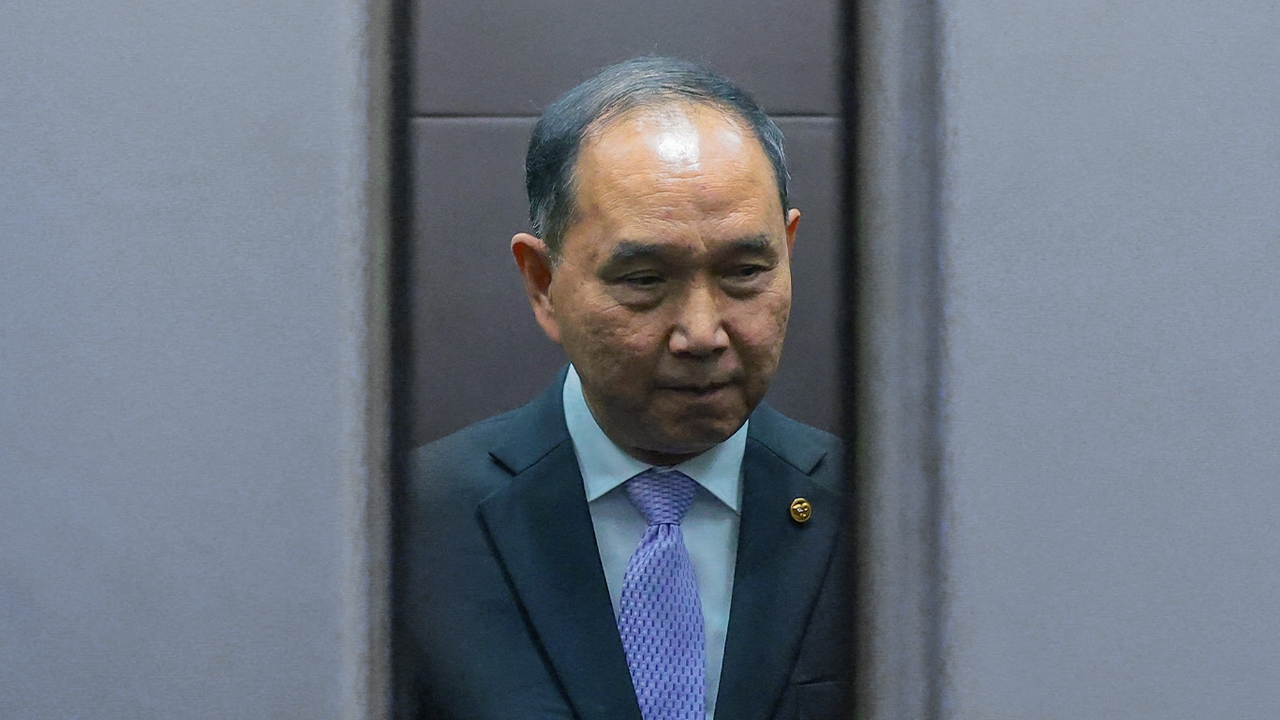
On 2 Oct 2026, Chai Iamsiri, CEO of Thai Airways Public Company Limited (THAI), revealed after a board meeting that the board was presented with reports on the flood crisis and its impact on company operations, including summaries and recommendations. Subsequently, the board resolved to relieve him from his CEO duties effective immediately from today (2 October 2026), while he retains his status as a company director.
“Today’s agenda was to report on the flood crisis situation and its impact on company operations. Afterwards, a meeting was held exclusively with non-executive directors, which I did not attend as I am the only executive director. Then I was informed of the resolution to remove me from the CEO role while I remain a company director to facilitate a fact-finding investigation, effective immediately,” Chai said.
This special board meeting was chaired by Lawan Saengsnit, Permanent Secretary of the Ministry of Finance and chairman of Thai Airways’ board. The meeting appointed Samrit Samniang, a director and executive of the company, as acting CEO.
However, previously the company faced delays in baggage handling and had to suspend some flights due to flooding in Bangkok and its vicinity.

Chai told reporters that the board did not clearly state the reasons for the resolution but it is believed to be an inquiry into whether there were gaps or faults in operations, why the crisis response plan failed to activate, and why the situation escalated causing inability to mitigate impacts and stop disruptions. He does not yet know who will chair the fact-finding committee.
Asked why the board decided this despite problems nearing resolution, Chai said this was his personal view without consulting other directors, but he believes the board sees the event as already causing damage to the company’s reputation, operations, and customers, while problem-solving is inherently the CEO’s responsibility.
“If you ask me, it’s unfair, but as a director, I must say it’s fair,” Chai said.
He added that he arrived to manage the crisis first on Sunday (27 Sept), relocating the entire management team to an operations center at Suvarnabhumi Airport, staying there since last week. He insisted he never blamed any subordinate, though some deputy executives had not arrived, including those directly responsible for ground operations and cargo who were on leave. The board did not raise investigation of other involved parties.
When asked if he felt the resolution was unfair, Chai replied that from his standpoint as the accused or directly responsible party, it is unfair, but from the company director’s perspective, it is fair to ensure transparency and good governance, preventing him from interfering with evidence.
Previously, no one had asked him to resign, and he learned of the resolution from news while walking from an adjacent building to the meeting room; the resolution was made before he arrived. The board chairman personally informed him, and he views the decision as that of the entire board, not just the chairman.
Chai also said that this removal before contract expiry is not a breach of contract since he has not been terminated, and he already proposed to the board that if they want him removed, it can be done legally under labor law.
Regarding progress, Chai said that on 3 Oct, Thai Airways will resume all scheduled flights normally. They have mobilized dozens of staff to the adjacent building, opened a 24-line call center, and eliminated all bottlenecks. He expects baggage backlog at the front area to be cleared today or by tomorrow at the latest.
Transfer luggage inside the airport bound for international destinations is more complex due to awaiting cargo flights. Multiple agencies, including the military, are assisting in sorting. For example, on 1 Oct, nine containers of luggage destined for Perth could not be fully shipped due to weight limits, so some were unloaded and will be sent today (2 Oct).
Overall, they expect to resolve 98-99% of baggage backlog within two days. The remainder involves passengers unreachable via provided phone numbers, requiring tracing through reservation systems and agents.
On compensation measures for passengers, Chai said he could not answer as he is no longer CEO.
Regarding political interference questions, Chai said, “Where in Thailand is there no politics? I’m not saying there isn’t here, but where is there no politics? Internal and external politics exist everywhere.” He noted many insiders and outsiders want to be CEO, thinking it’s easy. About his successor, he has no message, trusting the new CEO will be more qualified, otherwise the board wouldn’t have removed him.
“I’ve worked for 41 years. I thank the employees and now it’s time to rest, to relax with my family,” Chai concluded.
Board sources said Chai’s dismissal was because the board wants to investigate failures in managing flight operations, ground services, and cargo handling both inbound and outbound at the airport, which caused chaos and thousands of passenger bags to be left behind, as well as significant cargo backlogs at the airport’s cargo building.
The allegations leading to the investigation have two main points.
Due to these allegations, the Thai Airways board today resolved to suspend Chai indefinitely pending investigation, appointing Samrit Samniang, one of the board members, as acting CEO effective immediately.