

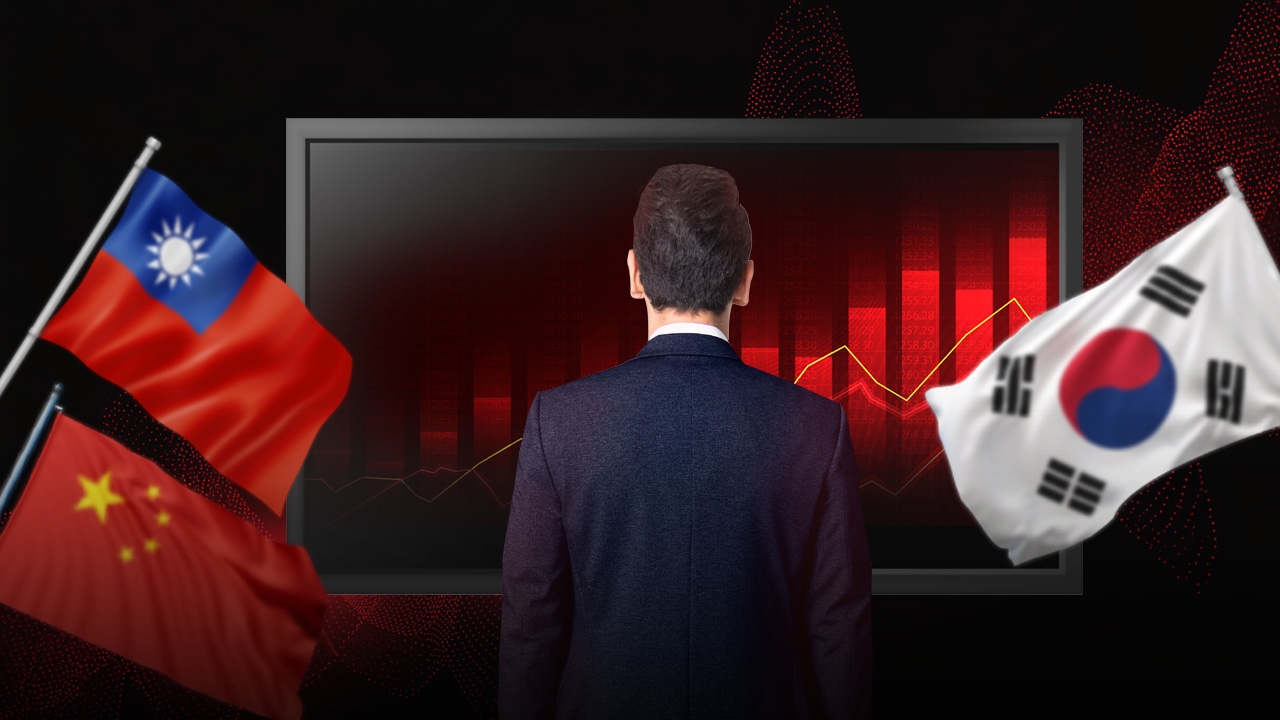
On 23 Nov 2026 GMT+7, Asian stock markets began showing signs of partial recovery following intense technology stock sell-offs last week. Taiwan’s stock market returned to positive territory, while South Korea’s market reduced losses but remained under pressure, reflecting fragile confidence in AI investment trends despite easing selling pressure in some markets.
These developments followed weekend announcements by China, South Korea, and Taiwan of market support measures, including China’s easing of margin requirements for stock purchases, South Korea’s preparation of a market stabilization fund and relaxation of share buyback restrictions, and Taiwan’s stricter short-selling controls combined with use of stabilization funds to manage volatility and support investor confidence.
These measures came after a sharp decline in U.S. stocks on Friday, 20 Nov 2026 GMT+7, driving the S&P 500 into a technical correction amid concerns over the sustainability of AI investments. However, partial recoveries remain insufficient to confirm an end to volatility. Key questions remain on how long government interventions can sustain markets and whether investor confidence can be restored.
Asian equity markets have been among the hardest hit by the AI stock correction, with key markets like South Korea and Taiwan dominated by semiconductor companies such as Samsung Electronics, SK Hynix, and TSMC, integral to the global AI supply chain.
Previously, the AI investment wave propelled Asian tech stocks to rapid gains and attracted massive foreign capital inflows. However, as confidence in investment returns waned, these funds rapidly exited the markets.
South Korea’s Kospi index plunged 5.21% on Friday, 20 Nov 2026 GMT+7, closing at 4,869.96 points, its lowest in 10 months. Samsung Electronics fell 7.01%, and SK Hynix declined 5.92%.
Similarly, Taiwan’s Taiex index faced severe selling pressure, losing approximately US$1.12 trillion in market capitalization—nearly 28% from its peak on 6 Oct 2026 GMT+7.
This selling pressure also dragged down the MSCI Emerging Markets index, which reflects global emerging markets, dropping over 20% from its June peak and entering bear market territory, risking negative returns for 2026.
The declines extend beyond equities, impacting currencies and capital flows regionally. In response, Asian governments have activated financial instruments to stem selling pressure and mitigate the risk of contagion in capital markets.
China is among the first to announce measures to stabilize its stock market. Xinhua News Agency reported potential liquidity injections up to 400 billion yuan (approximately US$60 billion) into the market.
Simultaneously, the Shanghai, Shenzhen, and Beijing stock exchanges announced on Sunday, 22 Nov 2026 GMT+7, with approval from the China Securities Regulatory Commission (CSRC), a reduction in the minimum margin requirement for stock purchases from 100% to 80%, effective from 30 Nov 2026 GMT+7.
This policy shift reverses earlier moves this year when authorities increased margin requirements from 80% to 100% to control risks amid a heated market. With borrowing activity diminished and leverage levels low, authorities now prioritize boosting purchasing power and liquidity.
However, the margin reduction had no immediate effect on Monday, 23 Nov 2026 GMT+7, serving more as a policy signal to build confidence ahead of market opening than an instant liquidity injection.
Additionally, China plans complementary measures, including proposals to introduce market makers in the ChiNext market to enhance liquidity and reduce volatility, and fee exemptions on certain green bonds, technology bonds, and private sector bonds during 2027–2028.
The People’s Bank of China (PBOC) is also supporting liquidity for securities firms, funds, and insurers via swap transactions exceeding 100 billion yuan, while adjusting lending mechanisms to support share buybacks and increased equity holdings as long-term measures by lowering interest rates from 1.25% to 1%.
Overall, China is combining credit, liquidity, and transaction cost tools to help stabilize its capital markets.
South Korea announced emergency measures on Sunday, 22 Nov 2026 GMT+7, following a joint meeting of senior economic and financial officials to assess stock market volatility and the impact of U.S. sell-offs.
Key measures include preparing a stock market stabilization fund ready for immediate deployment if necessary. However, this announcement does not indicate actual government purchases yet, but signals readiness to intervene if conditions worsen.
The government also relaxed daily share buyback limits for listed companies for three months to boost market buying pressure, alongside enhanced scrutiny of illegal short selling during the same period.
Earlier, South Korea eased margin lending rules for securities firms to reduce risks of forced stock sales during steep market declines.
Taiwan has also accelerated market stabilization measures after the Taiex index suffered sharp losses last week due to heavy selling of semiconductor stocks, particularly TSMC, which carries significant index weight.
The Financial Supervisory Commission (FSC) of Taiwan announced increased short-selling restrictions to alleviate downward speculative pressure and market volatility. Reports indicate the National Stabilization Fund has been actively buying shares to support the market amid concerns of broadening sell-offs.
Authorities are also considering relaxing margin requirements for stock purchases to reduce risks of forced securities sales.
Nonetheless, Taiwan continues to face sustained foreign capital outflows, with institutional investors withdrawing about US$10 billion in the first 10 days of November. This outflow pressured the Taiwan dollar, prompting central bank intervention in early November to slow currency depreciation.
The swift announcement of stabilization measures by several Asian governments on Sunday before markets opened Monday has led some investors to draw parallels with the historical Black Monday event.
Black Monday occurred on 19 Oct 1987, when the U.S. Dow Jones Industrial Average plunged 22.6% in a single day—the steepest daily decline in its history—triggering global stock market sell-offs.
This event remains a key lesson on systemic financial risks arising from simultaneous sell-offs, leveraged investments, and automated trading systems that can accelerate market declines.
For 2026, although no evidence indicates a crisis of the 1987 magnitude, concerns stem from the cross-regional contagion of sell-offs, especially following the steep U.S. market drop on Friday, leaving Asian markets to open Monday amid uncertainty.
However, today’s markets have more stabilization tools than in the past, including circuit breakers, short-selling regulations, and stabilization funds, which help slow selling and mitigate panic-induced risks to some extent.
Yet these tools do not guarantee halting market declines, particularly if selling is driven by fundamental shifts and investor confidence in corporate earnings.
Analysts and market observers view the Asian governments’ recent interventions as efforts to prevent leveraged and forced selling from causing systemic damage.
Each country’s measures target different aspects: China eases borrowing limits to enhance investor buying power; Taiwan tightens short-sale restrictions to reduce selling pressure; South Korea prepares stabilization funds and increases flexibility in corporate share buybacks.
However, these are short-term volatility reliefs that cannot fully address fundamental market pressures, including concerns over AI investment returns, tech company debt burdens, and domestic economic challenges, particularly China’s weak internal demand and sluggish real estate sector.
It is also assessed that while stabilization measures in China, Taiwan, and South Korea may slow sell-offs and encourage bargain buying, sustainable recovery depends on renewed global risk asset confidence and corporate earnings outlooks.
Going forward, key factors to monitor include not only the extent of government market support but also the direction of U.S. stock markets, movements of major semiconductor stocks, and ongoing foreign capital flows from Asia.
Although Asian governments can deploy temporary measures to slow selling, if confidence in U.S. AI stocks does not recover, Asian markets—highly dependent on the global technology supply chain—remain at risk of continued pressure.
Source Information Financial Times , Bloomberg , Yahoo Finance [1] [2] , Reuters
For stock and investment news with Thairath Money to help you achieve "Good Finance, Good Life," visit https://www.thairath.co.th/money/investment
Follow the Facebook page: Thairath Money at https://www.facebook.com/ThairathMoney