

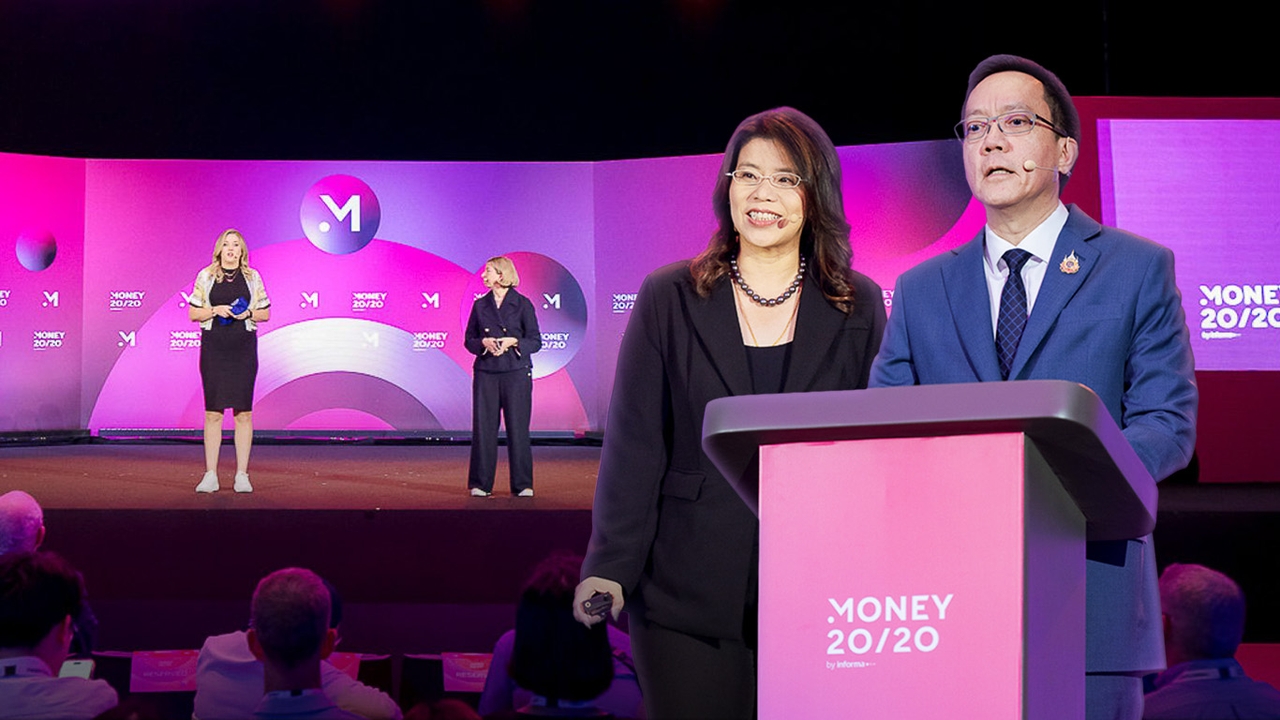
This year's Money20/20 Asia 2026 held in Bangkok not only clearly demonstrates that the center of financial innovation has shifted concretely to Asia but also signals a significant turning point in the global financial system.
The year 2026 marks a period where the industry is moving beyond "building" toward "delivering real outcomes" under the theme From Infrastructure to Impact. Market participants are no longer focused solely on infrastructure such as payment systems, platforms, or technology but are prioritizing the more critical question: do these technologies create real economic and human impact?
. . . Tracey Davies, Chairperson of Money20/20, stated that historically, the financial world looked to the West for its future. But today, the "ideas, scale, and momentum" of the industry are emerging in Asia. This year’s event has grown significantly, with participants from 87 countries—a 20% increase from last year—and over 70% of attendees from Asia. Additionally, over 4,000 participants represented a more than 30% rise from the previous year, alongside 1,400 companies including global financial institutions, growing FinTech firms, investors, infrastructure developers, and more than 80 regulators collaborating closely with the private sector.

One of the clearest transitions in the financial world at this event is the fading boundary between traditional finance (TradFi) and technology-driven digital finance (DeFi), as both worlds merge into a "new ecosystem" seamlessly connected.
The event featured dedicated forums focusing directly on this issue, emphasizing collaboration between traditional banks and new technology firms, practical uses of AI and blockchain technologies, as well as experimentation and development of new business models in finance.
Scarlett Sieber, Chief Strategy and Growth Officer of Money20/20, explained through the launch of the book"The New Intersection of Money: Where TradFi and DeFi Converge"that the industry is entering a new era where banks, financial institutions, and technology companies must collaborate to build a seamlessly connected financial ecosystem.
She further explained that over the years, the financial industry focused on building foundations—systems, infrastructure, platforms, and networks. Today, the Asian region has moved beyond that phase, focusing instead on real impacts on people’s lives, including how they pay, borrow, save, invest, trade, and transfer money across borders.
Moreover, another key sign of this transition is the changing definition of "money." Looking to the future, money no longer needs to be physical but can exist digitally, as tokens, or new asset forms like stablecoins.
However, what remains unchanged is "trust." Regardless of money’s form, value arises only when users trust the system. Therefore, this year’s event placed strong emphasis on discussions around regulation, policy, and oversight to ensure that new financial systems are built on reliability and transparency.
Another significant development is the collaboration between Money20/20 and FXC Intelligence to launch the report"The New Era of Asia's Cross Border Payments"which forecasts that Asia’s cross-border payments market will grow to reach USD 24 trillion, approximately THB 776 trillion, by 2033.
The report highlights that the industry is transitioning from pilot projects to widespread adoption, driven by key factors such as real-time payment systems, cross-border infrastructure connectivity, and emerging technologies like stablecoins and AI. This underscores that cross-border payments remain central to the market, with many organizations launching new collaborations and solutions to enhance efficiency and speed of international transactions.

As the host of Money20/20 for the third consecutive year, Tracey Davies noted that Thailand has made remarkable progress, setting new records for participant numbers this year, increasing sponsors from 105 last year to 150 this year, along with strong support from government and central bank, and active involvement from major commercial banks and startups.
This year also saw strong backing from Thailand's leading banks, with executives from Siam Commercial Bank, Bangkok Bank, and Kasikorn Bank speaking as keynote speakers, alongside startup representatives on international stages, reflecting the country’s robust financial ecosystem readiness.
Regarding financial infrastructure development, Thailand has taken a proactive role, notably by linking its PromptPay system with neighboring countries’ payment systems like Singapore’s PayNow, strengthening the financial system amid global economic volatility.
. . . . . . Dr. Warotai Kosonpisitkul, International Economic Advisor at the Fiscal Policy Office, Ministry of Finance, portrayed Thailand as moving beyond building mere infrastructure toward creating a transparent financial ecosystem that attracts investment, emphasizing the country’s potential and strategy to become a "Global Financial Destination."
Thailand’s strengths lie in its strategic location as the ASEAN hub, enabling efficient connectivity with global markets and capital sources, combined with proven financial infrastructure.
Additionally, Thailand prioritizes security through the "Connect the Dots" initiative—a framework integrating financial data to combat international financial crime—alongside government incentives such as tax benefits under the International Business Center (IBC), tax exemptions and privileges from the Board of Investment (BOI), and 10-year Long-Term Resident (LTR) visas. These collectively transform Thailand’s image from a tourist destination to a center of innovation and investment.
. . . Daranee Saejoo, Assistant Governor for Strategy and Special Projects at the Bank of Thailand (BOT), presented the vision of "Humanize Finance," aiming to leverage integration of Thai financial data to create real benefits and opportunities for all, with the ultimate goal of using technology to generate tangible positive impact, making the financial system safer, more inclusive, and beneficial to society overall. This aligns with global agendas and will be further emphasized at the IMF-World Bank annual meeting in Bangkok in October this year.
Over the next 3–5 years, the most discussed trend is AI driving profound transformation across industries—not just a passing fad. Meanwhile, the convergence of TradFi and DeFi, or from another perspective, Web2 and Web3, will become increasingly evident.
These changes will create new opportunities for both new entrants and established organizations, especially traditional banks that are beginning to embrace and learn from AI technologies and FinTech solutions to better meet customer needs.
In summary, this year’s announcements and directions reflect that the financial industry is entering a new era where technology, regulation, and organizational collaboration work closely to enhance the financial system’s speed, connectivity, and accessibility, while managing risks in a volatile world and preparing for digital economy growth.
Furthermore, FinTech is evolving beyond being merely new technology to becoming a key tool for broad economic opportunity creation, especially in Asia, which is regarded as a region seriously and comprehensively driving financial inclusion—not only increasing bank accounts but also enhancing small business credit access, women’s opportunities in finance, and genuinely improving people’s financial health.

. . .
Follow the Facebook page: Thairath Money at the link -