

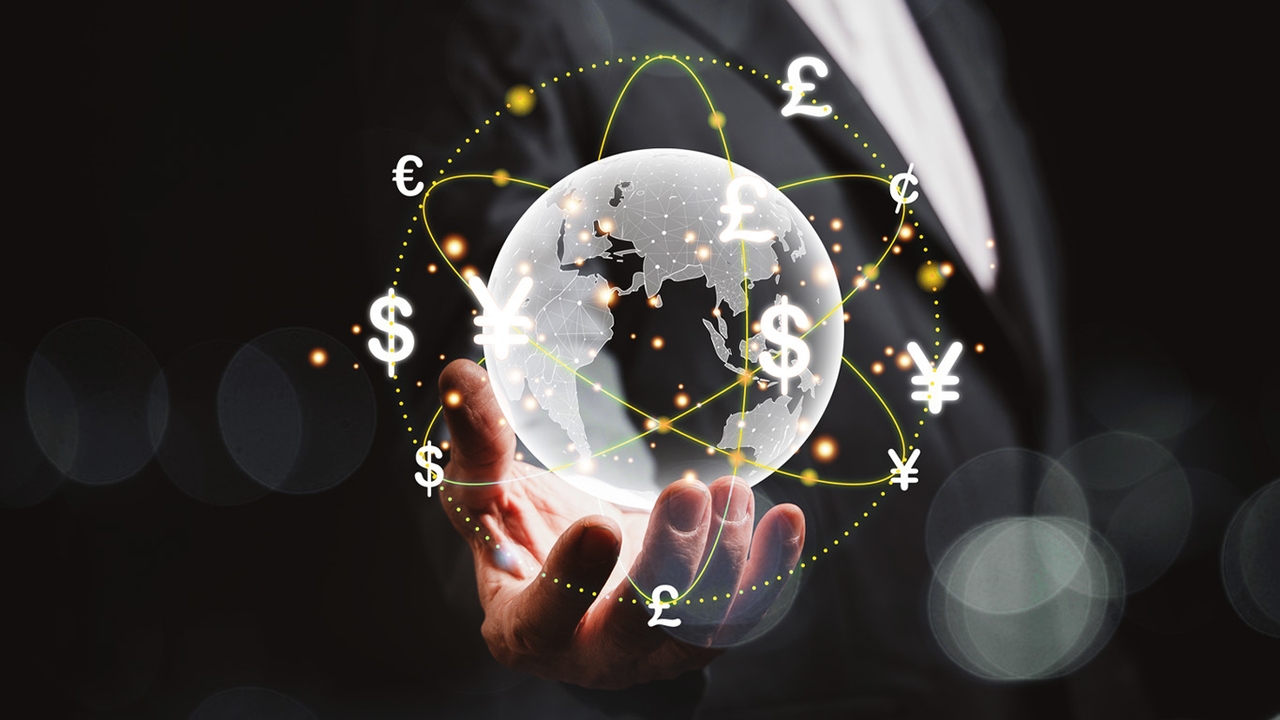
Today, the boundary between traditional finance (TradFi) and the crypto world is increasingly blurring as assets and infrastructures from both realms begin to connect more deeply, ushering global finance into a new, more borderless era amid these changes.
Binance no longer views itself simply as a “crypto exchange” but is expanding its role into a broader financial infrastructure. Today's crypto world is not just about speculating on coin prices but is increasingly used in everyday life—from cross-border money transfers and savings to enabling people in countries with limited financial access to easily reach U.S. dollar–pegged assets.
Thairath Money had the opportunity to speak with Richard Teng, co-CEO of Binance, about the bigger picture of the crypto industry evolving from a niche asset class into part of the global financial infrastructure, and to outline Binance's direction as traditional finance and crypto increasingly converge.

Richard sees stablecoins as the next major wave in blockchain. Since the U.S. passed the GENIUS Act, stablecoin transaction volumes have steadily increased. Their key strength lies in enabling near-instant cross-border transfers at a fraction of the cost compared to correspondent banking systems, which in some cases can take days for funds to reach recipients.
The use of stablecoins is no longer limited to retail investors but is expanding into business sectors and companies engaged in international trade. Meanwhile, financial institutions, payment providers like Mastercard, and regulators in many countries are increasingly entering the stablecoin space. Conversely, interest in central bank digital currencies (CBDCs), which attracted much attention in recent years, has waned in some countries.
Richard suggests that if the private sector can already offer practical solutions, governments may not need to invest heavily in creating duplicate systems. He highlights two key questions about retail CBDCs. First is the “role of commercial banks”: if people can hold CBDCs—which are claims on the central bank—directly, it could affect commercial banks' roles in deposits and lending, which are crucial economic mechanisms.
The second issue is “privacy.” Richard notes that when people spend money, they may not want the government to know all the details of how their funds are used. Because of this, he believes many countries are focusing more on institutional or wholesale CBDCs, used for settlement and clearing between financial institutions.
Richard explained that in 2017, there were about 6 million crypto holders worldwide; now the number has grown to approximately 740 million, with over 300 million registered users on Binance. The company’s long-term goal is to expand its user base to 3 billion people.
But what Binance is building goes beyond being just a crypto trading platform. This year, Binance Global began expanding its products to other asset types—from commodities like oil, U.S. stocks, to pre-IPO equity-linked assets like SpaceX—reflecting efforts to support investing, saving, and payments all in one place. Richard emphasizes “access” as a key challenge, noting that about 1.4 billion people globally remain unbanked, and many investors in emerging markets still face barriers to accessing assets like U.S. stocks. Another important trend is investing moving toward 24/7 trading.
Traditional financial markets have opening and closing hours and suspend trading on weekends and holidays, but news and events that affect asset prices can happen anytime. Investors thus want ways to manage risk outside regular hours. Richard said that 47% of trading volume for stock-referenced products on Binance occurs outside traditional stock market hours.
Markets like Nasdaq are also moving toward longer trading hours. Additionally, he sees tokenization—the conversion of assets into blockchain tokens—as a use case with significant growth potential, even though its market value is still relatively small today.
Note: The U.S. stock, commodity, and pre-IPO equity-related products mentioned are services on Binance Global, which are not available to investors in Thailand. Thai investors should use services only through operators licensed by the SEC.
In finance, “trust” takes time to build but can be lost quickly. Richard explained that Binance strives to build confidence through multiple mechanisms, citing two key examples: Proof of Reserves, which allows users to verify that customer assets are backed 1:1 by reserves, and the $1 billion SAFU fund, established as an emergency fund to protect users in case of security incidents.
Richard emphasized that these measures are not mandated by regulators but are initiatives Binance chose to demonstrate commitment to its users. Meanwhile, cyber threats are becoming increasingly complex, especially as AI enables more sophisticated scams.
He cited a case in Singapore where fraudsters used AI to impersonate the prime minister, tricking victims into transferring about $4.9 million. This shows that fraud is not unique to crypto but can occur in any financial system, often exploiting user vulnerabilities.
Binance says it has invested in multi-layered internal protections and user education—from avoiding unknown links to verifying any contact claiming to be police, banks, or authorities. When incidents occur, Binance collaborates with law enforcement to track and freeze assets, using blockchain’s traceable transactions. The system can also alert users before transfers if the destination is risky and help recover assets sent to wrong networks.
Regarding the crypto market outlook this year, Richard maintains his view throughout the year that this is a “year of consolidation,” with the market in an accumulation phase and prices moving within a range. He expects this phase to end around Q4 before the market enters the next cycle. He explains that all asset types follow cycles based on economic conditions, liquidity, and interest rates—similar to commodities or semiconductor stocks that have experienced hot periods followed by corrections. However, even if crypto prices remain subdued, Richard believes activity “below the surface” continues unabated.
Read more digital asset and investment news with Thairath Money to help you "Better Finance, Better Life" athttps://www.thairath.co.th/money/investment
Follow the Facebook page: Thairath Money at this linkhttps://www.facebook.com/ThairathMoney