

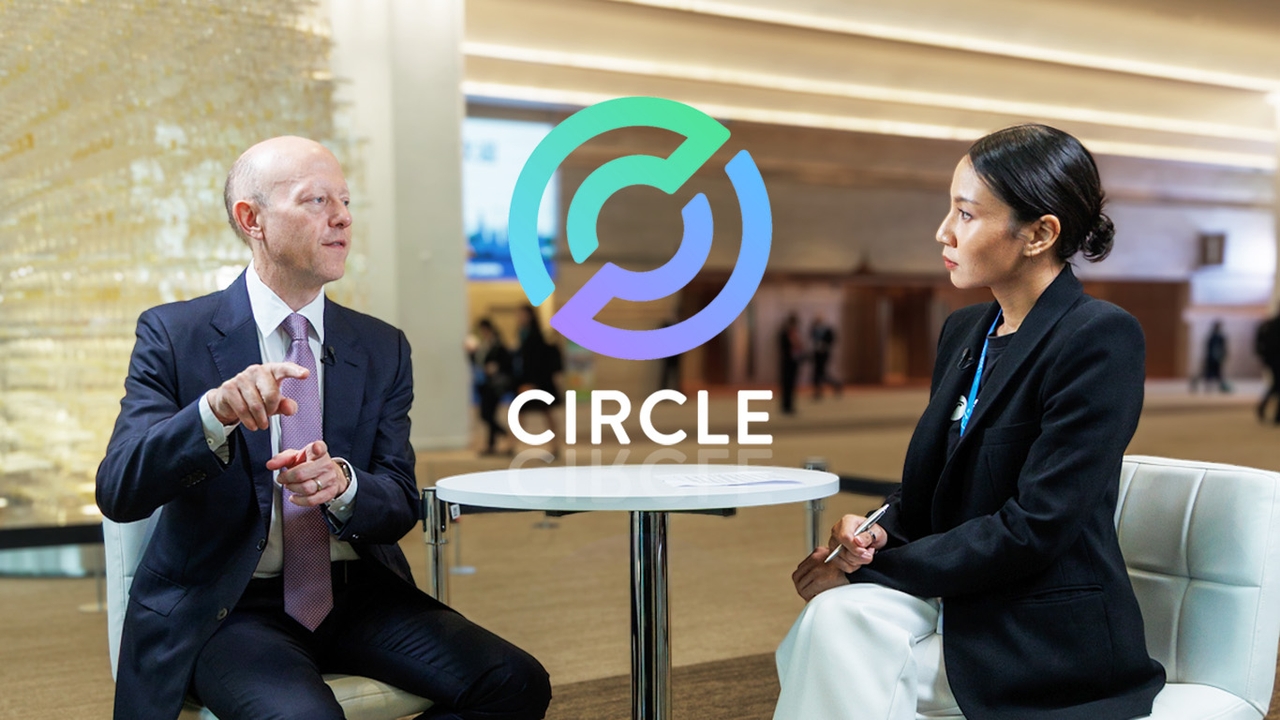
Over the past year, Stablecoins have shifted from being assets known mainly through the crypto world to technologies that the global financial sector closely monitors as new infrastructure. They offer opportunities to improve payment efficiency and cross-border money transfers. At the same time, key challenges around regulation, financial stability risks, and the role of central banks must be considered simultaneously.
This topic is thus a significant dimension of discussions at the IMF-World Bank Group Annual Meetings 2026 in Bangkok. This forum gathers economic leaders, policymakers, and financial sector representatives worldwide to exchange views on the global economic direction, including the future of financial systems and technologies that will transform money movement methods going forward.
For Thailand, this moment is pivotal in determining how Stablecoins will play a role and extend this technology from digital asset trading markets to infrastructure supporting tourism, trade, investment, and cross-border transactions, without compromising financial system security.
On this occasion, Thairath Money spoke with Jeremy Allaire, co-founder and CEO of Circle, the company behind USDC, one of the key Stablecoins in the global market, to explore the direction of the Stablecoin Economy, from the opportunity of a THAI BAHT Stablecoin, regulatory conditions, discussions with the Bank of Thailand, to the potential for partnerships with Thai businesses.
From the perspective of a global digital financial infrastructure builder, where does Thailand’s Stablecoin industry currently stand, and how should it advance to move beyond a technological trend into real economic system usage?
For Thais who may not yet be familiar with Circle or understand what a Stablecoin is,
a Stablecoin is a digital asset designed to maintain relatively stable value, often pegged to a reference asset such as the U.S. dollar. This contrasts with cryptocurrencies like Bitcoin, which can experience significant price volatility.
The key purpose of Stablecoins is to allow users to hold and transfer value digitally without facing price volatility comparable to general cryptocurrencies. The stability depends on value-maintaining mechanisms, backing assets, and issuer credibility.
Simply put, a Stablecoin is like a digital form of the dollar, similar to holding a $1 bill but transformed from physical cash in a wallet to a digital token transferable on a blockchain.
One of the globally recognized Stablecoins is USDC, issued by Circle and designed to maintain a 1:1 value ratio with the U.S. dollar. What draws attention to USDC is that Circle, the technology company behind it, does not position itself merely as a Stablecoin issuer but is developing infrastructure to integrate digital money with payment systems and broader financial networks.
Most recently, Circle has become the first company to obtain a digital banking license in the U.S., after receiving final approval from the Office of the Comptroller of the Currency (OCC), the federal banking regulator, to establish National Trust Bank, under the name Circle National Trust in July 2026, to provide asset custody services to institutional clients under federal oversight.

Jeremy said Circle is an internet software and infrastructure company enabling the full recreation of financial systems on the internet. Circle’s business can be divided into three main parts.
The first is USDC, or digital dollar, sometimes called Stablecoin. We create an open network where users can create digital wallets, trade, and connect payment platforms, allowing people to send and receive digital dollars globally almost instantly at very low cost.
The second part is building the underlying infrastructure to enable financial and economic activities on the internet, including Arc blockchain, a new infrastructure we developed, which we consider as an operating system for the economy.
The third part is developing a payment network enabling financial institutions worldwide to transfer money and currencies internationally within minutes, reducing costs and delays in cross-border money movement.
Jeremy revealed that the reason for attending the IMF-World Bank Group Annual Meetings is that Circle currently collaborates with these organizations and many member countries, especially focusing on emerging markets adopting this technology to increase financial service access and improve financial system efficiency. Is Stablecoin already mainstream?
“We still see businesses and households in many markets holding more digital dollars as an alternative to their domestic banking systems. Additionally, major payment companies, capital market firms, global banks, technology companies, and e-commerce businesses are integrating USDC into their products.”
Last week, the company announced cooperation with projects related to SAP, integrating USDC payments into enterprise resource planning systems, enabling large corporate treasury departments to automate global payment transactions via USDC.
Another key change is the new U.S. regulations establishing a Stablecoin regulatory framework effective January 2027. This is a significant industry development reflecting the U.S. government's emphasis on preserving the dollar's role and competitiveness in the global financial system.
“We are seeing Stablecoins enter nearly every economic sector, and this change is accelerating,”
Jeremy said.Traditional financial institutions are alert and opening doors for Stablecoins
Jeremy
said that currently CBDCs have limited practical use, while most tokenized deposits remain in experimental stages. Conversely, Stablecoins are already significantly used with transaction volumes in the trillions of dollars. “I view this similarly to how the internet works. People want communication tools that interconnect and want information accessible online. The same principle applies to money.”
Jeremy
said he believes in market competition, technological innovation, competitive free markets, and good regulation, which allow broader participation in this industry. Traditionally, financial institutions could create closed payment systems usable only within limited institutions, which limits system benefits. Stablecoin networks like USDC offer open, public services accessible globally to everyone. There are also increasing signs of major financial institutions responding to customer demand. Jeremy
gave examples such as Citibank, The Bank of New York Mellon Corporation (BNY), and Standard Chartered, which currently provide services enabling institutional clients to access or use USDC. Asia is Circle’s largest market Jeremy
Asia plays a crucial role in global trade, both within the region and with other continents. Many businesses require invoicing and payment in U.S. dollars, making Stablecoins an efficient method for these transactions. “We also see increasing Stablecoin roles in trading, investing, and saving. Digital financial platforms are becoming popular across Asia, especially among younger generations. For many users, these platforms serve as financial hubs on their mobile phones, enabling them to hold digital dollars, invest, earn returns, and make cross-border payments. I believe we are witnessing the emergence of a global financial Super App, with Asia as a key market for this transformation.”
Jeremy said.
And for Thailand, where do the opportunities lie, and what should Thailand do correctly to seize them?Jeremy clearly outlined three major opportunities for Thailand. The first iscross-border payments.Thai households and businesses interacting with foreign individuals or companies need methods for safe, efficient, and cost-effective transactions. Stablecoins can reduce steps and costs and speed up money movement.

Jeremy
said this is an opportunity for fintech companies, digital asset trading platforms, brokers, and banks in Thailand to integrate Stablecoins into products and services for international transactions. Next is global investment.
Digital financial platforms can help people in various countries access savings and investments in global markets more efficiently. Thailand should consider how to enable Thais to access these markets. Lastly, there is the opportunity within the country (domestic scalability).
This means upgrading the baht to a digital currency on blockchain, or On-chain Currency. Jeremy believes all currencies worldwide can benefit from becoming On-chain currencies operating on blockchain networks. This form of money can be programmed to operate under specific conditions, known as Programmable Money, and supports new uses that traditional money held only in bank or government accounts cannot easily achieve. Especially as the economy becomes more digital and AI plays a larger role, we will need money that software and AI agents can use efficiently. For Thailand, having a digital baht in On-chain form and Stablecoins pegged to the baht will be important for domestic use and connecting to global markets. From cross-border payments to baht-pegged Stablecoins.
However, a key question is whether Thailand developing its own Stablecoin would affect baht stability or the Bank of Thailand’s ability to manage the financial system. Jeremy
answered clearly:
Stablecoin issuers can create a structure called a Narrow Bank, focusing on holding and managing reserves separately from other company assets. Circle itself operates through its National Trust Bank structure under U.S. regulation.
Thailand can consider a regulatory framework placing Stablecoin issuers under relevant authorities, setting reserve protection measures for baht-pegged Stablecoins, and possibly involving central bank reserve management. This approach would allow the private sector to innovate in digital money use while maintaining oversight and reserve safeguards. Jeremy confirmed that well-designed regulation would not conflict with policy and would support central bank goals.Jeremy
revealed that Circle has previously discussed with the Bank of Thailand, which has conducted sandbox trials where USDC was used in some projects, including involvement by commercial banks and fintech companies with innovative participation in these trials.
Regarding regulatory progress regionally, Hong Kong, Japan, Singapore, and South Korea are each advancing Stablecoin regulatory frameworks in different forms. Jeremy
said Thailand would follow soon on this matter.
Regarding business cooperation, Circle sees significant opportunities in Thailand. Some regulated crypto platforms in Thailand already support USDC, while payment companies, investment firms, and banks are considering how to utilize this technology. USDC, Arc, and the payment network development projects all offer opportunities to collaborate with traditional financial institutions in multiple ways. We are doing this in many countries worldwide and believe there will be strong opportunities to partner with leading Thai companies. In the next 10 years, Stablecoins will become part of our lives.
In the next decade, Jeremy foresees that Stablecoin may no longer be a term people mention, as digital money will become part of daily life just like the internet, which we use almost without thinking about the technology behind it.
Terms used to describe technologies often change over time. In the past, we talked a lot about the internet, but now it is everywhere around us. We were once excited about SMS messaging, but today there are many apps and services for communication, with little thought about the underlying technology. Stablecoins will follow the same path.
Jeremy
“People will recognize its benefits because Stablecoins enable things previously not possible. They will have easier, safer, and lower-cost access to financial systems and new ways to participate in the global digital economy.” For Thailand, the question is how long it will take to reach that point and how to establish rules that allow this technology to grow, benefiting businesses, investors, and the Thai economy. Read stock and investment news with Thairath Money for your “Better Finance, Better Life” at
https://www.thairath.co.th/money/investment Follow the Facebook page: Thairath Money at this link https://www.facebook.com/ThairathMoney
