

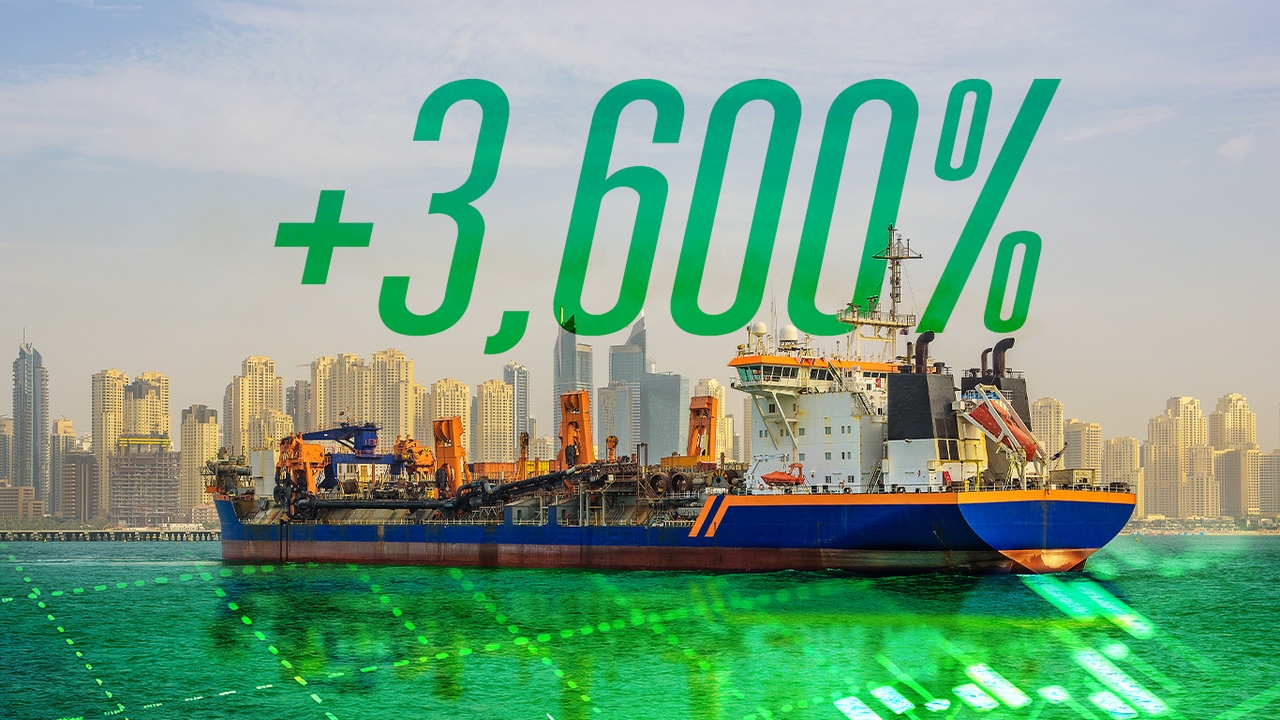
In an era when global investors flock to AI stocks, inflation hedges, or crude oil speculation, one ETF rarely mentioned has outperformed all U.S. market assets.
That fund is the Breakwave Tanker Shipping ETF, or BWET.
CNBC reports that BWET surged over 3,600% since early 2026, an unprecedented return among non-leveraged U.S. funds, amid the U.S.-Iran conflict that severely tightened shipping through the Strait of Hormuz.
Returns in the thousands of percent prompt curiosity about what BWET is and why Middle East war impacts this fund’s price so dramatically.
CNBC explains BWET is the only ETF designed to give investors direct access to oil tanker freight futures without needing a futures trading account. It does not hold shipping company stocks, crude oil, or actual oil tankers.
Amplify ETFs, the issuer, states BWET reflects daily price movements of an index tracking the "future cost of crude oil transportation," offering unleveraged returns from freight futures.
The fund trades on NYSE Arca and has a sibling, Breakwave Dry Bulk Shipping ETF (BDRY), which focuses on dry bulk freight futures. Both are managed by Breakwave Advisors LLC, registered as commodity trading advisors with the U.S. NFA regulator.
What is "freight rate"? Simply put, it is the charter cost for an oil tanker to transport crude oil from one point to another, such as from the Persian Gulf to China.
Freight rates fluctuate with supply and demand for available ships on that route. During wars or unrest in key passages like the Strait of Hormuz, many ships avoid the usual route, taking longer, more distant paths.
At the same time, insurance risks rise, reducing available ships and causing freight rates to spike sharply. Since BWET holds futures tied directly to these freight indices, its price swings dramatically alongside.
Investing.com notes the fund’s holdings consist entirely of futures contracts expiring between September and December 2026, consistent with the fund’s rolling strategy as contracts near expiry.
According to Morningstar data as of 11 Sep 2026, the fund’s market price returns are:
Although BWET is listed on the U.S. NYSE Arca, Thai investors can access it through international securities investment channels, either by opening foreign stock accounts with Thai brokers offering such services or directly through foreign brokers, similar to trading U.S. stocks like Apple or Tesla.
BWET’s phenomenon reflects global investors seeking new ways to profit from geopolitical volatility beyond direct crude oil price speculation, focusing instead on "transportation costs"—a critical and often overlooked bottleneck in the global energy supply chain.
However, a key risk to understand is that freight rates are highly volatile, and despite past rises from low levels, there is no guarantee rates will remain high.
Moreover, the fund has no risk-hedging mechanisms; if freight rates fall, the fund’s unit value may decline sharply, just as it rose sharply before.
BWET exemplifies a fund whose returns are directly tied to geopolitical conflict situations. Such high volatility, both up and down, makes this fund suitable only for investors who deeply understand the risks and can tolerate exceptional volatility.
Sources:Amplify ETFs,CNBC,Investing,Morningstar
For stock and investment news with Thairath Money to help you achieve "Better Finance, Better Life," visithttps://www.thairath.co.th/money/investment
Follow the Facebook page: Thairath Money at this linkhttps://www.facebook.com/ThairathMoney