

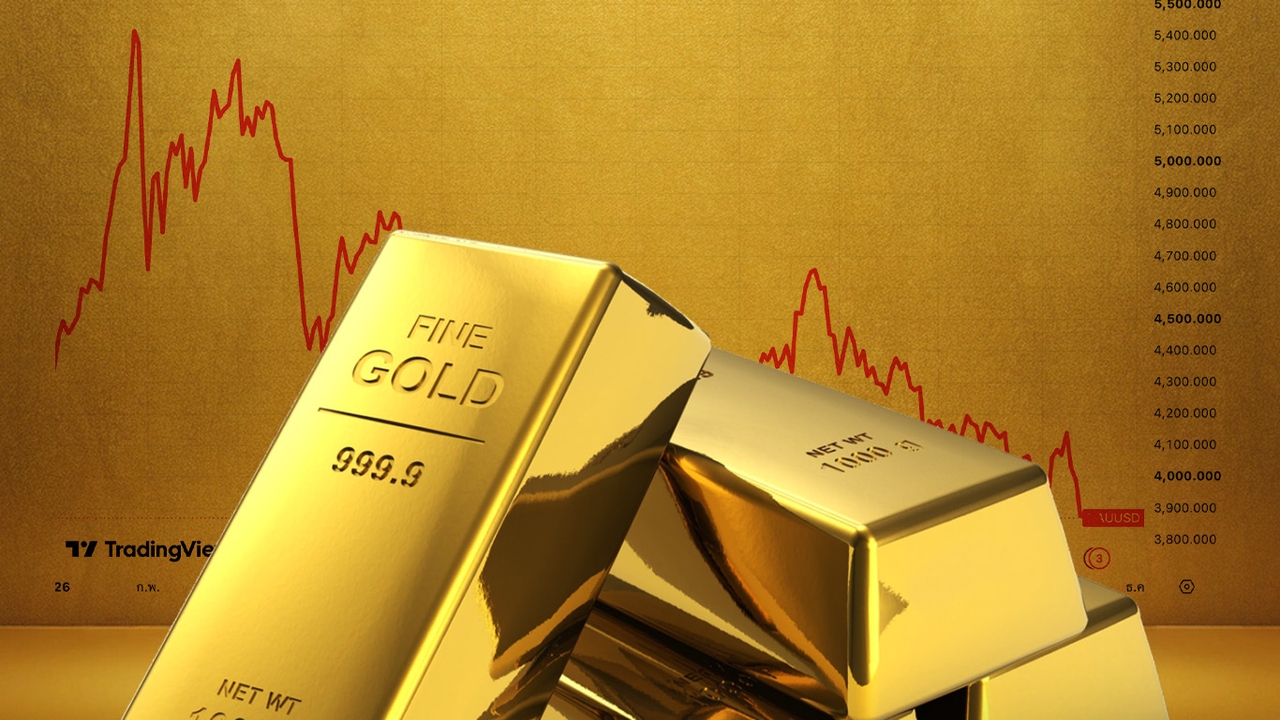
Global gold prices this year have experienced significant volatility, rising to record highs before reversing direction and continuously correcting downward. Particularly from October to November, selling pressure intensified, pushing gold prices down to around $3,800–$3,900 per ounce.
This situation coincided with global stock markets facing selling pressure, especially in technology and AI-related stocks, reflecting that current financial market volatility is not confined to any single asset class.
Even gold, traditionally viewed as a safe-haven asset, has faced similar selling pressure.
As of 17 Nov 2026 GMT+7, global gold spot prices hovered around $3,864.97 per ounce, clearly trending downward.
Gold prices declined 7.34% over one month, 10.85% over three months, and 14.85% over six months. Year-to-date returns stood at -10.50%, with a one-year return of -5.38%.
Reuters On 16 Nov 2026 GMT+7, Reuters reported that gold spot prices fell to $3,830.74 per ounce, the lowest level in over a year since 2 Oct 2025 GMT+7, representing a 31.5% drop from the record high of $5,594.82 reached in January.
Reuters highlighted multiple factors pressuring gold prices, including elevated US Treasury yields, a strong US dollar, and expectations of tighter monetary policy by the US Federal Reserve.
Markets have priced in a high likelihood of a Fed interest rate hike in December, increasing the opportunity cost of holding gold, which yields no interest.
Additionally, Reuters noted that gold selling coincided with pressure on US stock markets, particularly technology shares, amid concerns about Nvidia and AI investment trends, prompting investors to reduce portfolio risk.
The Nasdaq index dropped 2.5%, the S&P 500 fell 1.9%, and the Dow Jones declined 1.4%. Asian markets also fell, with Japan’s Nikkei down 2.4%, China’s markets down 1%, and South Korea’s markets dropping 4%.
This indicates global financial markets are simultaneously pressured by economic concerns, changing interest rate expectations, and investor risk reduction, preventing gold from rising as a typical risk-off asset.
Siriluck Pakotiprapa, Director of Analysis at Hua Seng Heng Gold Futures Company Limited, shared her perspective with Thairath Money. She said the direction of global gold prices this year remains risky. Although prices have fallen to a 14-month low, it is not yet confirmed as the cycle’s bottom.
Prices continue to make new lows, and every attempted rebound faces profit-taking pressure, resulting in weak technical signals and an overall bleak outlook.
Fundamental pressures include concerns that the Federal Reserve might raise interest rates again. Recent statements have opened the possibility of a 0.50% hike at the December meeting.
Additionally, US inflation came in higher than expected, and the US dollar strengthened. These linked factors increase the opportunity cost of holding gold, pressuring its price.
A key factor to watch closely is President Donald Trump’s stance on the Iran conflict, which remains highly uncertain. The Iran war is seen as a major variable for gold prices in the remaining year.
If the conflict escalates, oil prices may rise, feeding into inflation and prompting the Fed to tighten monetary policy or raise rates, which would further pressure gold prices.
Regarding gold falling alongside risky assets despite ongoing war, Siriluck noted that gold’s role as a safe haven remains, but current market conditions have changed. Part of the gold selling stems from investors’ need for cash.
Gold has delivered strong returns, second only to silver last year, so many investors hold unrealized gains. During market volatility and liquidity needs, investors sell gold to raise cash.
This reflects investment psychology, where investors seek to protect accumulated profits from turning into losses. Some also sell gold to cover margin calls in other investments.
Capital outflows from gold have partly moved into the US dollar, which is strengthening, and US government bonds. After prior bond selling pushed yields higher, renewed bond buying makes US Treasuries a refuge and risk hedge currently.
Siriluck said to watch developments in the Iran conflict and the upcoming APEC summit closely. Although APEC usually focuses on trade,
the potential meetings among leaders like Donald Trump, Xi Jinping, and Vladimir Putin attract attention for political signals, especially regarding efforts to end the Iran or Ukraine wars, which could positively affect gold prices.
For investment strategy, short-term or trading investors are advised to wait and see, as no clear bottom is found. Long-term investors may accumulate gradually by dividing investments into portions, waiting for a strong base to form.
Gold prices around $3,800–$3,832 per ounce are key levels to monitor. A stable base here would boost investor confidence and present a buying opportunity.
However, a drop below $3,500 per ounce would be more concerning, although she personally believes prices will not fall that far.
In domestic markets, gold prices around 61,400–61,700 baht per baht-weight are levels for long-term investors to consider accumulating. Thai gold has fallen less than global prices partly because the baht has weakened to about 34 baht per US dollar, offsetting some of the impact from lower global gold prices.
Source:Reuters
For stock and investment news with Thairath Money to help you achieve “Good Finances, Good Life,” visit
Follow the Facebook page: Thairath Money at