

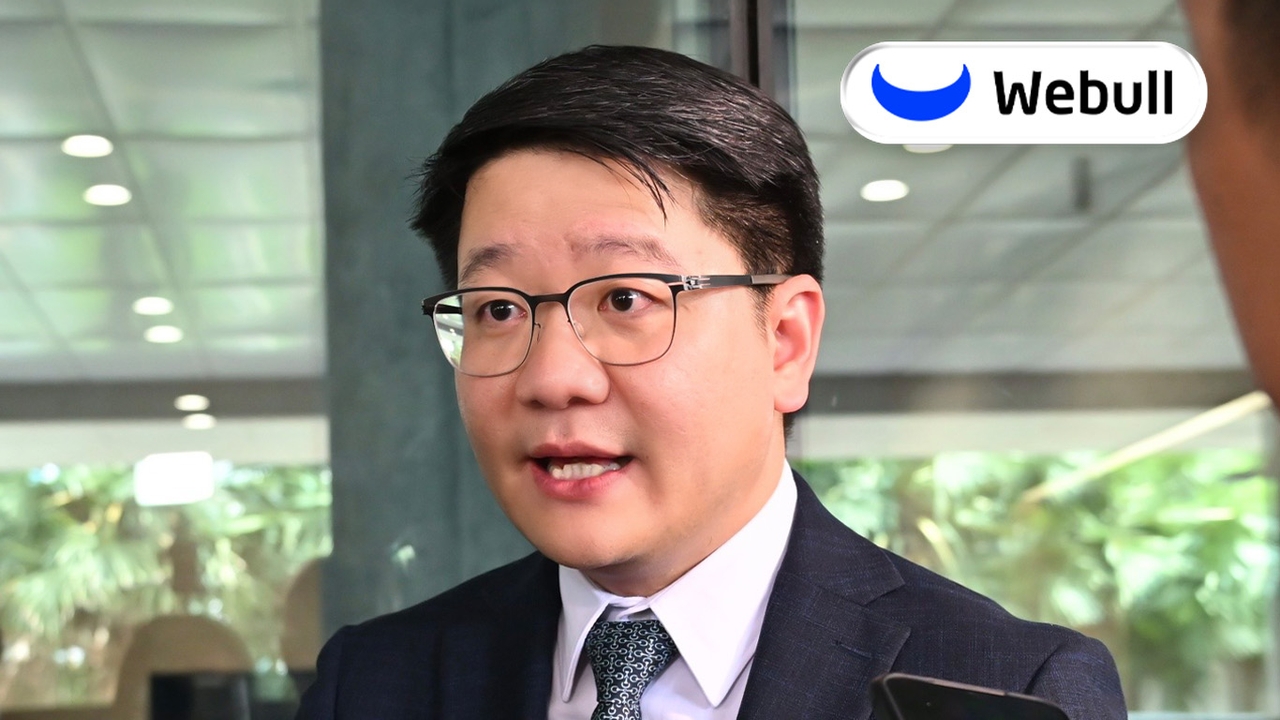
On 11 June 2026, Mr. Chonladej Khemaratna, CEO of Webull Securities (Thailand) Co., Ltd., a subsidiary of Webull Corporation which owns the Webull online trading platform, appeared before the Anti-Money Laundering and Drug Suppression Committee of the House of Representatives at the parliament building to provide clarification.
This followed an invitation to provide information regarding complaints that criminal groups were using Webull Thailand’s online stock trading platform to open mule accounts and transfer illicit funds. Concerns were also raised about the platform's Know Your Customer (KYC) and Customer Due Diligence (CDD) systems potentially not meeting legal standards, which the committee feared could damage the image and trust in the Thai capital market.
Regarding the issue of mule accounts on the platform, Chonladej explained that the problem did not begin with account opening or deposits, but rather from certain criminal groups exploiting the company's real-time withdrawal service as a channel for money laundering.
Webull Thailand developed a system allowing customers to withdraw settled funds in real time to enhance convenience. This differs from typical withdrawal processes at most brokers, which often require waiting for liquidity arrangements before approving withdrawals. For example, funds from foreign stock sales require a T+1 business day wait, Thai stocks T+2, and some cash not yet invested cannot be withdrawn in real time at many firms.
This became a loophole exploited by criminals who deposited money and immediately withdrew it without purchasing stocks, turning Webull Thailand into a conduit for money transfers rather than an investment platform.
Chonladej noted that the company was informed by the Royal Thai Police of two suspicious accounts. Subsequently, Webull Thailand joined the police war room, coordinating with the Securities and Exchange Commission and related agencies to investigate financial flows, uncovering a network of 40 mule accounts. The company suspended all transactions and reported suspicious activities to relevant regulators.
After being notified, the company developed an Internal Risk Scoring Model to analyze behaviors indicative of money laundering. Examples include depositing funds without investing, minimal investment followed by withdrawal, frequent large deposits and withdrawals, or behaviors inconsistent with normal investment patterns. Upon detecting suspicious transactions, the company can delay withdrawals and require additional identity verification.
If customers fail to verify their identity or evade contact, the company follows procedures to report suspicious transactions to regulatory bodies.
After only a few weeks of using this system, mule accounts attempting to exploit the securities company’s platform disappeared from the system. “Currently, the police have confirmed that no such mule accounts remain on the platform,” Chonladej said.
Beyond the mule account case, Chonladej revealed that the company found cases where criminals forged bank deposit documents to link accounts for withdrawals. Although account opening and KYC checks had been completed, some used fake documents to link withdrawal accounts. He admitted that at that time, there were operational deficiencies among some staff, allowing withdrawals to accounts not belonging to the true owners. Originally, the securities company lacked authority to verify bank account names directly.
However, the company coordinated with a global partner bank to develop an automated system that verifies the bank account holder’s name before approving withdrawal account linkage. They also retrospectively checked hundreds of thousands of customers to ensure name consistency. This new system was implemented within 2-3 weeks after the incident. Police have confirmed there are currently no mule accounts in Webull Thailand’s system.
Regarding concerns about Know Your Customer (KYC) and Customer Due Diligence (CDD) processes, Chonladej stated that Webull Thailand employs multiple identity verification steps from the start, including checks via the National Digital ID (NDID) system and the Department of Provincial Administration (DOPA) database, photographing ID cards and using AI to detect counterfeit cards.
Additionally, selfies are compared with ID card photos using AI and manual review before entering customer data into further checks against the Anti-Money Laundering Office database, the Department of Legal Execution’s database, and the global Refinitiv database—a standard used by international financial institutions. The company also developed systems for groups without public databases, such as local politicians. All procedures comply with the criteria set by the Securities and Exchange Commission and the Anti-Money Laundering Office.
The company evaluates data consistency, such as occupation, income, source of investment funds, address, and financial behavior. If inconsistencies arise—for example, a freelancer with unusually large investments or an address mismatching employment data—the system flags the case for staff review. The company insists there is no 100% automatic approval.
Regarding allegations from some media outlets claiming that Webull Thailand "accepts cash deposits or operates as an illegal bank", Chonladej confirmed these claims are untrue. The company does not accept or withdraw cash; all transactions go through bank accounts only. No securities company in Thailand allows customers to deposit cash directly. Since launch, deposits must be made via a Dynamic QR Code generated each time a customer logs in, and the source bank account name must exactly match the securities trading account name.
Chonladej stated that if the source account name does not match the trading account holder’s name, the system immediately rejects the transaction at the origin. This approach is stricter than some securities companies that may accept funds first and verify later, or use bank accounts linked directly to trading accounts, potentially allowing deposits from third parties.
Regarding accusations of illegal banking, this is a distortion of facts related to customers depositing Thai baht to convert to US dollars for investment, with the company paying interest. This is a normal practice among securities firms authorized to pay interest on deposits in both baht and foreign currencies. The interest paid complies with the Securities and Exchange Commission’s limit, which prohibits paying more than the rate received from banks. Other brokers not paying interest do so based on their business policies, not legal prohibitions.
On the impact on customers, Chonladej acknowledged that media reports caused some investors to misunderstand the situation and mistakenly believe the committee’s invitation was an accusation, whereas it was actually a request for explanation. Asked about future plans, Chonladej said that the Securities and Exchange Commission, the Anti-Money Laundering Office, the Securities Companies Association, and capital market operators are jointly discussing raising industry standards for mule account prevention. Key areas include account opening, deposits, withdrawals, and using technology to verify customer data and behavior.
The SEC is also considering whether to continue allowing real-time withdrawals by securities companies. If new measures are implemented, they will affect all brokers equally. The new criteria will also consider impacts on normal investors. The company has proposed segmenting customers, allowing established, normal investors to continue real-time withdrawals, while new or suspicious customers might experience 1-2 hour delays or limited withdrawal times per day.
However, banning real-time withdrawals may not fully address the root problem, which originates at banks, not securities companies. He also noted that current securities laws need updating to keep pace with evolving technology. Chonladej added,
Webull Thailand is willing to share approaches and experiences with regulators and extend these standards to other operators, such as e-Wallet providers and digital asset trading platforms, which also face significant losses from criminals, to collectively raise industry standards.
The meeting included full participation from the SEC, the Anti-Money Laundering Office, the Royal Thai Police, the Stock Exchange of Thailand, the Securities Companies Association, and other brokers. Chonladej confirmed that this issue did not happen only to Webull Thailand.
Regarding defamation lawsuits filed against media outlets for false reports, Chonladej affirmed there will be no settlement and the company will pursue the case to protect its reputation and maintain investor confidence. Meanwhile, the company awaits results from inspections by the SEC and the Anti-Money Laundering Office, scheduled for later this month, to finalize findings and future regulatory guidance.
Read more
Follow the Facebook page: Thairath Money at this link -