

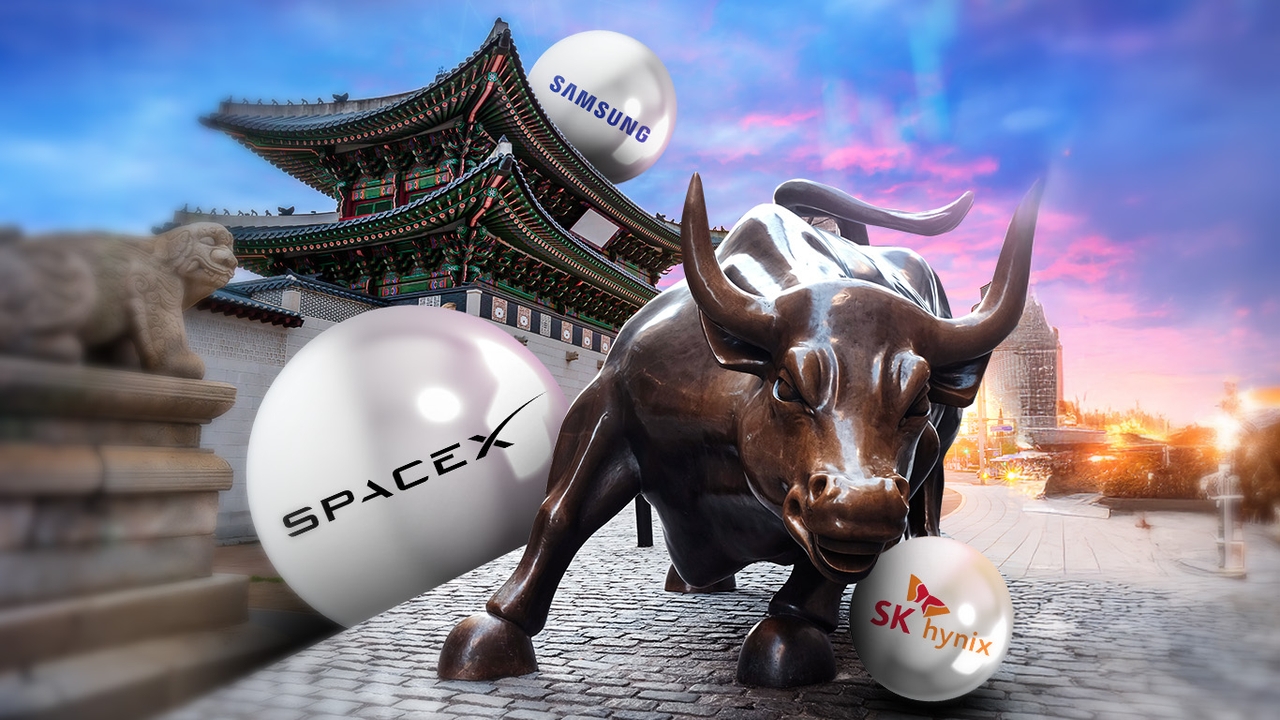
Looking back to the height of the COVID-19 pandemic, the stock market was once impacted by the frenzy over "meme stocks" or "Meme Stocks" once before, to the extent that several prominent hedge funds had to shut down. However, according to a Bloomberg report, that event pales in comparison to what we are facing now in the age of Agentic AI.
An article byBloombergwritten by Shuli Ren, a former investment advisor, career planner, and columnist, offers insight into the emergence of "AI-era meme stocks" which differ completely from the previous era in that these companies are not struggling to survive but are trillion-dollar giants capable of shaking the entire stock market system.
These global giants are becoming “meme stocks” because traditional valuation methods can hardly be applied to this group anymore.
SpaceX’s profit forecasts are nearly meaningless, as documents filed with the SEC before its market entry clearly state the company will not be profitable for some time and will require massive investment. Investors are buying not for earnings but due to belief in Elon Musk’s vision that he is selling to the market.
Many investors are willing to pay a “Musk Premium,” expecting huge returns based on their confidence in Musk, similar to early Tesla investors.
In South Korea’s market, companies like Samsung Electronics and SK Hynix also face similar valuation difficulties, as the memory chip business is highly volatile with cycles lasting only 2-3 years, causing rapid changes in earnings and stock values.
For example, Samsung traded at 26 times forward earnings in early 2023 before that valuation dropped to only 8 times about a year and a half later. Without a suitable or fair value to anchor prices, technical trading mechanisms now largely determine market direction.
One popular term currently is “Gamma Squeeze,” which describes a sharp and unusually rapid stock price surge caused by bullish speculation that forces large purchases of underlying shares to hedge risk in the options market.
The mechanism works when market makers sell call options to investors and must buy the actual shares to hedge risk, creating increased buying pressure that pushes stock prices even higher. A call option is a contract allowing investors to buy the underlying stock at a predetermined price, but they can choose not to exercise this right if it’s unprofitable.
For SpaceX, call options referencing its stock officially began trading last Tuesday, with nearly one million contracts traded, mostly expiring this Thursday. This may have contributed to SpaceX’s market value temporarily surpassing Amazon’s.
Another key factor is SpaceX’s free float—the proportion of shares held by retail investors actively traded—is only 7.5%, compared to Amazon’s 91.8%. When few shares are available for trading, large capital inflows can more easily drive up the stock price than in companies with a large free float.
Open interest in call options for Samsung and SK Hynix has surged rapidly in recent weeks, partly due to the launch of leveraged single-stock ETFs.
These ETFs must rebalance daily using derivatives, with adjustments accounting for about 60-70% of SK Hynix’s total trading volume.
However, these trillion-dollar meme stocks can also cause damage. As derivatives trading has grown rapidly in South Korea, the Kospi index’s volatility has increased significantly. At the same time, forced liquidations have begun, signaling that less experienced retail investors may be engaging in a high-risk game without fully understanding the mechanisms.
The problem is that this trend no longer affects just individual stocks but entire asset groups.
For example, the entire emerging markets segment is impacted because Samsung and SK Hynix together represent about 15% of the MSCI Emerging Markets Index, while SpaceX is expected to be included in the Nasdaq 100 Index in early July.
One approach is to avoid falling victim to greed driven by others’ success, since no one wants to be the last shareholder holding stock when the bubble bursts.
Ultimately, this round of meme stock speculation is not driven solely by retail investors but is also supported by powerful financial machinery on Wall Street, which lends its reputation to justify stock values that seem to defy all worldly forces.
Furthermore, to help promote the stock, Morgan Stanley has projected SpaceX’s revenue could reach $3.4 trillion by 2040. Many semiconductor industry analysts have also endorsed the concept of an “AI Supercycle,” a major growth cycle powered by artificial intelligence.
These optimistic views make many retail investors feel stocks like SpaceX are still undervalued with huge growth potential. This is what differentiates “AI-era meme stocks” from past meme stock stories—the Wall Street narrative and rationale instantly make these enormous valuations seem reasonable.
At the article’s end, Shuli Ren states, “Today, many may doubt whether SpaceX will actually be able to build data centers in space or whether memory chip shortages will persist until the end of this decade. But whether believed or not, one thing is clear: the era of trillion-dollar hype has arrived and is becoming a major driving force in global financial markets.”
Source:Bloomberg
Follow the Facebook page: Thairath Money at this link -https://www.facebook.com/ThairathMoney