

Right now, everyone is talking about the U.S. stock market because it is interesting and growing fast. But if you want to start investing now, are there things we need to know or understand before entering?
The U.S. is a large country with global-leading innovation and industries. Recently, funds from all over the world have continuously flowed into the U.S. stock market. Its market value is the largest in the world, exceeding 50% of the global total. As more money flows in, liquidity increases accordingly.
Highlights of the U.S. stock market include over 6,000 stocks and ETFs to choose from, compared to about 700 in Thailand. It also has innovative business sectors with promising growth, such as technology, healthcare, and biotech stocks — industries that are less represented in the Thai stock market.
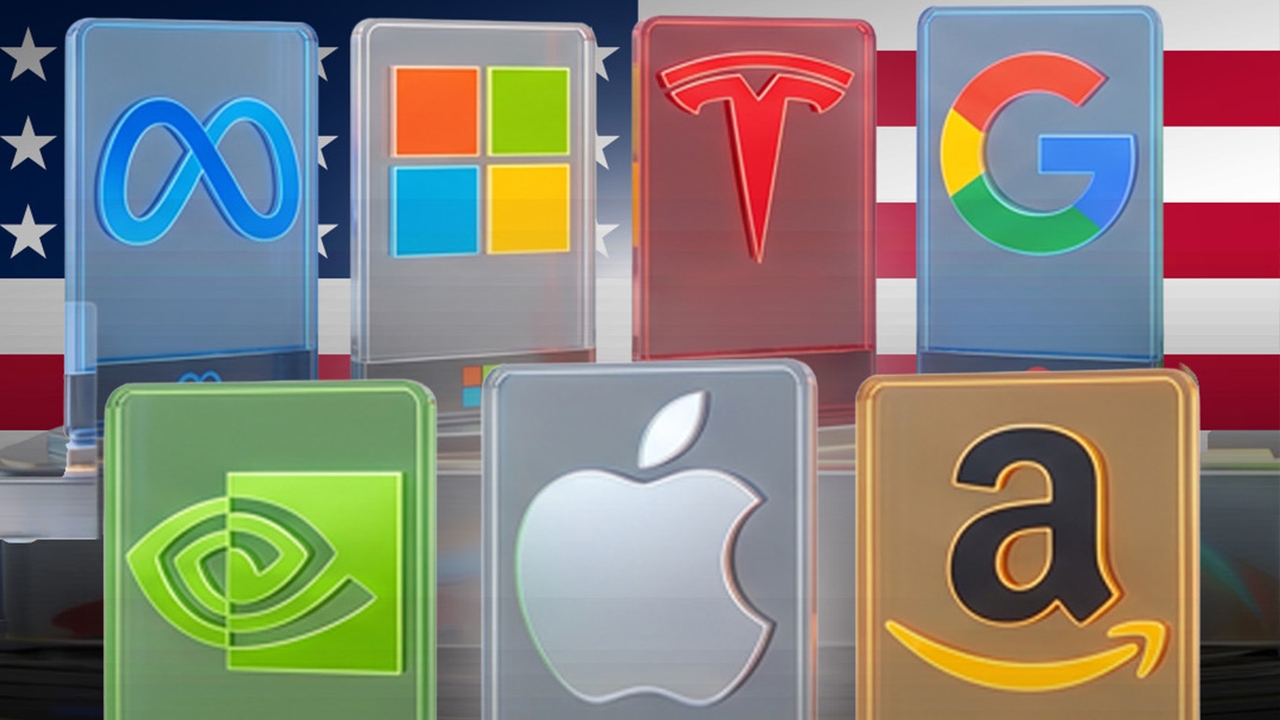
For example, well-known tech stocks we might use daily or find interesting growth in are the Magnificent 7, including familiar brands like Apple, Amazon, Alphabet (Google), Meta, Microsoft, Nvidia, and Tesla.
There are two main stock markets in the U.S.: New York Stock Exchange (NYSE) founded in 1792, hosting large, long-established companies. Another market popular among Thai investors is Nasdaq founded in 1971, where many tech companies whose products many people use are listed.
Regarding popular U.S. stock indices, three stand out:
If you plan to buy index mutual funds, it is advisable to study the stocks within that index closely. For example, some tech companies appear in both the S&P 500 and Nasdaq 100.
There are various channels to invest in the U.S. market today, depending on your preference and capital, divided into four main types you should consider to suit yourself.
1. Buying stocks directly Today, you can open an international investment account with many Thai brokers. Some brokers also offer fractional shares trading, allowing you to buy stocks for as little as 1 U.S. dollar.
Advantages: You can choose individual stocks freely and receive rights and dividends directly from those stocks.
Disadvantages: You must exchange currency to foreign money, trade during U.S. market hours, and there are minimum trading amounts depending on the account and broker conditions.
2. Depositary Receipt (DR) DRs are securities representing foreign stocks. The issuer buys the foreign securities and issues DRs for public sale (IPO). These are registered and traded on the Thai stock exchange. The DR issuer acts as the custodian of the foreign securities on behalf of investors.
Advantages: You can buy U.S. stocks or ETFs in Thai baht on the Thai stock board, trade from as little as 1 DR, and use your existing Thai stock portfolio. Some U.S. DRs offer extended trading hours (7:00 PM - 3:00 AM the next day).
Disadvantages: Limited stock selection, and prices on the Thai board may deviate from the underlying U.S. stock prices at times.
3. Mutual funds These are funds managed by asset management companies that pool investors' money and invest according to stated policies. For instance, a fund tracking the S&P 500 will invest accordingly.
Advantages: Easy to buy and sell in Thai baht, professional portfolio management, and usually start investing from 500 baht.
Disadvantages: You can only buy or sell at the end-of-day NAV price, and there are management fees.
4. Exchange Traded Funds (ETF), often called index funds that are listed and traded on stock exchanges, such as the S&P 500 or SET indices.
Advantages: Diversify risk with a single ETF, and trade real-time like stocks.
Disadvantages: Management fees apply, and sometimes you need to open a foreign investment account similar to buying stocks directly.
Although the U.S. hosts many global-leading stocks and appears full of growth opportunities, investors must understand and be cautious about certain aspects before deciding to invest.
Ultimately, investing in the U.S. stock market is an attractive option because you can buy major stocks you use daily. However, every investment carries risks, so careful planning and understanding of risks are essential before committing your money.
For stock and investment news, visit Thairath Money athttps://www.thairath.co.th/money/investment
Follow the Facebook page: Thairath Money at this linkhttps://www.facebook.com/ThairathMoney