

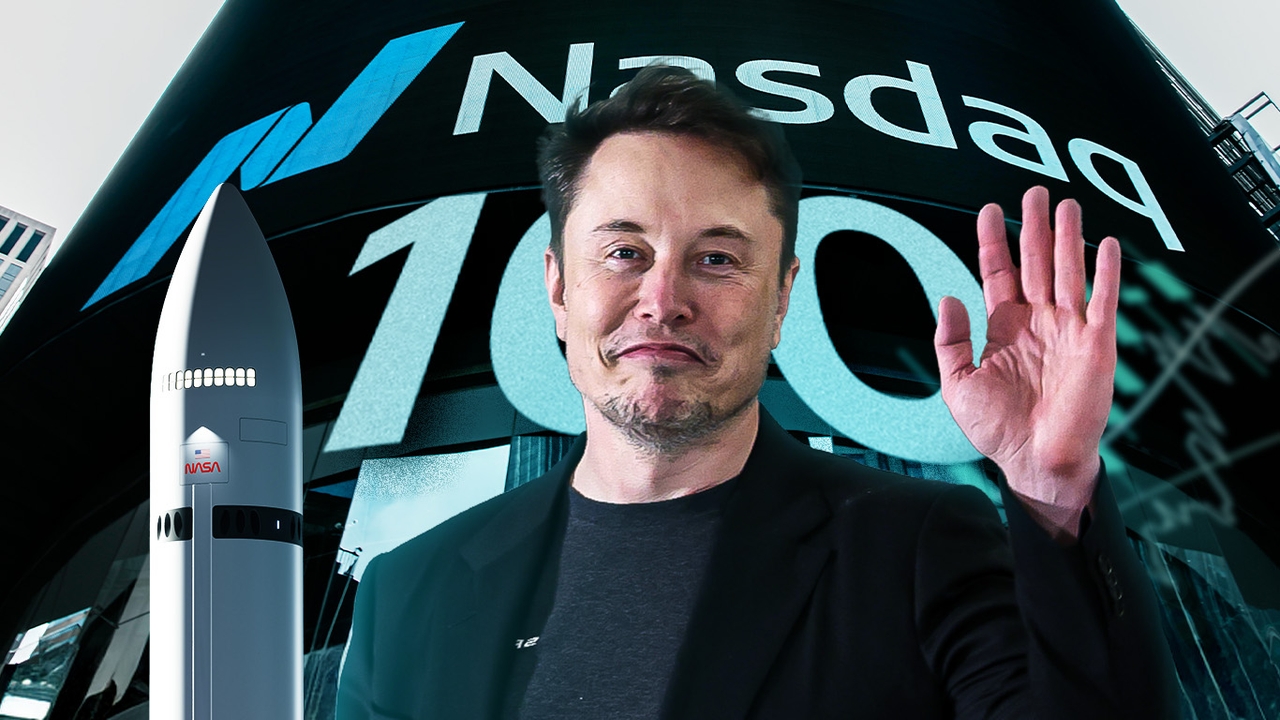
SpaceX (SPCX) stock is set to be included in the Nasdaq 100 index before the U.S. stock market opens tomorrow (7 July) under Nasdaq’s Fast-Track rules, designed for large newly listed companies (Mega-cap IPOs). This inclusion marks a major milestone for SpaceX, which debuted with a valuation close to $2 trillion, instantly making it one of the world's most valuable companies.
. . .Asia Plus SecuritiesAsia Plus Securities views this index inclusion as likely to attract around $4.3 billion from passive funds that track indices, since these funds must adjust their portfolios to reflect the Nasdaq-100 components. This could support SpaceX’s share price through both fund buying and short-term speculative interest.
The key point of this index inclusion is not just that SpaceX becomes a new Nasdaq-100 member, but that Nasdaq has revised its stock selection criteria for the first time to accommodate IPOs of trillion-dollar companies.
Previously, newly listed companies had to wait months or nearly a year before being eligible for Nasdaq-100 inclusion. However, on 1 May, Nasdaq announced the Fast Entry Rules, allowing large market cap companies to be included within 15 trading days of their market debut.
This change reflects Nasdaq’s intention for the index to more quickly mirror the capital market structure. In recent years, many private tech companies have grown to trillion-dollar valuations before going public. Under the old rules, index fund investors would miss out on holding these large companies for a long time.
Another reason global investors are watching SpaceX’s index inclusion is the expected inflow from passive funds. Currently, hundreds of billions of dollars in assets worldwide track the Nasdaq-100 via ETFs and index funds. When the index changes, fund managers must buy SpaceX shares to align their portfolios.
However, despite SpaceX’s nearly $2 trillion valuation, its free float—the proportion of shares publicly traded—is only about 3%. This limited float means fewer shares are available for trading, so fund buying could have a greater impact on the stock price than for typical large companies.
This factor could lead to an Index Inclusion Effect, where the stock price rises before and after the index addition due to fund buying, before later moving according to the company’s fundamental business performance.
Moreover, SpaceX’s index inclusion is viewed positively for the space economy theme, signaling growing recognition of the space industry as a core sector in global capital markets. Related stocks expected to benefit include Rocket Lab (DR: RKLB03) and AST SpaceMobile (DR: ASTS03).
For investors, it will be important to monitor not just initial buying on SpaceX’s index entry day but also whether passive fund inflows exceed market expectations. The persistently low free float may cause higher volatility than typical large stocks. Over the longer term, the growth and financial results of SpaceX’s space business will determine if its nearly $2 trillion valuation is sustainable.
Read more
Sources Reuters , Yahoo Finance , Business Insider
Follow the Facebook page: Thairath Money at this link -