

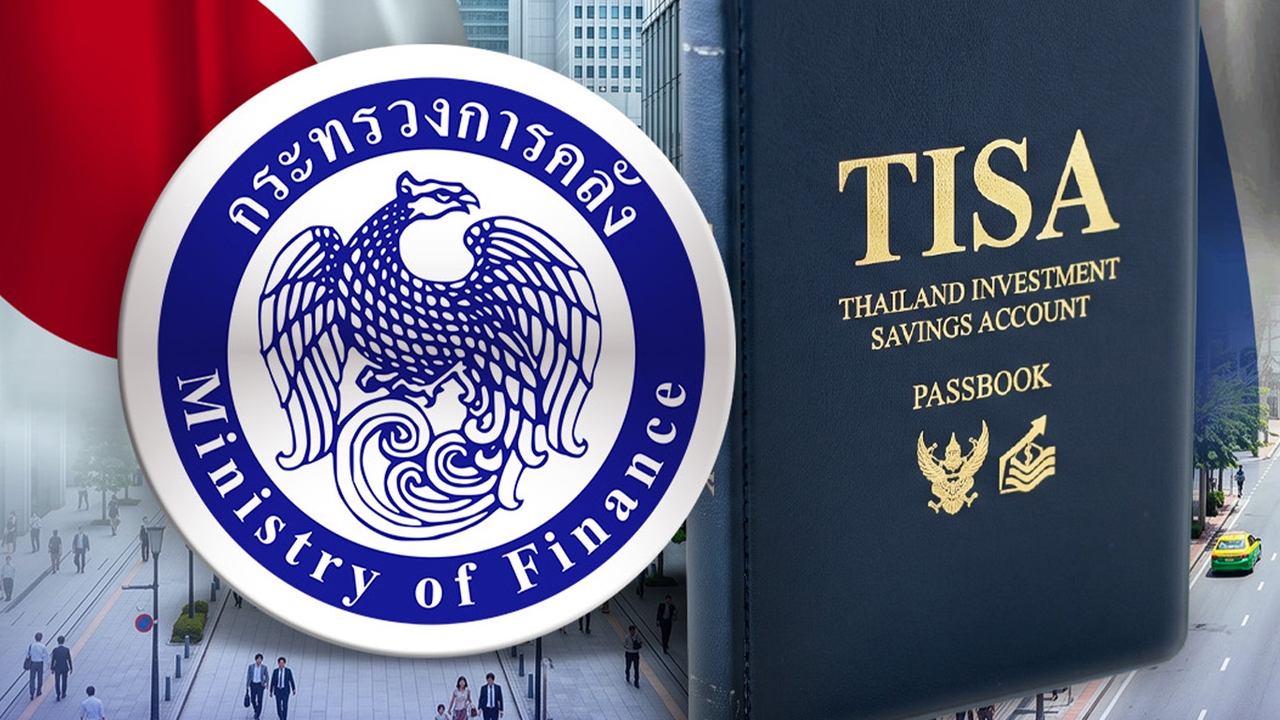
It is well recognized that Thailand is rapidly entering a super-aged society, while the financial structure of Thai households is quietly facing a crisis that many may overlook. Currently, citizens have savings totaling 16.72 trillion baht held in over 102 million bank accounts, earning an average return of only 1.5% to 2.0% per year, or even less.
When adjusted for actual inflation rates, bank deposit savings are effectively negative in real terms and gradually losing value over time. This means the savings that people have set aside for retirement may be insufficient to sustain their future living expenses.
This demographic and savings structural challenge is not new in Asia. Japan faced an aging society combined with an excess of bank deposits since the 1990s. Most citizens were attached to cash deposits and reluctant to take risks in capital markets.
Until the Japanese government decided to change the game by launching the Nippon Individual Savings Account (NISA) program in 2014, later upgraded to New NISA. This mechanism created a major turning point by permanently abolishing taxes on investment returns, successfully shifting Japanese investors towards long-term investing.
Recent statistics show over 28 million NISA accounts opened, channeling as much as 71 trillion yen into capital markets. Notably, most users are middle-class individuals with moderate to low incomes, and over 70% had no prior investment experience.
Building on Japan's success, Thailand's Securities and Exchange Commission, together with the Ministry of Finance, the Stock Exchange of Thailand, and the Federation of Thai Capital Market Organizations (FETCO), are preparing to promote the Thailand Individual Savings Account (TISA) as a key milestone in reforming Thailand's financial structure. The goal is to shift policy from encouraging bank deposits to fostering a culture of long-term investment.
Previously, Thailand's tax deduction measures such as RMF were limited to purchases through "mutual funds" only. However, TISA will break these limitations and become a game changer for the Thai capital market with the following core structure.
From an economic perspective, some may question why the government is willing to forgo tax revenue in this way. The answer is that this is a mechanism of "accepting tax revenue loss today to save budget in the next 20-30 years." If the public's savings structure remains weak, the government will bear enormous fiscal burdens for welfare, social assistance, and elderly healthcare. Using tax incentives to encourage individuals to build their own retirement wealth portfolios reduces the state's long-term fiscal burden and redirects massive deposit funds into capital markets to drive business growth.
Regarding recent progress, the Ministry of Finance, led by Dr. Arkhom Termpittayapaisith, Deputy Prime Minister and Minister of Finance, plans to eliminate the concept of tax deduction multipliers to ensure equal tax benefits for all income levels, aiming to finalize all benefit criteria by September 2026.
Meanwhile, from an investment strategy analysis viewpoint, once TISA's regulations are clarified and officially launched, long-term savings flowing into the Thai capital market will provide liquidity support and help reduce volatility in the stock market over time. The stock groups expected to benefit most include large-cap stocks with strong fundamentals, consistent high dividend payouts, and ESG-compliant business operations, aligning with long-term retirement investment goals. These include commercial banks (BBL, KTB, KBANK, SCB), energy sector (TOP, PTTEP, BCP), and telecommunications (ADVANC, TRUE).
In conclusion, TISA is not merely a new tax deduction measure but a fundamental pillar to enhance the financial stability of Thai citizens and boost the competitiveness of the Thai capital market simultaneously. For new investors, it marks an important starting point for long-term wealth planning. For existing investors, it signals a positive development that will help drive and build confidence in Thailand's economic system in the future.
Sources: Bloomberg, Bualuang Securities, Ministry of Finance, SEC, Stock Exchange of Thailand, Revenue Department.
Follow economic and government policy updates with ThairathMoney athttps://www.thairath.co.th/money/economics/thai_economics
Follow the Facebook page: Thairath Money at this linkhttps://www.facebook.com/ThairathMoney