

Just a few weeks ago, investors worldwide were still questioning whetherthe era of the 7 Magnificent—or 7 'angels'—was coming to an end. Large technology stocks were heavily sold off after companies such as Meta, Alphabet, Microsoft, Amazon, and Oracle competed to announce AI investment budgets worth hundreds of billions of dollars, raising market concerns that capital expenditures (Capex) were growing faster than the revenues they would generate.
Especially in July, the AI trade momentum faltered as investors rotated funds out of growth stocks into small caps, value stocks, and European markets. It became one of the months when tech stocks experienced some of their heaviest selling, with the Technology Select Sector SPDR ETF (XLK) falling nearly 8%.
Goldman Sachs noted that the key factor was not that AI was out of favor, but that the free cash flow of major tech companies was pressured by massive investments. This led investors to accept lower P/E ratios, triggering a derating for the first time since 2009. The S&P 500 Equal Weight Index outperformed the market-cap weighted S&P 500 by more than 7.3%, indicating that market gains were broadening beyond Mega Cap stocks, unlike the concentrated gains of recent years.
Additionally, the premium for global software stocks dropped to about 20%, down from nearly 200% during the dot-com peak. Meanwhile, the five largest US companies by market value—Nvidia, Apple, Microsoft, Alphabet, and Amazon—have P/E ratios only slightly higher than the other 495 S&P 500 companies, marking the cheapest valuations in over a decade.
However, the market picture shifted quickly after the latest quarterly earnings were released. Despite Meta raising its 2026 Capex target to $135-145 billion and Alphabet increasing its full-year target to $195-205 billion, signaling further increases in 2027, their revenues and profits came out stronger than analysts anticipated.
Jed Ellerbroek, portfolio manager at Argent Capital Management, stated that investors now believe the AI investments by major cloud computing companies will yield worthwhile returns in the long term. The market interprets AI Capex not just as a cost, but increasingly as a driver of business returns.
He highlighted that demand for accelerated computing and data centers still far exceeds supply, and this gap is unlikely to close soon, while chip manufacturers and cloud service providers continue to grow rapidly.
Signs of renewed confidence in tech stocks were clear on the first trading day of August, when the Dow Jones surged 693 points to close at a record high. The S&P 500 rose 1.48%, just about 0.3% shy of its all-time high, while the Nasdaq, heavily weighted with tech stocks, gained over 2%.
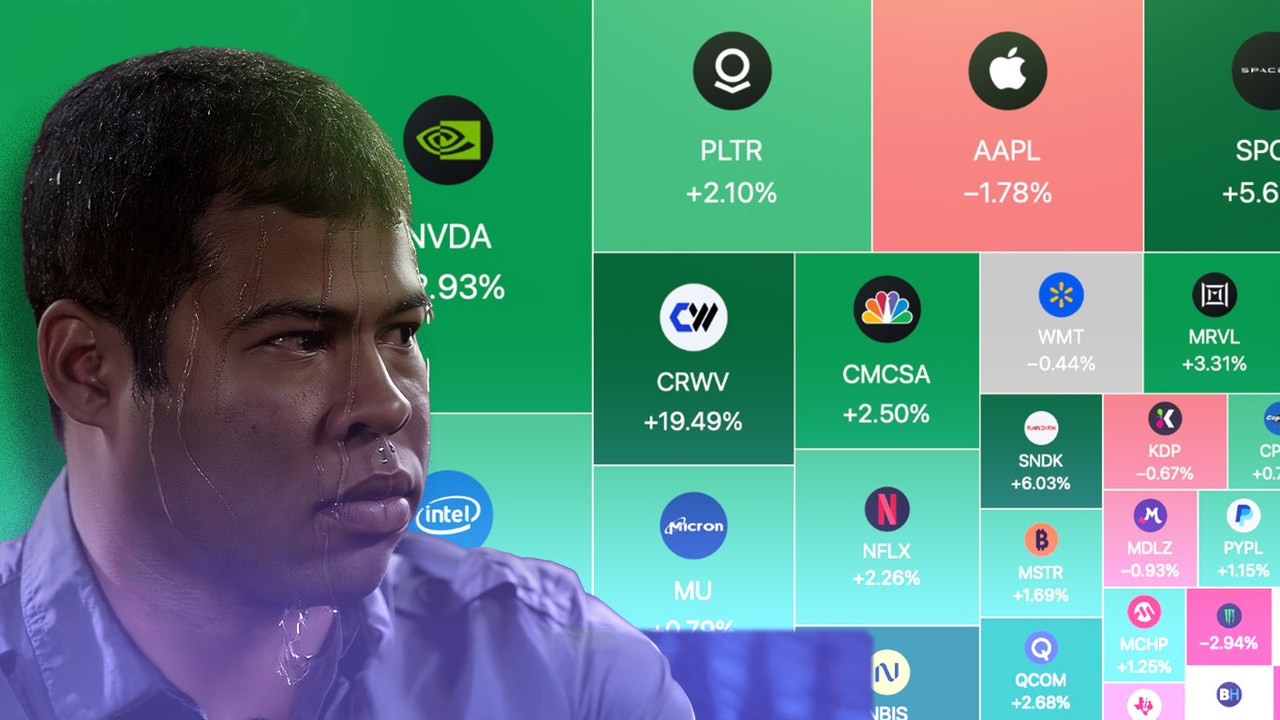
The market leaders remained the 7 Magnificent group: Meta jumped over 6%, Microsoft, Alphabet, and Amazon each rose about 4-5%, and Nvidia gained nearly 3%. Only Apple declined, falling 1.8%, but the group’s combined market value increased by more than $678 billion in one day.
This rebound reflects a temporary easing of concerns about AI overinvestment. Investors are growing more confident that the hyperscalers’ heavy AI spending may be translating into real revenue and profit growth, as recent earnings from several companies have exceeded market expectations.
Beyond strong Q2 results, the market was also supported by falling oil prices after President Donald Trump canceled plans to attack Iran, easing geopolitical tensions. Additionally, US Treasury yields declined.
Read more
Although tech stocks have rebounded, many research firms see a shift in investment themes. They expect the market in the second half to broaden, with other sectors gaining prominence rather than concentrating solely on the 7 Magnificent, as in the past two years.
Previously, analysts atCitipointed out that investors might no longer achieve returns by buying the entire group as they did from 2023 to 2025. Going forward, winners may not be all Big Tech companies but those able to convert AI investment into actual revenue and profits.
Meanwhile, Goldman Sachs expects rotation into other stocks to continue even as capital flows back to Hyperscalers, given the US economy’s strength. Mid and small caps are beginning to benefit, and merger and acquisition (M&A) activity is picking up.
The key question for investors in the second half is which of the 7 Magnificent companies will first convert AI Capex into AI cash flow. After a major valuation reset, many Big Tech stocks are trading at their cheapest levels in over a decade.
Recent earnings indicate that the hundreds of billions poured into AI may be starting to generate real returns. If this trend continues, the current tech stock rebound may not be a short-term bounce but the start of a new competitive cycle in the AI era.
Source information CNBC , Yahoo Finance [1] , [2] , Financial Times
Follow the Facebook page: Thairath Money at this link -