

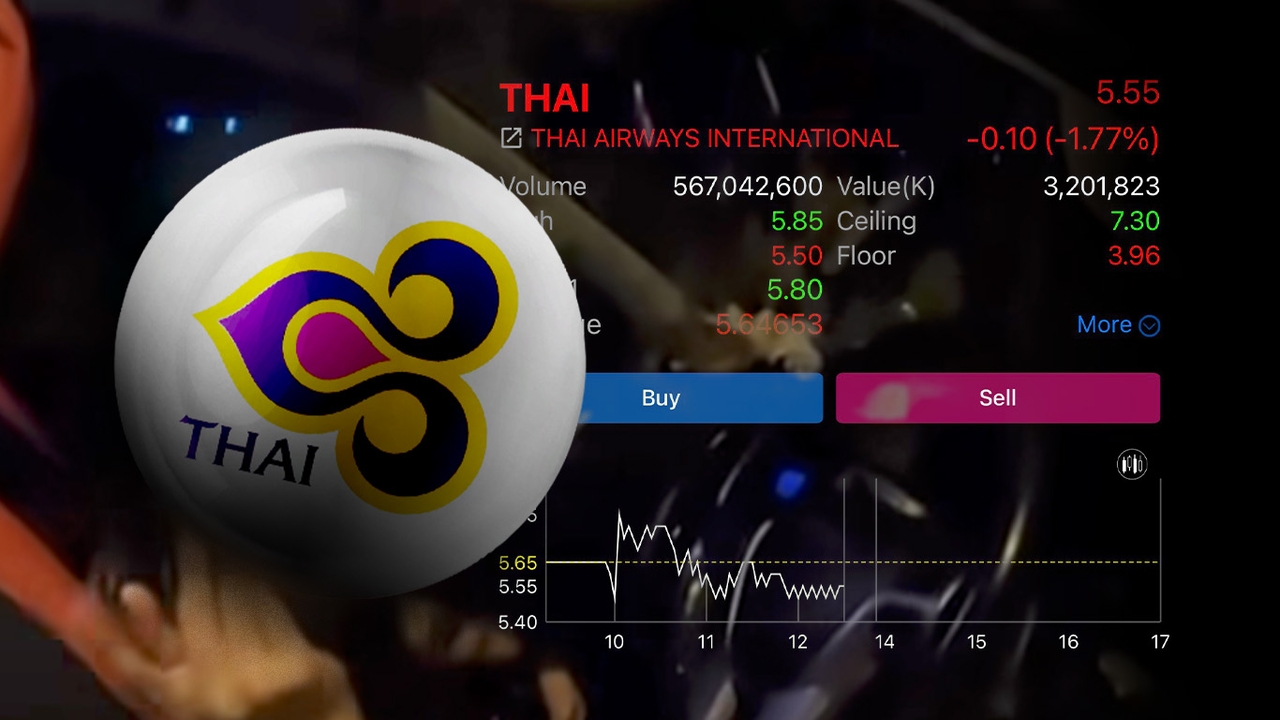
After much speculation… many expected a steep drop! But surprisingly, in the morning trading session today (4 August 2026), shares of Thai Airways International Public Company Limited (THAI) closed at midday at 5.55 baht, down only 0.10 baht or -1.77%, on the first day of unlocking a large 75% block of debt-to-equity conversion shares.
This left many skeptics puzzled because the feared sell-off of tens of billions of shares barely affected the share price. It seems creditors either forgot to sell or the market had already priced in the bad news in advance!
Looking back at the timeline, THAI has been closely watched and under sustained selling pressure, dropping the most among SET50 stocks, with its share price falling over 18.71% since early 2026.
The main reasons investors rushed to sell ahead were two major storms: soaring jet fuel costs due to geopolitical issues and fears surrounding this large "lock-up" share batch.
over the past decade, Thai Airways faced continuous accumulated losses caused by fierce competition, escalating operating costs, and internal structural problems.
The COVID-19 crisis became the final straw, draining company liquidity, leading to Thai Airways filing for rehabilitation under the Central Bankruptcy Court in 2020, triggering a historic corporate restructuring.
This included debt restructuring negotiations, workforce reductions by over half, and downsizing and reconfiguring the fleet to reduce complexity and maintenance costs.
As the pandemic eased and global tourism recovered, Thai Airways managed a strong turnaround to profitability, allowing the company to achieve its rehabilitation plan goals faster than scheduled.
Eventually, the Central Bankruptcy Court ordered the termination of the rehabilitation process, and the Stock Exchange approved the resumption of THAI shares trading normally.
A key factor was the creditors’ "debt-to-equity conversion," which restored positive shareholder equity and fundamentally changed Thai Airways’ shareholder structure.
The resumption of THAI share trading came with a crucial condition: a lock-up period prohibiting sales to stabilize the share price initially.
Shares resulting from debt-to-equity conversion and those held by strategic shareholders were collectively restricted from selling, totaling 26.4 billion shares (93.3% of total shares).
The first 25% tranche was unlocked on 3 February 2026, and 4 August 2026 marked the first day the remaining 75%, totaling 19,802,574,214 shares (70% of total), were freed from the sales restriction.
Creditors allocated shares from the debt conversion include major national institutions such as the Ministry of Finance, Bangkok Bank (BBL), Krung Thai Bank (KTB), and various savings cooperatives like the Electricity Generating Authority Savings Cooperative and PTT Savings Cooperative, all former bondholders.
Market concern over this lock-up batch is high because the debt conversion cost was only 2.5452 baht per share, leading retail investors to worry that creditors might heavily sell to take profits and return cash to their organizations. Nearly 20 billion shares represent a massive supply that could pressure the trading board anytime.
However, during the morning session today (4 August 2026), THAI shares closed at 5.55 baht, down only 0.10 baht or -1.77%, despite major news of unlocking the final batch of debt-to-equity shares entering the market.
Although pressured by many factors, in-depth analysis shows the market leaning positive. The Investment Analysts Association (IAA Consensus) from 13 brokers recommends "buy" from 8 brokers, "hold" from 4, and only 1 "sell," with an average target price of 7.26 baht, ranging from 5.50 to 12.00 baht.
Analysts at Innovest X Securities advise cautious monitoring for low-risk investors but see an attractive buying opportunity if prices fall sharply to 4.10-5.80 baht, with a target price of 6.50 baht.
Q2/2026 normalized profit is estimated at 502 million baht, down 93% year-on-year and 94% quarter-on-quarter, mainly due to jet fuel prices averaging 159 USD per barrel, though about 1 billion baht in tax income helped offset losses.
Regarding the lock-up shares, selling pressure is viewed as short-term volatility, based on a previous episode where prices dropped 14% and took about 14 days to recover to prior levels, since fundamentals remain unchanged.
Pay Securities raised its recommendation to "buy" with a target price of 6.20 baht, suggesting purchasing after the creditor sell-off on 4 August, expecting Q2/2026 net profit of 407 million baht, a 97% decline year-on-year due to fuel price pressure.
However, full-year 2026 net profit estimates were raised 77% to 18.189 billion baht, as global oil prices have fallen faster than expected since late June, combined with airlines promoting ticket discounts to attract passengers in the second half, a key growth factor going forward.
Read more stock and investment news with Thairath Money at
Follow the Facebook page: Thairath Money at this link