

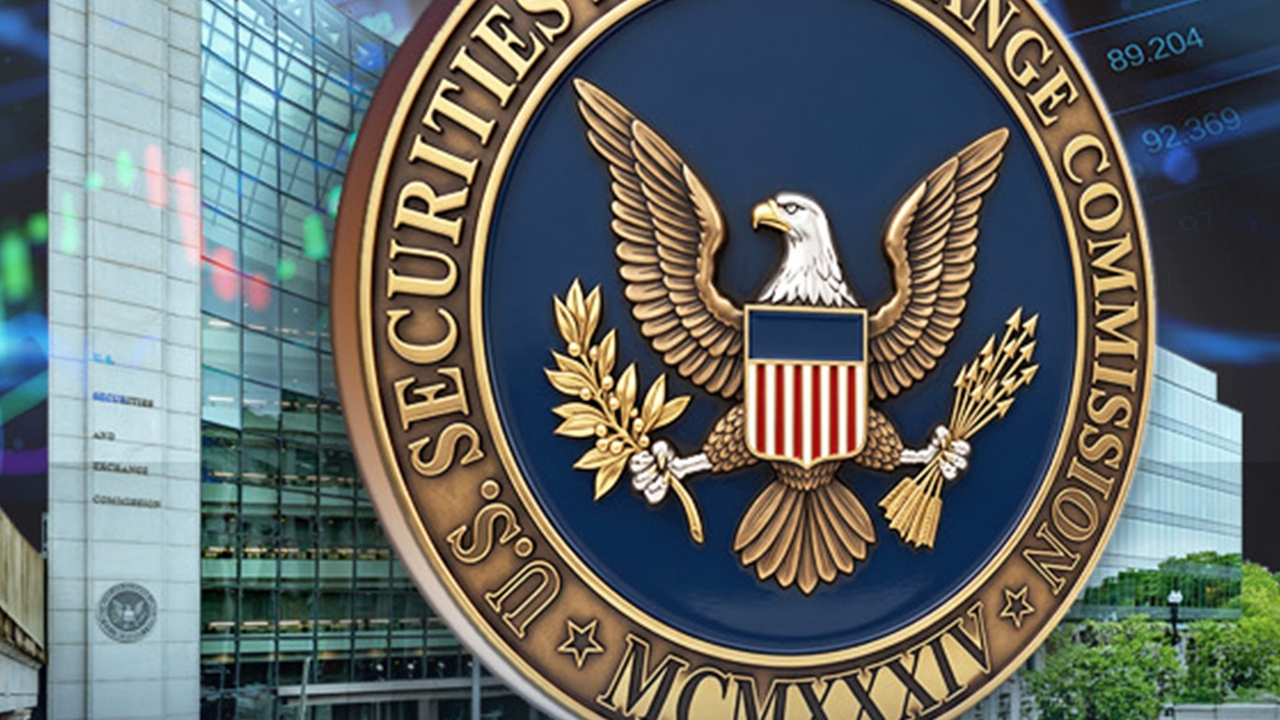
The U.S. stock market is approaching a significant turning point as the U.S. Securities and Exchange Commission (SEC) prepares to issue a regulatory framework for trading shares of companies listed on Wall Street calledInnovation Exemption.This could pave the way for tokenized securities to be traded more easily on blockchain systems.
This move is not just about digitizing "stocks" but challenges the entire infrastructure of the U.S. capital markets—from market hours, intermediaries, settlement processes, to who has the right to create tokens referencing a company's stock.
Recent reports indicate the SEC is considering allowing Third-party Tokens, which are tokens created by third parties that can reference prices of publicly listed stocks even without direct support or consent from the issuing company.
If implemented, this would be a major experiment for the U.S. to see how much stock markets can expand beyond traditional capital market structures into crypto and blockchain-based infrastructures.
Tokenizing real-world assets, Real-World Asset Tokenization (RWA), has become one of the hottest trends in crypto markets over the past year. The concept involves creating digital assets that represent real assets such as stocks, bonds, real estate, and private loans.
Supporters highlight advantages like 24/7 trading, faster settlement, fewer intermediaries, and lower overall system costs, potentially improving market efficiency and offering new choices for investors.
This development is viewed not merely as a cryptocurrency idea but as applying the same technology to transform Traditional Finance (TradFi) and become part of capital markets, potentially allowing familiar stocks to be tokenized and traded on blockchain networks in the future.
The SEC has started allowing traditional capital markets to experiment with tokenization, including approving the Depository Trust & Clearing Corporation (DTCC) to tokenize certain high-liquidity assets on approved blockchains for a three-year period.
In March, the SEC approved Nasdaq's rule change to support trading of tokenized securities. Nasdaq itself has developed Tokenized Equity approaches maintaining listed companies as the center of stock ownership structures. The NYSE is moving similarly, developing tokenized securities trading platforms and blockchain-based settlement systems.
While the SEC is progressively embracing these technologies and approving operations on a case-by-case basis, the market still lacks a unified regulatory framework. The agency continues to emphasize that tokenized assets remain securities subject to U.S. federal securities laws, and currently, tokenized U.S. stocks are not officially tradable on U.S. markets.
Nonetheless, several companies are actively testing these models, such as Robinhood Markets, which launched tokenized stocks for European customers last year, covering private companies like OpenAI and SpaceX.
Coinbase also launched tokens backed 1:1 by U.S. stocks on blockchain in June, allowing holders to trade, redeem for underlying assets, and receive dividends.
The Exemption framework is seen as a key step to broaden institutional and investor participation in tokenization markets and could mark a pivotal moment establishing clear, unified regulatory pathways for token asset development in the U.S.
An interesting aspect of the Innovation Exemption proposal is allowing third-party tokens that reference prices of listed companies' stocks without direct approval or consent from those companies.
These tokens act as new instruments for speculating on stock price movements, tradable on decentralized crypto platforms. However, they might not grant shareholder rights like voting or dividends. The SEC proposal suggests platforms unable to provide these rights may be barred from listing such tokens.
If the SEC permits third parties to create tokens referencing listed company stocks without company consent, it would open a multi-year experiment to see if a parallel market for listed stocks can operate outside some regulatory frameworks designed to ensure price fairness, transparency, and investor protection.
The SEC classifies Tokenized Securities into two types:
The second type raises controversy because anyone could create tokens referencing companies like Apple, Amazon, or Nvidia without their permission, potentially resulting in multiple token versions of the same stock trading on various DeFi or crypto exchanges.
In the future, "Apple stock" might not only trade on Nasdaq or NYSE but exist as Apple Tokens on multiple blockchains, tradable 24/7, changing investment perspectives to keep pace with tokenization.
U.S. stock markets currently have set trading hours, while crypto markets operate 24/7. If stocks are tokenized and tradable on blockchain, investors could buy or sell U.S. stock-referenced assets overnight, on weekends, or holidays.
This could significantly alter investment behavior; for example, if major news about Nvidia breaks on a Saturday, investors wouldn’t have to wait until Monday to react. Continuous trading could increase volatility and eliminate current market breaks.
Tokenization can simplify the traditional capital markets back-end, which involves exchanges, brokers, clearinghouses, custodians, and multiple intermediaries.
Blockchain can serve as infrastructure for ownership records and settlements, speeding processes and reducing intermediaries. If widely adopted, this could lead to not only 24/7 trading but lower transaction costs and faster settlements, pressuring traditional market players to adapt, including exchanges, brokers, and post-trade service providers.
Another key effect is improved accessibility. Tokenization can fractionalize expensive assets into smaller units and provide access via digital infrastructures.
With efficient connectivity, investors worldwide could more easily access U.S. assets through digital platforms, broadening the U.S. stock market’s global investor base and blurring lines between U.S. stock and crypto markets.
The biggest concern may be market fragmentation. If third parties can create many different tokens referencing the same company’s stock, these tokens could trade across various platforms and blockchains.
If multiple Apple tokens exist, how can investors be sure that prices accurately reflect Apple’s true stock value? Price discrepancies could lead to arbitrage and complicate identifying the real asset price.
Industry players like Citadel Securities and SIFMA warn that broad rule exemptions for stock tokens might weaken crucial Know Your Customer (KYC), Anti-Money Laundering (AML), and investor protections. Without sufficient standards for market linkage and price transparency, token markets risk fragmentation and disorder.
Brett Redfearn, Securitize’s chairman and former SEC official, highlights the risk that third-party tokens without company involvement could create unlimited token “wrappers” for the same stock, forcing investors to reconsider where the true stock price lies.
Investors should beware that tokens do not always represent actual shares. Some tokens may only reflect stock prices without conferring shareholder rights like voting or dividends, meaning two assets tracking the same stock’s price could differ legally.
This underscores the importance of SEC’s regulatory framework, as platforms unable to provide appropriate rights to token holders may lose authorization to list these assets.
Another area to watch is the integration of tokenized securities into Decentralized Finance (DeFi), where users can trade, borrow, and lend digital assets via smart contract protocols.
If tokenized stocks enter DeFi, they could be used as collateral for loans or to create new financial products. This may blur lines between stock markets, crypto markets, and DeFi but also raise risks from smart contract vulnerabilities, hacking, and significant asset losses from cyberattacks.
If the SEC fully advances the Innovation Exemption, the U.S. capital markets may enter a major trial phase, not just tokenizing stocks on blockchain but "creating a new version of capital markets" operating 24/7, potentially transforming how investors worldwide buy, hold, and trade assets.
However, the Innovation Exemption framework is still under review, and conditions may change before official announcement. An SEC spokesperson stated the agency has consulted hundreds of market participants and is gathering broad feedback to develop suitable regulations for new trading models. The path forward remains to be seen.
Source information Bloomberg , Yahoo Finance , Reuters , SEC
Follow the Facebook page: Thairath Money at this link -