

When the stock market rises, people want to buy; when it falls, they start to worry. Many try to time when to buy or sell, but for long-term investing, constantly trying to predict the market may not be the answer.
Because investors' lost returns don’t come solely from bear markets but also from fees, economic uncertainty, and their own emotions that may lead to poor decisions during volatile periods.
Therefore, instead of asking “Which stock is good?”, it’s better to ask how to structure your portfolio and plan investments so you can progress long-term without constantly guessing the market.
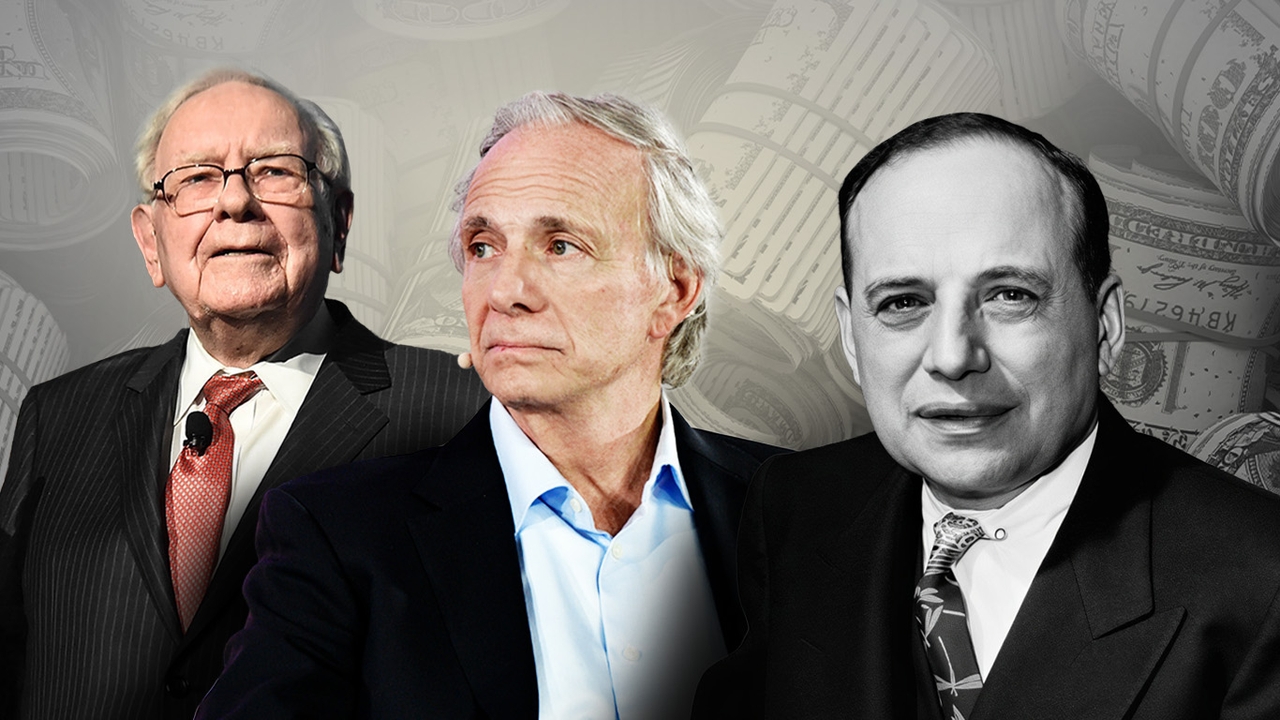
The ideas of three global investors—Warren Buffett, Ray Dalio, and Benjamin Graham—may help answer this. Each has a different perspective, but combined they form an easy-to-understand three-step investment approach that can be practically applied.
When people think of Warren Buffett, many imagine individual stock picking. But Buffett’s advice for ordinary investors is much simpler: there’s no need to try to pick stocks better than the market. Instead, invest through low-cost index funds or ETFs that diversify across many stocks.
Especially the S&P 500 index. The key reason is that investing always involves “costs” such as management fees, trading fees, and taxes. Higher costs reduce the net returns investors ultimately receive.
This was clear from Buffett’s 10-year bet with Protégé Partners from 2008 to 2017, starting with $1 million.
The results showed that:
The key lesson is not just that “index funds beat hedge funds,” but that costs greatly affect long-term wealth. The longer you invest, the more fee differences accumulate and impact returns.
So how did Buffett allocate money?
His well-known approach, seen in the portfolio for his wife after his death, was to invest 90% in a low-cost S&P 500 index fund and 10% in short-term U.S. government bonds. The 10% isn’t just for safety but acts as “cash reserves” to use during severe market downturns without forced selling at low prices.
Buffett’s formula is simple: choose low-cost, broadly diversified tools and let time help build wealth.
If Buffett answers “What to invest in,” Ray Dalio answers “What if the world doesn’t go as expected?”
Ray Dalio, founder of Bridgewater Associates, believes investors shouldn’t try to predict the future in just one way. Instead, design portfolios to handle various economic scenarios. His key idea, The Holy Grail of Investing, holds that combining assets with different returns and uncorrelated movements reduces risk without significantly lowering return potential.
Dalio views the economy through two key variables: whether growth is rising or falling, and whether inflation is increasing or decreasing. Combining these creates four main scenarios.
From this, Dalio created the All Seasons portfolio, designed to handle shifting economic environments. A well-known non-leveraged allocation is:
Interestingly, the portfolio holds 55% in bonds. This doesn’t mean Dalio dislikes stocks, but because stocks are more volatile than bonds, a larger bond allocation balances risk across asset types.
Backtests from 1984 to 2013 show the All Seasons portfolio averaged about 9.7% annual returns, volatility around 7.6%, and worst annual loss about -3.9%.
Dalio’s formula: don’t try to predict economic direction; build a portfolio ready for multiple scenarios.
Benjamin Graham, the father of value investing and Buffett’s teacher, categorized investors as either aggressive or defensive. For most who don’t have time to analyze financials or time the market daily, Graham said the goal isn’t the highest returns.
It’s to preserve capital, reduce heavy losses, and achieve reasonable returns without excessive effort. One practical method is Dollar-Cost Averaging (DCA).
Simply put, invest a fixed amount regularly, such as monthly, regardless of market ups or downs.
This removes the need to answer “Is the market expensive now?” each time before investing. Equally important to Graham is controlling emotions.
He personified the market as “Mr. Market,” a volatile partner who sometimes offers unrealistically high prices and other times very low prices out of fear.
Graham’s point is investors need not follow Mr. Market’s emotions. The market’s role is to offer prices, but that doesn’t mean investors must accept them. In the short term, prices are driven by fear, greed, and news, but long-term prices tend to reflect business fundamentals more.
Thus, DCA not only averages costs but also builds discipline and reduces emotional decision-making.
Graham’s formula: have a clear investment system and don’t let emotions decide for you.
Putting Buffett, Dalio, and Graham’s ideas side by side shows they address different questions.
Combined, these form a three-layer investment framework.
Layer 1: Tool selection - Buffett.
Put most money into broadly diversified, low-cost assets like index funds or ETFs. One example is 45% in broad market stocks like VOO or VTI to power long-term growth.
Layer 2: Diversification - Dalio.
Don’t let the portfolio rely on one asset type.
A sample allocation might be:
The key isn’t to follow these exact ratios but to hold various asset types that can handle different economic conditions.
Layer 3: Discipline - Graham.
No matter how good the portfolio, if investors change plans every time the market falls, it won’t perform as designed. Use DCA monthly and set rules in advance, like reviewing and rebalancing once a year or when asset weights deviate beyond set limits. This keeps investing from depending on emotions like “buy because market is good” or “stop because market is bad,” letting the system guide decisions.
Sources: Bualuang Securities, Berkshire Hathaway Shareholder Letters (1993, 2013, 2017), Javier Estrada (2016), Dalio’s book The Holy Grail of Investing, academic paper "The All Weather Story," MONEY Master the Game, The Intelligent Investor.
Read stock and investment news with Thairath Money to help you "Better Finances, Better Life" athttps://www.thairath.co.th/money/investment
Follow the Facebook page: Thairath Money at this linkhttps://www.facebook.com/ThairathMoney