

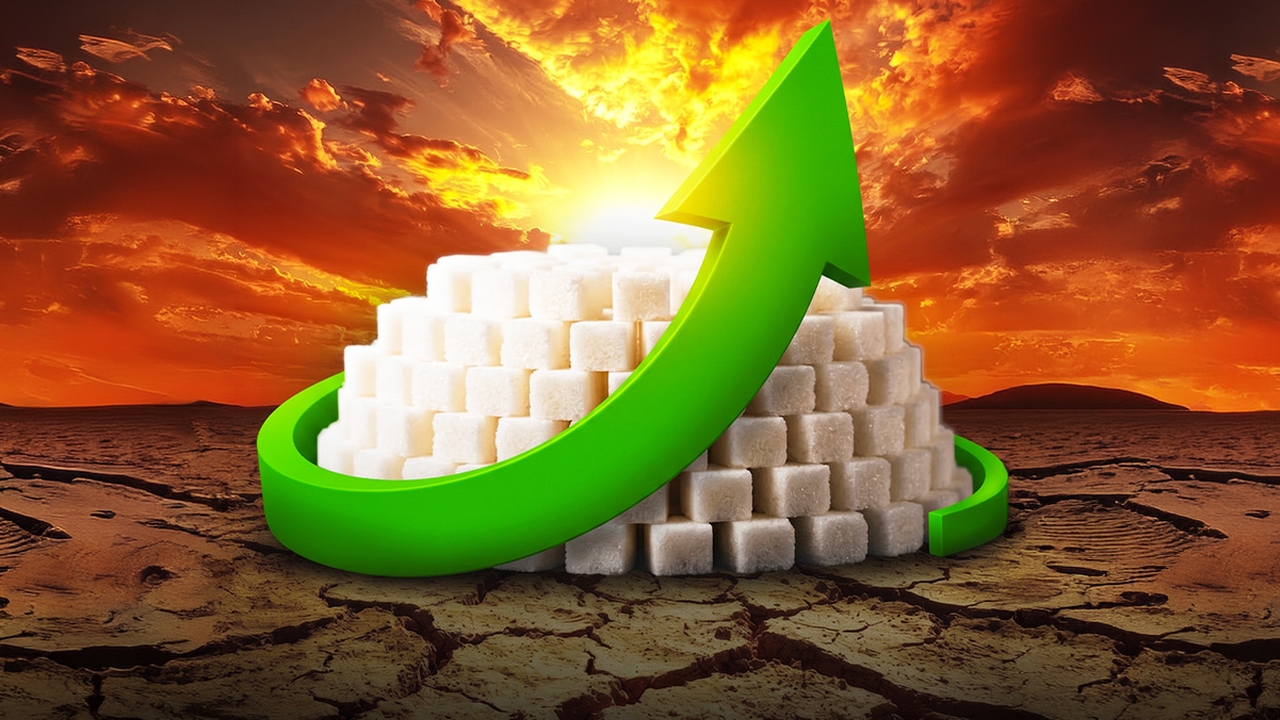
Sugar prices have become one of the hottest commodities in 2026 after surging over 20%, outperforming the S&P 500 amid concerns of a global sugar shortage caused by reduced output in Europe, Brazil, India, and risks from the El Niño phenomenon that may further affect major producers.
Sugar prices have become a market investors must watch closely, as Sugar Futures prices have risen sharply since the start of the year, generating returns that have surpassed the U.S. stock market. In August alone, sugar prices soared 21.5%, marking the strongest monthly increase since October 2010, when prices rose 24%.
Looking at the year 2026 so far, sugar prices have increased by about 20%, outperforming the S&P 500 index, which has gained nearly 13%.
The surge in sugar prices is driven not by a single factor but by simultaneous global supply risks, including heatwaves in Europe, decreased yields in Brazil, weather problems in India and Thailand—key sugar-producing and exporting countries—and the looming threat of El Niño that may worsen future yields.
The Food and Agriculture Organization of the United Nations reported that the global food price index rose in August, with one key factor being the increased price of sugar.
Sugar prices have risen due to concerns over production in several regions. In the European Union, unfavorable weather has led to lower key crop yields. There is also the risk of El Niño impacting major Asian producers, alongside declining sugar output in Brazil, a critical global market.
Another significant factor is that India, a major producer, is facing domestic supply challenges and has allowed duty-free imports of raw sugar.
The latest Sugar Balance Sheet report from the European Commission forecasts a 19% drop in EU sugar production for 2026/27, down to 13.4 million metric tons from 16.6 million tons in 2025/26. Meanwhile, Citi predicts a global sugar market deficit of 1.3 million metric tons, and Green Pool Commodity Specialists estimate the deficit could reach 3.2 million metric tons.
Although estimates vary between organizations, the market consensus is that the deficit trend is increasing.
Citi noted in its report that sugar is among the agricultural commodity markets with the most positive outlooks within those traded on the Intercontinental Exchange (ICE).
Citi has also raised its three-month sugar price target to 19 cents per pound, citing tightening sugar stocks, unexpected Indian sugar import programs, and worsening weather conditions in India, Thailand, and the European Union as key factors.
Looking ahead, the most closely watched risk is the El Niño phenomenon—climate changes causing ocean temperatures to rise and triggering extreme or erratic weather worldwide.
Concerns grow as Brazil, India, and Thailand—together accounting for about 70% of global sugar exports—face potential droughts during critical sugarcane growth periods, which could reduce yields, according to Goldman Sachs.
At the same time, excessive rainfall during harvest could disrupt fieldwork, lowering the amount of sugar produced.
India is currently experiencing below-normal rainfall in key sugar-producing areas. A weak monsoon may reduce reservoir levels, causing many farmers to hesitate to plant sugarcane next season, as it requires substantial water.
Thailand, another major global sugar producer, may face erratic rainfall and water shortages if Pacific Ocean temperatures remain abnormally warm. Thus, climate risks are not confined to one nation but affect multiple regions critical to the global sugar supply chain.
Additionally, rising energy prices affect choices in production. In Brazil, sugarcane can be used to produce both sugar and ethanol fuel, and higher oil prices make ethanol production more attractive.
Rob Johansson, Director of Economics and Policy Analysis at the American Sugar Alliance, explained that when oil prices rise, countries producing ethanol from sugarcane are incentivized to increase biofuel production, exporting less sugar to the world market.
If oil prices exceed $90 per barrel, countries like Brazil, which heavily support the ethanol industry, may boost biofuel output, resulting in less sugar entering the global market and pushing sugar prices higher.
Brazil alone accounts for about half of global sugar exports, so decisions by its mills on whether to produce sugar or ethanol directly impact global market balance.
Goldman Sachs also notes that drought-affected corn production may lead to increased use of sugarcane for ethanol, as corn is another key biofuel feedstock.
This means investors in the sugar market are betting not only on supply and demand but also on global climate conditions.
As Europe faces heatwaves, India experiences water shortages, Thailand risks erratic rains, and Brazil chooses between sugar and ethanol production, the global sugar market balance could shift due to multiple simultaneous factors.
This explains why sugar is becoming one of the hottest commodities in 2026.
Source:CNBC
Follow stock and investment news with Thairath Money to help you achieve “good finances, good life” athttps://www.thairath.co.th/money/investment
Follow the Facebook page: Thairath Money at this linkhttps://www.facebook.com/ThairathMoney