

Banpu Public Company Limited (BANPU) states that energy security and the transition to clean energy are two factors that must be driven simultaneously.
The company focuses on sustainable cash flow in its operations and seeks opportunities to expand its base to meet the soaring electricity demand fueled by global growth in AI technology and Data Centers.
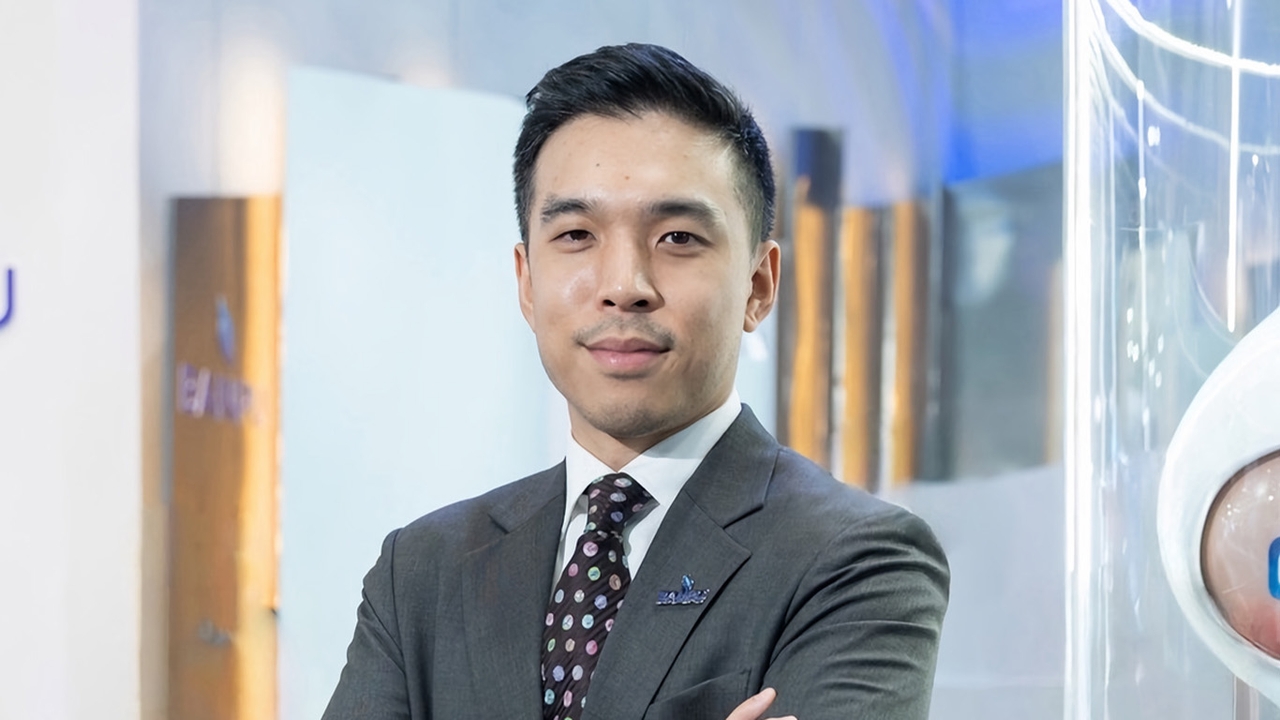
Sinn Wattanasuksakul, Chief Executive Officer of Banpu Public Company Limited (BANPU), said that amid geopolitical tensions and volatile global energy prices, the energy transition must balance power system stability with carbon reduction goals.
Banpu aims to restructure cash flow by reducing its coal business share, currently about 50%, and increasing contributions from natural gas and electricity businesses, targeting over 50% cash flow from these sectors in the future.
In the US market, Banpu, through BKV Corporation, has developed the U.S. Closed-Loop Gas model in Texas, linking natural gas sources in the Barnett shale with a 1.5-gigawatt combined cycle gas turbine power plant.
Along with a carbon capture, utilization, and storage (CCUS) project, this setup delivers carbon-neutral natural gas covering Scope 1, 2, and 3 emissions, addressing new-era customer needs.
Furthermore, rapid growth in AI and Data Centers is expected to increase natural gas demand in the US by 25% by 2030, and electricity demand in the ERCOT market of Texas is projected to grow over 21 times between 2026 and 2032.
BKV has developed the Integrated Energy Complex on more than 6,200 acres in Jack County, Texas, combining power generation with carbon capture to meet the rapidly increasing electricity demand in ERCOT. It has already applied for grid connection approvals for both production and consumption.
The battery energy storage system (BESS) business is crucial to address the intermittency of renewable energy, acting like a large power bank for the grid to ensure power stability and continuity up to 99.99%, a key standard required by AI and Data Center customers.
Currently, Banpu Group has ten battery farm projects across four key countries: Japan, Australia, the US, and China. It plans to expand investments in renewable energy and BESS platforms in China from late 2026 to early 2027, responding to relaxed regulations in China's deregulated energy markets and Data Center growth.
In Thailand, the market is fully ready to adopt the BESS model and ecosystem partnerships immediately. Thailand is well-positioned to support Data Center and AI growth as the government begins easing key policies such as Direct PPA and revising the Power Development Plan.
Banpu is ready to bring comprehensive energy solutions, including modular gas engines to accelerate power delivery within 1–2 years.
It is preparing to introduce BESS platforms to guarantee 99.99% power system stability, supported by local battery manufacturing plants and services such as cooling technologies and energy-saving solutions, providing sustainable relief for Thailand's Data Center energy bottlenecks.
In the US market, BKV has successfully operated three carbon capture and storage projects: Barnett Zero, Cotton Cove, and Eagle Ford, targeting a carbon storage rate of 1.5 million tons of CO2 annually by 2028.
The CCS business in the US is highly profitable due to clear government financial incentives via the 45Q tax credit, offering $85 per ton of CO2 sequestered underground, generating economic value of $5–10 added GDP for every $1 invested.
In Thailand, Banpu sees significant opportunities to apply CCUS technology to reduce emissions in the energy sector and manage the country's electricity costs over the long term.
However, the emergence of CCUS in Thailand requires clear initial government support, including a defined policy framework and financial incentives or tax benefits to mitigate early investment risks.
Until the industry matures and becomes self-sustaining in the private sector, appropriate government policies could enable Thailand to become a regional leader in CCUS technology.
Amid global LNG price volatility and supply chain constraints in the Middle East, Banpu sees a key opportunity to expand into LNG trading by leveraging its strength as a major natural gas producer in the US, with infrastructure directly linked to the southern coastal hubs for LNG processing and export.
Banpu plans to use its US-based team and strong demand networks in Asia—including Thailand, Indonesia, South Korea, and Japan—to match US gas supply with regional demand, providing new market options.
Currently, Banpu is studying business models and value chains focused on profitability with low investment before expanding into full-scale LNG trading.
Read stock and investment news with Thairath Money for your "Better Finances, Better Life" athttps://www.thairath.co.th/money/investment
Follow the Facebook page: Thairath Money at this linkhttps://www.facebook.com/ThairathMoney