

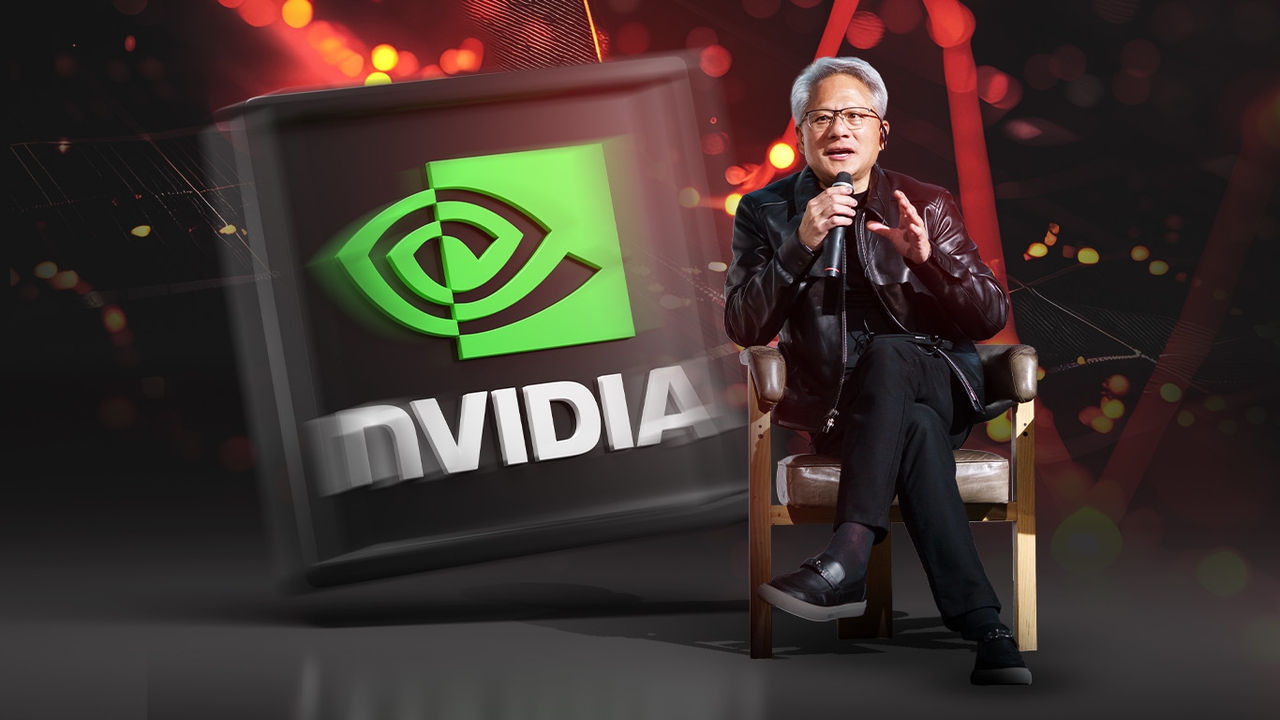
Jensen Huang, Nvidia's CEO, admitting to an extramarital relationship with a woman suspected of being a Chinese spy, raises critical questions about his future at the company he founded and what will happen if he steps down as CEO.
Nvidia shares dropped over 5% in Monday trading despite the broader stock market rising strongly after Jensen Huang sent a message to employees admitting to the extramarital affair and revealing that the board has begun investigating whether he has been targeted by foreign intelligence agencies.
However, Nvidia's board issued a statement affirming their continued confidence in Jensen Huang and stating, "At this time, there is no reason to believe that national security or Nvidia’s confidential information has been compromised or leaked."
Although Nvidia confirmed Huang will remain leading the company during the investigation, pressure on the company continues to mount, especially as Nvidia has been a key AI chip maker driving the AI surge over the past four years.
Huang is highly influential over Nvidia and is virtually the sole public face of the company, while internally there is no clear second-in-command ready to take over from him.
Additionally, Huang is one of the most active U.S. advocates for AI technology, playing a major role in funding AI infrastructure expansion industry-wide and maintaining close ties to former President Donald Trump.
These relationships have positioned Nvidia to be closely involved in policy discussions on AI development direction, security, and related regulations.
According to CNBC reports, analysts say, "Nvidia's problem is it lacks a clear successor to Jensen Huang. Previously, it was expected he would remain CEO for at least another 10 years."
Moreover, Huang controls and directs nearly all company operations from the top down, essentially orchestrating and managing everything within the organization.
Historically, Nvidia has maintained a relatively flat organizational structure, meaning it does not have a complex hierarchy like many large companies; the CEO is deeply involved in daily operations and often represents Nvidia in meetings with world leaders and at major global tech industry events.
Besides being co-founder and CEO, Jensen Huang also serves as Nvidia's chairman.
In September 2025, he told CNBC he had as many as 60 executives reporting directly to him, but internal documents now show 33 direct reports, including key figures such as
However, in terms of control through shareholding, Jensen Huang has relatively limited power compared to other major tech founders like Meta’s Mark Zuckerberg or SpaceX’s Elon Musk.
Currently, Huang owns about 3% of all issued and outstanding Nvidia shares and is one of 11 board members; this board has no official chairman.
Additionally, Nvidia's financial disclosures listing business risks do not identify Jensen Huang as a "Key Person" the company especially depends on.
Instead, Nvidia states broadly, "Our company relies heavily on the work of our long-serving senior management team."
Nvidia also notes succession risk in these documents: "If the company cannot effectively plan succession, transfer knowledge, or manage leadership and key personnel transitions smoothly, it could impact strategic planning, operations, and long-term success."
Nevertheless, Huang's influence over Nvidia is undeniable, and until now, succession issues have rarely been seriously discussed by analysts or investors.
Analysts from Rothschild & Co. Redburn say, Jensen Huang may be pressured to step down as CEO if the board’s investigation finds "significantly serious" issues beyond the undisclosed relationship.
However, analysts view Huang’s resignation as not an inevitable outcome of this investigation, especially considering his vital leadership role.
They add, "Nvidia's board must demonstrate independence and protect shareholders’ interests without destabilizing this founder-dependent company."
They further note, "The board’s initial statement reflects an attempt to balance these priorities simultaneously."
Meanwhile, several analysts expect this investigation might lead to changes in Nvidia’s governance and corporate oversight structure, including emergency succession planning to ensure business continuity in unexpected events.
Analysts from Melius Research state, Nvidia still has a highly capable and experienced management team, especially in networking, hyperscale cloud infrastructure, and high-performance computing (HPC) businesses.
The company also has top technology experts like Michael Kagan, Chief Technology Officer (CTO), and Bill Dally, Chief Scientist.
However, while these executives can maintain Nvidia’s operations, Huang's unique role in building investor and AI industry confidence is difficult to replace.
Melius Research analysts conclude, "Though these leaders can keep the company running, Jensen Huang’s unique presence and driving force remain essential to sustaining investor confidence in AI investment trends."
Sources:CNBC,The Guardian
Follow stock and investment news with Thairath Money for your "Better Finance, Better Life" athttps://www.thairath.co.th/money/investment
Follow the Facebook page: Thairath Money athttps://www.facebook.com/ThairathMoney