

"Why has Thailand allowed dangerous railway crossings to persist for decades?
Until the final solution was to remove trains from the city."
Following the tragic collision between a freight train and bus line 206 at the Makkasan-Phetchaburi crossing, which caused many deaths and injuries, alongside chaotic traffic scenes with motorcyclists squeezing through barriers and vehicles parking on tracks, many risked their lives to avoid long waits—a common sight before and after the incident, highlighting the failure of traffic management in inner Bangkok.

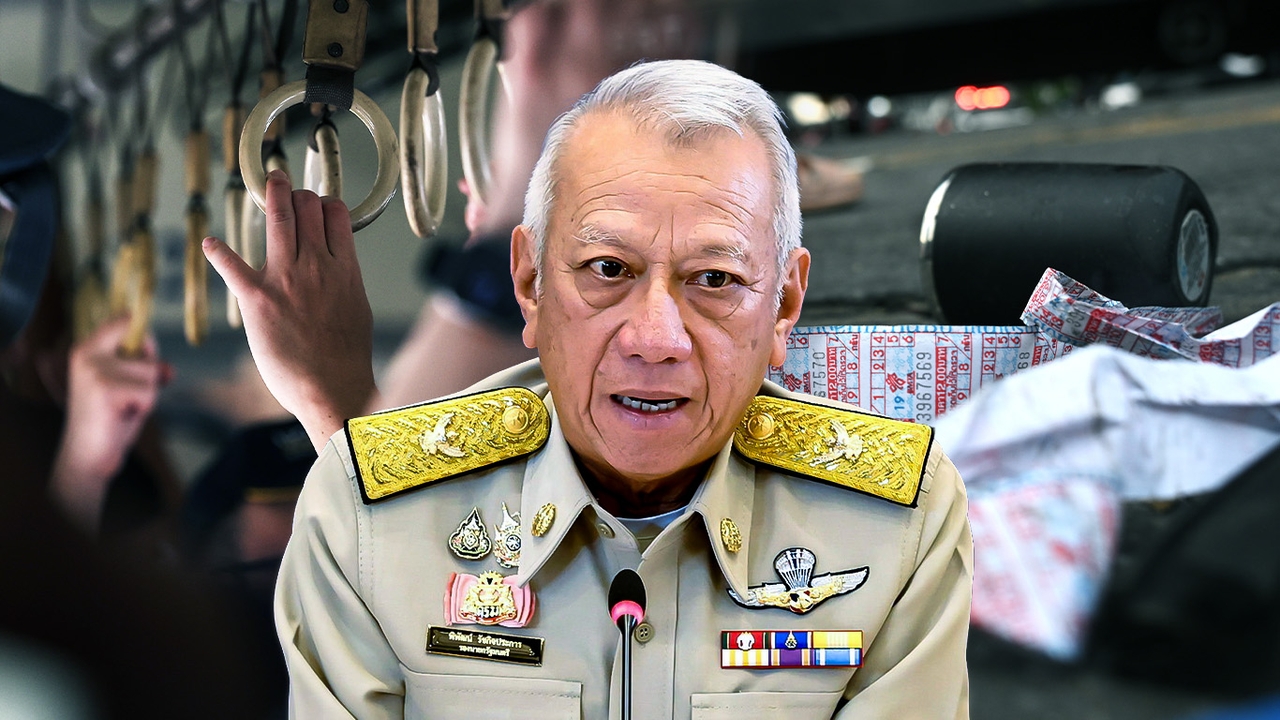
Recently, this led to Deputy Prime Minister and Minister of Transport Pipat Ratchakitprakarn proposing a three-month plan to solve the issue by "canceling trains running into inner Bangkok." Trains on the Eastern Line would stop at Lat Krabang, and Southern Line trains at Taling Chan, with commuters transferring to BMTA buses, the Red Line, or the Airport Rail Link (ARL) to enter the city instead, aiming to reduce accident risks.
While this may seem like a solution, for daily wage earners, small company employees, security guards, housekeepers, and students who rely heavily on the train each morning and evening, this is not just a travel inconvenience but a state-imposed shift of infrastructure costs onto individuals’ wallets, sharply increasing their living expenses.

Let's examine real numbers to see what additional costs ordinary people would incur if city-bound trains are canceled.
Example: Students and workers traveling by State Railway of Thailand (SRT) trains from Chachoengsao junction to Sukhumvit 71 stop.
This group would pay an extra 2,000 - 3,000 baht monthly. While a few thousand baht may seem small to some, it's equivalent to a family's entire monthly food budget, children's tuition, or motorcycle installment payments.
Another case: An office worker earning 18,000 baht monthly.
The difference, or additional monthly expense, could be as high as 2,100 baht.
To put this in perspective, 2,100 baht equals a household's electricity bill, internet subscription, and nearly a month's lunch expenses for a salaried worker.

Some may pay more for convenience and time savings, but others may have to question whether they'll have enough money for food that month. Beyond the fare increase, the government may overlook the real difficulties of "forced transfers," which conceal numerous pain points, including...

Someone insightfully reflected that suburban trains are a "paradise for those living far away," allowing a trip to Ayutthaya for 15 baht compared to 160 baht by van in roughly the same time. Everyone wants convenience, but financial limitations prevent some families from choosing it.
Moreover, there are "hidden costs" borne fully by the working class: parking fees at outer stations (where parking is limited), lost time, taxi fares when missing trains, higher food prices due to late returns, and even lost work opportunities.
Ultimately, this issue is more than a traffic accident policy story. It reflects class-based impacts on travel amid divided opinions: one side demands safety, which is valid, while the other insists, "Do not solve problems by carelessly shifting burdens onto the poor." Do you agree?
Follow the Facebook page: Thairath Money at this link.https://www.facebook.com/ThairathMoney