

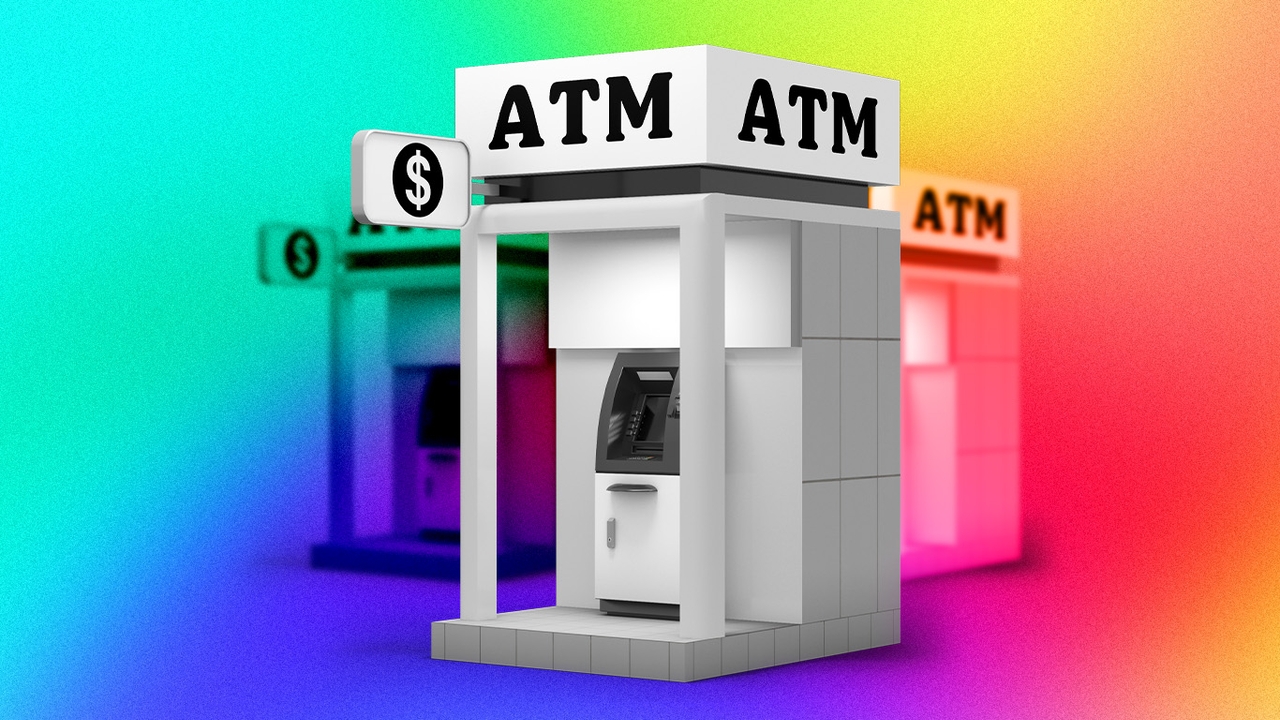
Seven to eight years ago, most Thais still relied heavily on cash for daily transactions, making ATMs indispensable. In some locations, multiple ATMs from various banks lined up with queues of dozens of people. A major pain point was the high fees charged for withdrawing cash from ATMs of different banks or making multiple withdrawals per month.
/* No translation needed; fragment only */ “White ATMs” These are centralized ATMs that allow customers of any bank to withdraw money or carry out transactions more easily. The idea is that if banks share their backend systems and ATMs, it could reduce costs and potentially lower transaction fees.
Although this idea has been discussed, since 2017 at levels including the Thai Bankers’ Association, commercial banks, and the Bank of Thailand (BOT), it has yet to be widely implemented. Now, as Thais use less cash due to increased digital payment adoption, the White Label Smart Machine (WSM), or white ATM, concept has resurfaced.
Recently, Daranee Saeju, Assistant Governor for Payment Systems and Consumer Protection at the Bank of Thailand, explained that in the past, over 90% of transactions in Thailand were cash-based. However, with the growth of digital payment systems, this proportion has clearly decreased, from 63% in 2021 to 54% in 2023, and it may fall to around 20% within the next 3-5 years as digital payments rise.
From this data, it is evident that as people increasingly make payments digitally and cash usage declines, the per-unit cost of managing banknotes—including production, transportation, and storage—may rise accordingly. With rising costs and declining cash transactions, questions arise whether banks will reduce their branches and ATM numbers in the near future.
Naphongthawat Photikit, Senior Director of Payment Systems Policy and Financial Technology at the Bank of Thailand, noted that to address this issue, there are plans to reduce cash management costs through introducing new players that could lower overall system costs. For example, issuing licenses for providers of White Label Smart Machines (WSM). These white ATMs are not owned by any single bank but operate as a shared infrastructure allowing banks to use them without bearing cash management costs individually, while providing accessible ATM points to the public.
Currently, the process involves preparing to propose licensing to the Ministry of Finance, with expectations that operators will begin applying for licenses early next year.
Despite the BOT's acceleration on this matter, the question remains: if the white ATM model is truly important and attractive, why, after multiple rounds of cooperation and discussion since 2017, has it not yet been widely adopted by the public? Thairath Money consulted Thakorn Piyapan, CEO of TMBThanachart Bank, who commented that although white ATMs were discussed years ago, uncertainties remained, preventing widespread adoption.
If this model is to be implemented again, deeper examination is needed, especially regarding technology, since each bank’s ATMs have different features and development—some banks have facial recognition. It is uncertain how much of these features can be supported on a shared machine. Another key issue is how fees will be structured, as banks have different cash management costs. To reach consensus, banks must consider the efficiency gains as well.
In conclusion, white ATMs remain an interesting model, especially as digital channels increase but cash use persists. All Thais should be able to access their funds without facing excessive fees. However, whether this will materialize broadly remains to be seen.
Read personal finance and financial planning news with Thairath Money for better financial life.https://www.thairath.co.th/money/personal_finance
Follow the Facebook page: Thairath Money at the link below.https://www.facebook.com/ThairathMoney