

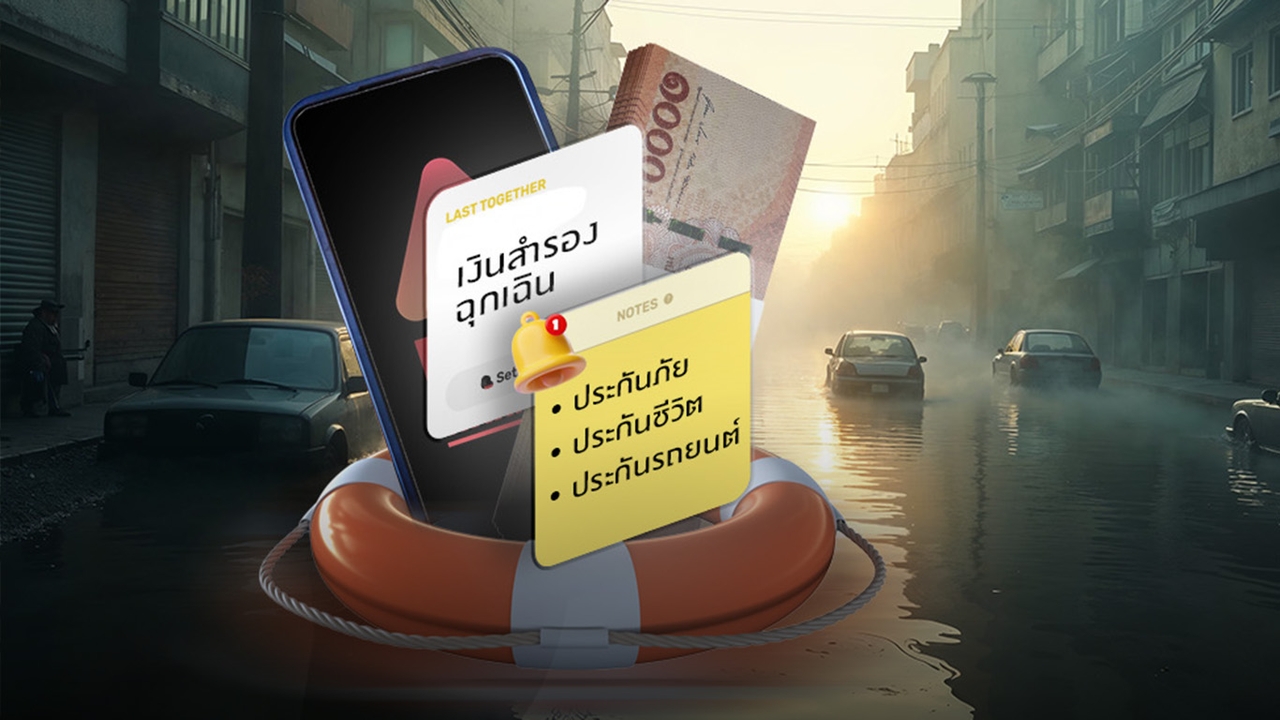
When it comes to financial planning, many think of retirement or investing for future wealth. However, what many may overlook is having funds set aside to cover risks from various hazards, including natural disasters like the recent major floods in Thailand. These events impact not only property but also the finances of many individuals.
Who would have thought that this year a major flood would hit southern provinces such as Nakhon Si Thammarat, Phatthalung, Surat Thani, Narathiwat, Pattani, Trang, Satun, Yala, and Songkhla? According to the Department of Disaster Prevention and Mitigation (DDPM) as of 28 Nov 2025 GMT+7, about 1.22 million households, roughly 3.54 million people, were affected.
This major flood caused severe damage to people's homes and vehicles. More importantly, the finances of many were almost sunk along with the waters. Thairath Money invites readers to learn financial lessons from this massive flood disaster to better prepare for future unexpected challenges.
1. Have an emergency fund = wearing a life jacket during floods
Flood damage often leads to unexpected expenses, such as home repairs that could cost tens of thousands or even hundreds of thousands of baht if structural damage is severe. This excludes other costs like vehicle repairs or damaged household items.
During such times, normal work may be disrupted and income lost. Therefore, the first priority is to have an emergency fund to cushion against these risks.
But how much should one have? The Financial Planning Association of Thailand recommends having an emergency fund covering at least 6 to 12 months of monthly expenses to stabilize oneself during a crisis.
For example, if monthly expenses are 20,000 baht, one should have approximately 120,000 to 240,000 baht saved to provide peace of mind and help ease large expenses after the flood recedes.
2. Always have insurance
When floods strike unexpectedly and cause significant property damage, if we want to avoid depleting all our savings, what options do we have? One solution is insurance, which covers risks we consider important. When disasters occur, insurance can provide financial support to help us recover.
Examples of insurance covering floods that can be claimed include:
2.1. Fire insurance with flood coverage
Most people purchase home insurance in the form of "fire insurance," which may include flood coverage under natural disaster clauses. However, coverage limits and conditions must be checked carefully in the policy. Without explicit flood coverage, claims cannot be made.
2.2. All-risk property insurance (IAR)
For some who use their homes for business, additional coverage such as IAR insurance can be purchased. This covers various risks, including flood damage and sudden business interruptions.
Before buying insurance, it is important to check coverage terms, limits specified in each policy, and ensure you have the insurer's contact information.
After this major flood, many who had home insurance had natural disaster coverage limits of about 20,000 to 30,000 baht per year. If this amount seems insufficient, it is a good time to review whether your insurance matches your risk and consider increasing coverage accordingly.
3. Openly communicate with creditors
Floods strain anyone's finances, but those with debts face even greater challenges as expenses rise yet debt payments remain unavoidable. Therefore, those in debt should plan to manage this early.
One solution for flood victims with debts is to directly communicate with creditors. After calculating expenses and available funds, if you cannot pay the original installments, contact banks or creditors to explain your situation, such as flood damage requiring costly repairs.
You can request debt restructuring or renegotiation of payment terms to align with your current repayment ability and maintain your ability to pay.
Currently, many banks have relief measures for flood-affected borrowers, such as payment holidays and interest rate reductions. If natural disaster impacts your payments, discussing options with creditors or banks is a practical step.
These are the strategies Thairath Money has drawn from the recent flood disaster to help readers plan for natural disasters that can strike without warning. Having a solid financial plan provides a stable foundation to stand firm even when facing major storms.
Read personal finance and financial planning news with Thairath Money to help you "Better Finance, Better Life" athttps://www.thairath.co.th/money/personal_finance
Follow the Facebook page: Thairath Money at this linkhttps://www.facebook.com/ThairathMoney