

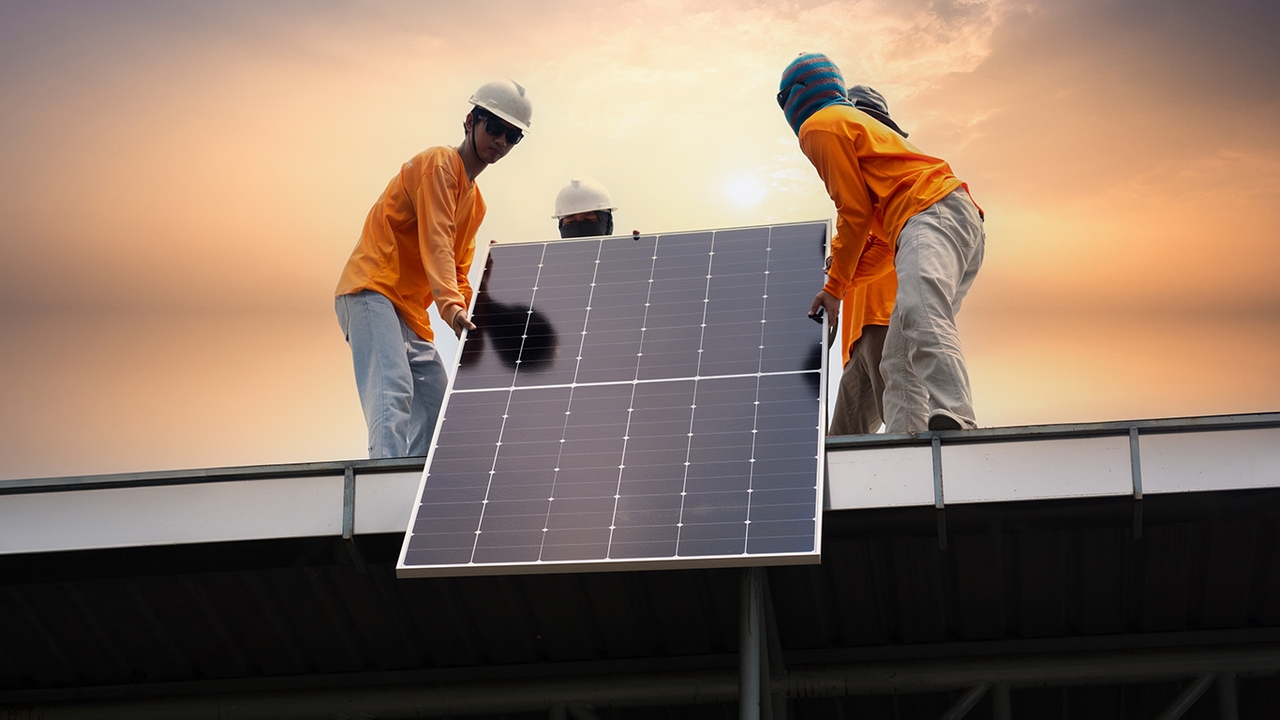
Starting in 2025, it is a significant opportunity for those wanting to install Solar Rooftop systems at home, as the government has introduced new tax measures helping to save on both monthly electricity bills and year-end taxes simultaneously.
Thairath Money summarizes the key points in an easy-to-understand way from the latest Revenue Department announcement about "Solar Tax Deductions" that most people want to know.
This measure allows individuals to deduct the actual cost of purchasing and installing a solar power system on their home rooftop (Solar Rooftop), up to 200,000 baht, under these key conditions.
However, this announcement also specifies important conditions about which Solar Rooftop systems can be used for tax deductions, which must meet the following criteria.
1. Installed on a roof or terrace with at least part of the building used as a "residential home."
2. Connected to the electricity grid of the Metropolitan Electricity Authority or Provincial Electricity Authority.
3. The installed Solar Rooftop system must be an on-grid system with a maximum installed capacity of 10 kilowatts peak (kWp) per household.
4. Complete documentation is required, such as.
If installing a Solar Rooftop system worth 180,000 baht, you can deduct the full 180,000 baht from your taxable income according to your tax bracket.
1. Can I install multiple times to get multiple deductions?
Answer: No, the deduction can only be used once per system throughout the program.
2. If I have one house but change the installer, can I claim the deduction again?
Answer: No, this measure provides a one-time deduction only.
3. Can I buy the equipment myself and install it to claim the deduction?
Answer: No, you must purchase from a VAT-registered operator who issues an e-Tax Invoice.
4. Can this deduction be combined with other energy tax incentives?
Answer: No, equipment costs cannot be used for deductions under other measures.
According to the Revenue Department announcement, the deduction applies in the tax year when the system is connected to the electricity grid (COD), not the year payment is made.
The Revenue Department clearly states this measure will help Thailand reduce electricity consumption by 25,585 million units per year, cut Spot LNG imports worth 88.3 billion baht, and reduce greenhouse gas emissions by 11.28 million tons, making it a national policy encouraging more use of solar energy among Thais.
This measure is suitable for those who want to reduce their electricity bills and tax burden simultaneously, as well as those interested in investing in solar energy, including owners of new homes, renovated houses, or those already considering solar installation.
Source: Revenue Department, itax
Read personal finance and financial planning news with Thairath Money to help you "Achieve Good Financial Health and a Better Life."https://www.thairath.co.th/money/personal_finance
Follow the Facebook page: Thairath Money at this linkhttps://www.facebook.com/ThairathMoney