

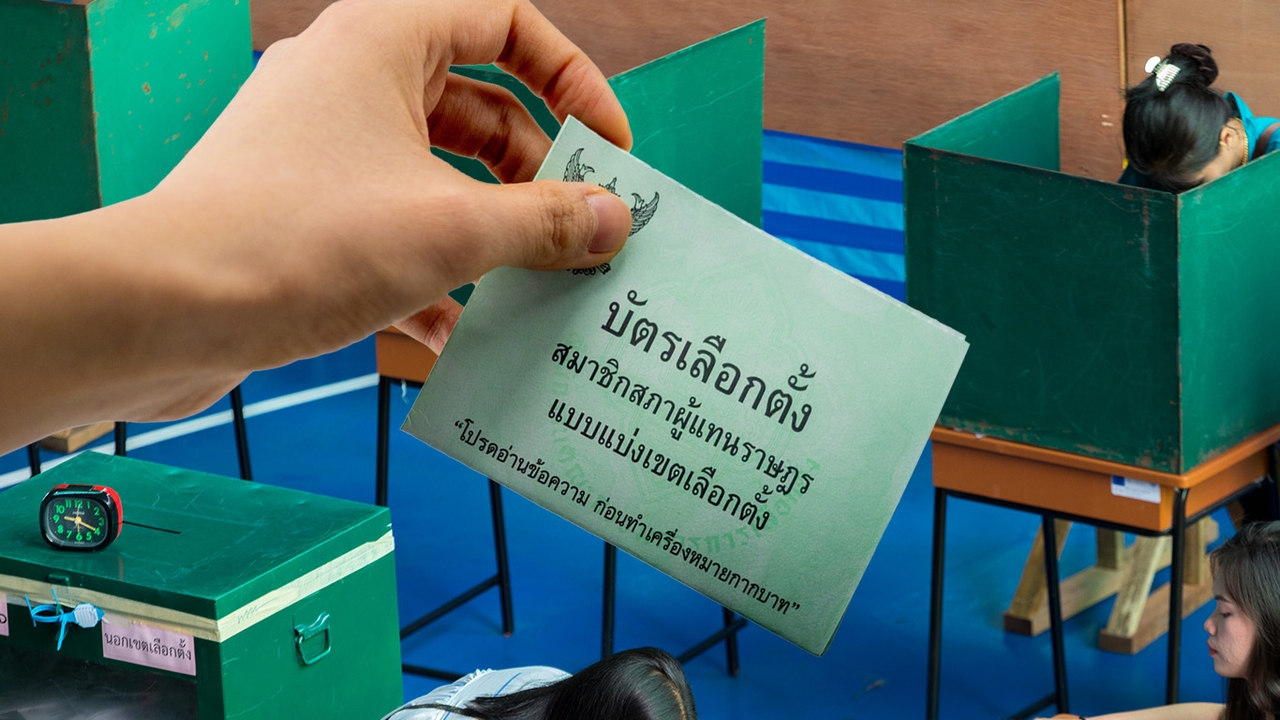
The current hot topic everyone is watching is the major 2026 election. Many hope it will be the turning point to improve Thailand's sluggish economy—if the government is stable and projects proceed fully. However, some believe politics may not improve their personal lives or finances.
Today, Thairath Money invites you to delve into two reasons why politics matters to people's livelihoods and why we must think carefully before voting for those who will work for us!
Nowadays, everything revolves around money. Developing Thailand requires huge funds, one of which is the government's budget. In recent years, we've often heard about economic slowdown due to delayed government budget disbursements. One cause is Thailand having to change prime ministers three times (2024–2025), creating a "political vacuum."
This problem affects not only domestic budget disbursements but also damages the country's image and development direction. Foreign capital and investors have been hesitant and uncertain about investing in Thailand.
From this big picture, imagine money not circulating, the private sector not seeing economic growth, so who will invest more? Those planning to hire more staff have to pause. Production must decrease because sales are uncertain. Many employees in various businesses may have reduced income or wage increases that don’t keep up with rising living costs.
The government plays an important role in managing living costs, because prices of food, consumer goods, transportation, even utilities like water and electricity, have become "expensive" partly due to lack of transparency.
When people are unsure about future income but still need to live, some choose to borrow and take loans to cover expenses, creating a chronic debt cycle. This has become Thailand’s unresolved household debt problem.
This is another harmful effect of economic uncertainty: income not meeting expenses, high living costs, reflected in surveys by the Economic and Business Forecasting Center, University of the Thai Chamber of Commerce. It found that in 2025, over 95.1% of Thai households had debt burdens, with average debt reaching 740,596.94 baht per household—an increase of 22% from the previous year (previously about 600,000 baht). Most debt is credit card debt, followed by home loans (mortgages) and vehicle loans. Many people are essentially "working to pay debts," not to build their lives.
These vulnerabilities, with household debt remaining high for over 10 years and exceeding 80% of GDP, mean that solving this requires clear government policies with sustainable, practical solutions.
When Thailand’s economy is strong, people see a future where earning money is possible, and spending follows. Therefore, next year’s election is another crucial turning point for Thailand to either move forward or remain stalled as in recent years.
Structural reforms in Thailand may take considerable time. In 2025, many major events occurred—from the earthquake in March to floods in several provinces. Although some predicted the floods, the massive water volume disrupted lives. People couldn’t earn income, and waiting for government aid might be too late. So, immediate problem-solving is necessary.
1. Emergency fund
This is an opportunity to check whether your emergency fund is sufficient. Most theories recommend having 3 to 6 months of monthly expenses saved. For example, if a family spends 40,000 baht per month, the traditional formula suggests 120,000 to 240,000 baht in reserve. If your current savings fall short, consider planning to save more to cover actual needs during crises.
2. Manage debt before thinking about investing
Many think investing is necessary for life to improve, but consider this: if you invest 100 baht with a 10% annual return but have debt costing 16% interest annually, you are losing money overall. Therefore, before investing, focus on clearing debt. Debt isn’t inherently bad if you distinguish between necessary and unnecessary debt. After gathering and analyzing your information, decide how to manage it.
For example, credit card debt with 16% interest per year and a home loan at 4% per year for your residence, which you must keep paying to avoid foreclosure. You should allocate some money to pay off high-interest debt first. You might negotiate with creditors to restructure debt or adjust payment plans to reduce interest.
3. Upskill – create multiple income streams (if possible)
The world changes fast, and companies expect more from us. Therefore, gaining new skills or abilities can help maintain your current job and also create new income sources—side jobs that generate long-term earnings.
In this era, as we desire more things to spend on, we may need to earn more to keep up with our needs.
Good financial health doesn’t mean having huge wealth but managing your money appropriately for your life today and in the future.
Read personal finance news and financial planning with Thairath Money to help you "achieve good finances and a good life."https://www.thairath.co.th/money/personal_finance
Follow the Facebook page: Thairath Money at this linkhttps://www.facebook.com/ThairathMoney