

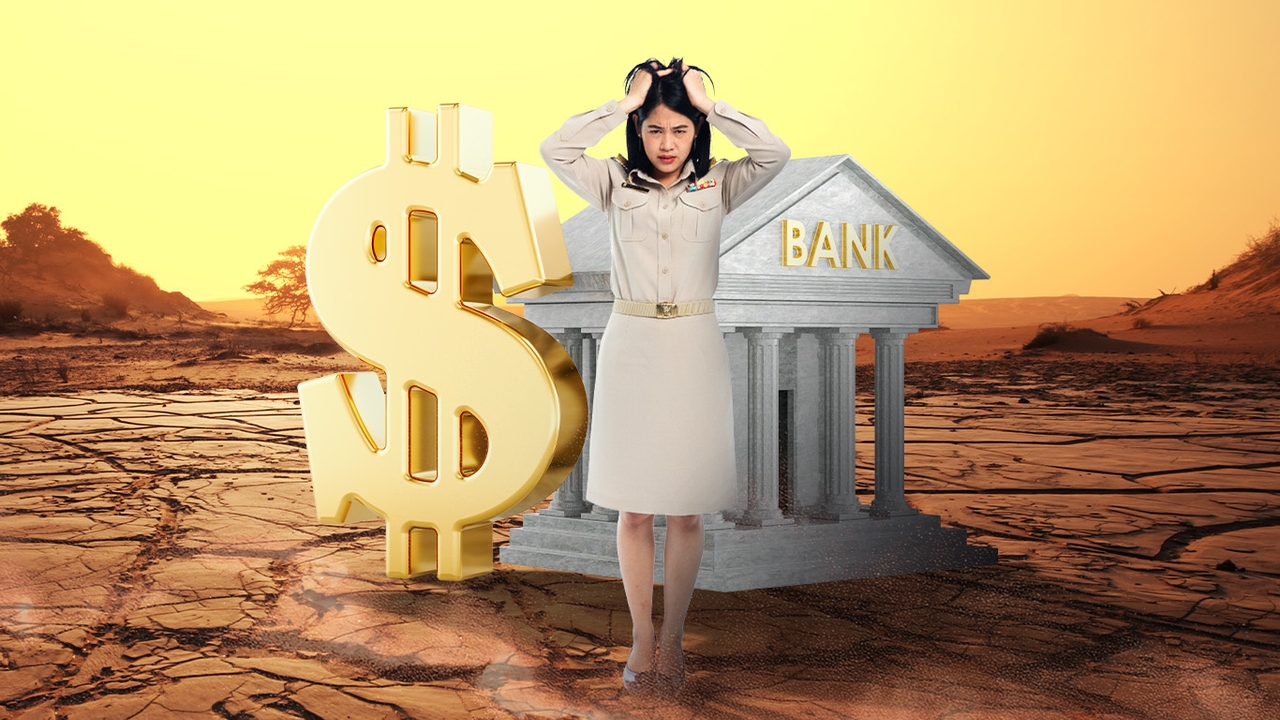
“Thai teachers’ debt totals 1.4 trillion baht.”,
Who would have thought that teachers, regarded as the nation’s foundation, would carry such a massive debt load? Over the past several years, government agencies have attempted various aid programs—from interest rate reductions to debt clearance initiatives—but despite efforts dating back to 1997, clear success remains elusive.
Data from the Ministry of Education reveals that this 1.4 trillion baht debt stems from both active and retired teachers numbering in the hundreds of thousands. Their debts include loans from savings cooperatives, Government Savings Bank, Krung Thai Bank, Government Housing Bank, and numerous other financial institutions.
When asked about the sources of teachers’ debt, reports highlight the following topics: “When Teachers Are in Debt: A Study of the Debt Patterns, Structures, and Cycles of Civil Servant Teachers through Bureaucratic System Analysis” by Chulalongkorn University. This study identifies four main types of debt accumulation:
1. Debt incurred before becoming a teacher. For example, coming from impoverished families or borrowing for education expenses.
2. Debt accrued during civil service. Such as self-funded professional development, producing teaching materials, participating in competitions and evaluations, social taxes, and other non-teaching duties that often generate more expenses than expected.
3. Debt for establishing family stability. Examples include purchasing a home, buying a car, or funding ordination ceremonies.
4. Debt caused by external factors. These include economic conditions, low salaries and compensation, and workload burdens.
Given these varied needs, when borrowing channels are more accessible than in other professions, many teachers opt for loans through cooperatives. Having debt is not problematic if managed well, with timely payments and leftover funds for living expenses.
However, in many cases, monthly deductions from teachers’ paychecks leave insufficient money for daily needs, forcing them to take additional loans elsewhere. This creates a cycle of debt that continues indefinitely, often persisting even after retirement.
For example, teachers with loans from cooperatives or welfare loans from banks have monthly repayments automatically deducted from their salaries. The rule is that after these deductions, at least 30% of the salary should remain for the teacher’s personal expenses. Yet, some teachers have other debts such as credit cards, cash cards, or even informal loans, resulting in insufficient funds and leading to new debts, perpetuating the endless debt cycle.
Some teachers experience such heavy debt stress that they worry about how to make payments each month. This problem can be addressed by: Creating a “Debt Manual” by listing all creditors, both formal and informal, along with the interest rates for each. This allows prioritizing repayments by following the principle “reduce expensive interest first.” For instance, pay off high-interest debts like credit cards or informal loans before welfare loans with lower interest rates.
Next, if calculations show that debt exceeds one’s capacity or includes items no longer used, consider “selling some assets” to pay off debts. Alternatively, modify spending behavior by cutting unnecessary expenses and letting go of items that are not essential, aiming for a more comfortable and stress-free life.
But if some assets are essential, like a house for living, and one wants to keep them while still needing to pay debts, the solution is to “increase income.” Taking extra work such as tutoring, creating educational content, or other manageable jobs that do not interfere with primary duties can be a good approach. The debt problem among teachers has many causes, including income structure and basic welfare. However, a key factor is lack of financial literacy and repayment discipline. Therefore, tackling personal loan debt must start with individual responsibility.
Read personal finance news and financial planning with Thairath Money to help you achieve “Good Finance, Good Life.”https://www.thairath.co.th/money/personal_finance
Follow the Facebook page: Thairath Money at this linkhttps://www.facebook.com/ThairathMoney