

It seems that while we strive to maintain our best health, what is "ailing" more severely than the bodies of Thai people may be their wallets. A recent report from the National Economic and Social Development Council (NESDC) revealed alarming figures: Thailand's medical inflation in 2025 is expected to surge to 10.8%, which is not only vastly higher than the country's overall inflation but also exceeds the global average of 10.3%.
This serves as a warning that no matter how wealthy you are or how well you have planned your finances, entering the current healthcare system could cause your "wealth" to deteriorate in an instant.

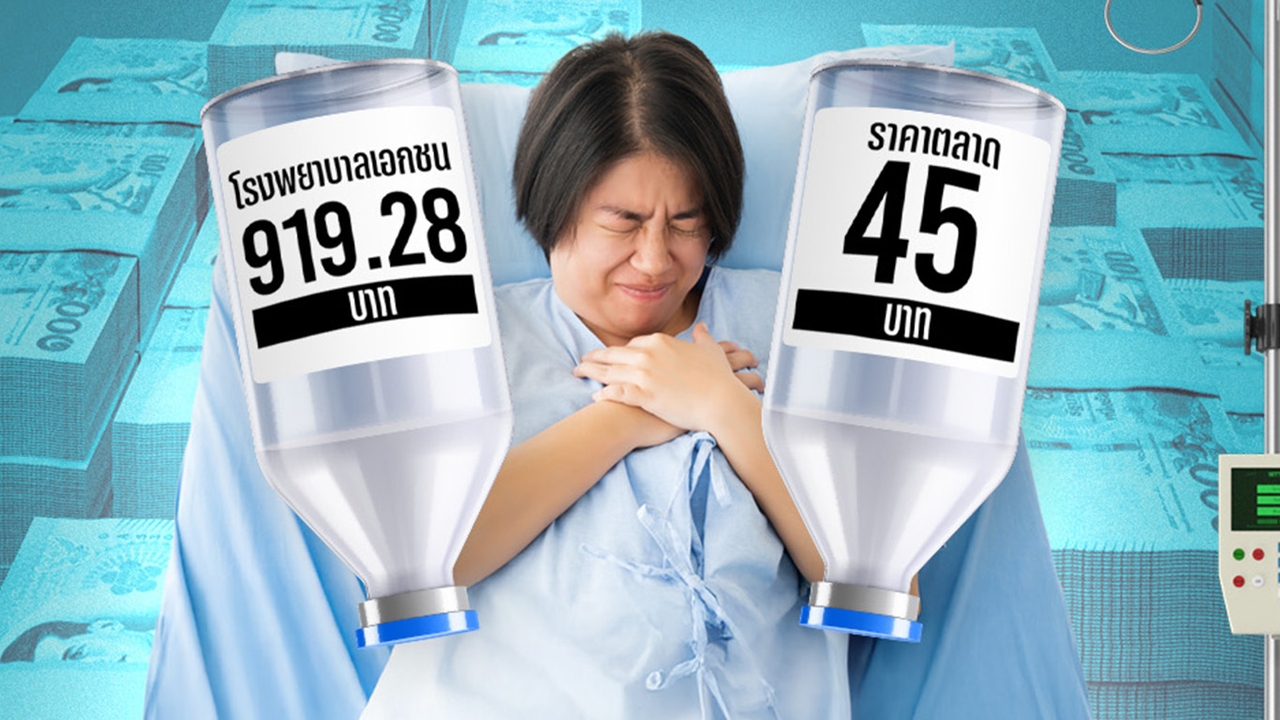
Data from NESDC reveals a startling reality through the "price gaps" of basic medical supplies in private hospitals compared to general market prices, showing markups so high that consumers find it hard to keep up.
Moreover, it's not only medical supplies; professional service fees and doctor charges constitute up to 45% of total medical costs. Basic services like intravenous solutions have price differences ranging from 50 baht to 10,140 baht, depending on each hospital's cost structure and discretion.

NESDC identifies three main factors driving the soaring healthcare costs in Thailand:

This medical inflation crisis is impacting not only patients but also shaking the "health insurance business." Data indicates that claim ratios (Loss Ratios) could rise to 90% by 2026, a level that threatens insurers' survival without adaptation.
A key cause is inappropriate use of insurance benefits (Low-Value Care), such as minor illnesses leading to inpatient admissions (IPD) to claim insurance. Statistics from the Office of Insurance Commission (OIC) show that inappropriate claims account for up to 28% of all claims.
This explains why the "fixed-rate insurance era" is ending, replaced by new rules including:

According to the report, to prevent the Thai healthcare system from reaching a dead end, NESDC has proposed several rescue strategies.
In summary, the medical inflation crisis is no longer distant because when illness strikes, a lifetime of savings may not suffice if Thailand's healthcare system lacks effective regulatory measures.
Source: National Economic and Social Development Council (NESDC)