

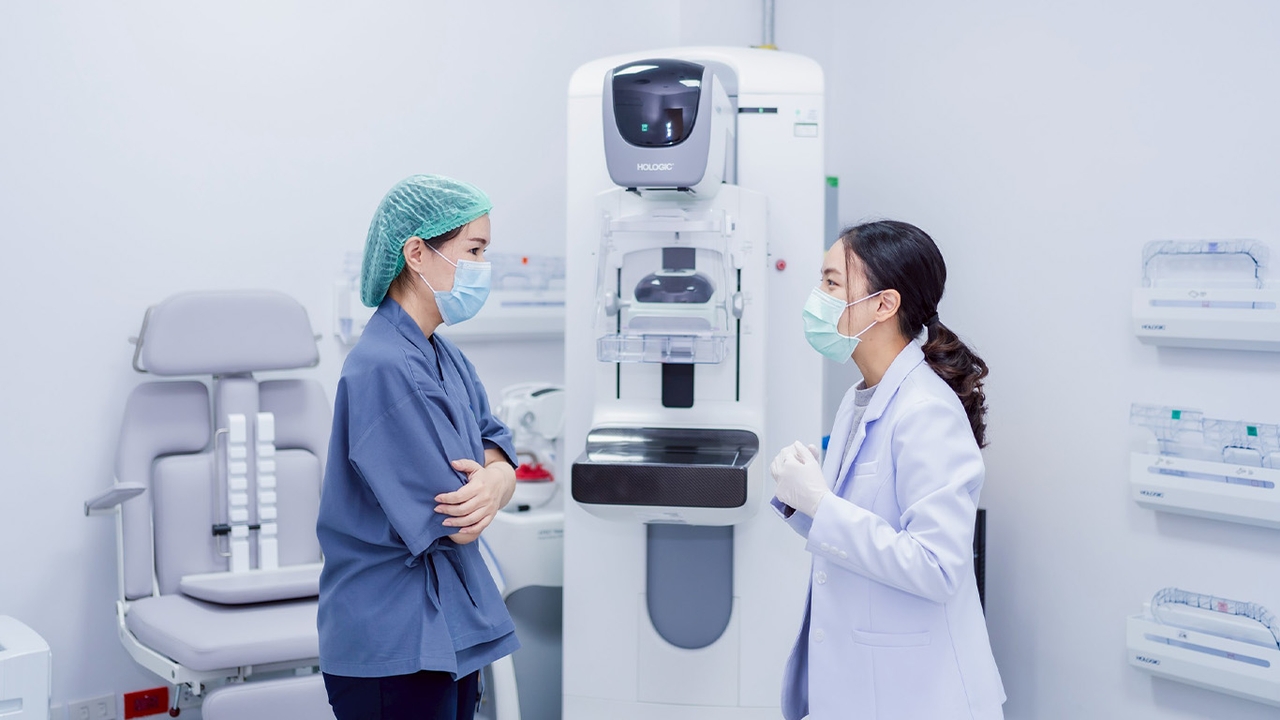
Today, women play an essential role in driving society forward—as workers, executives, entrepreneurs, and influencers across industries. Research shows that women's economic roles are steadily increasing worldwide, especially in Thailand. A 2024 report by Grant Thornton, a global business consultancy, revealed that Thailand ranks third globally for the highest percentage of female CEOs, reaching 42%.
Additionally, data from the 2024-2025 Global Entrepreneurship Monitor report surveyed 51 countries worldwide and found Thailand uniquely has a higher proportion of women owning established businesses (operating more than 3.5 years) than men, with a female-to-male ratio of 1.04. This has given rise to the new financial trend known as "Womenomics."
This trend reflects that modern Thai women are not only workers but also decision-makers in investment, consumption, and organizational management. Meanwhile, Thailand's women's health market continues to grow steadily at an average rate of 7.2%, projected to reach approximately 5.8 billion baht by 2030.
However, despite women being key drivers of Thailand's economy, women's health remains an overlooked issue. Women face hormonal changes and complex internal systems from adolescence through old age, with many disorders accumulating silently because women’s diseases often show mild or no pain symptoms initially.
Detailed health screenings are often postponed amid work, family responsibilities, and roles that prioritize caring for others before themselves. Furthermore, “fear” is a significant factor preventing women from visiting doctors—fear of exams, fear of diagnosis, and fear that treatment will disrupt daily life and duties.

Statistics from female patients at Vimut Hospital between 2022 and 2025 identified the five most common diseases among women as follows:
1. Uterine fibroids Benign tumors influenced by female sex hormones, commonly found in women of reproductive age; this is the most frequently diagnosed condition.
2. Endometriosis A condition where the uterine lining grows outside the uterus, causing chronic inflammation and scar tissue, commonly known as chocolate cysts.
3. Abnormal bleeding from the uterus and vagina This may indicate hormonal imbalances or reproductive system disorders.
4. Breast lumps Often self-detected, these lumps can be either hard or soft.
5. Benign breast tumors Non-cancerous lumps common in working-age women and those with hormonal fluctuations; while not dangerous, they require regular monitoring.
Screening rates for these five diseases among Thai women are approximately just over 60%. Key barriers include fear of pain (especially from mammograms), limited access to services in rural areas, and concerns about costs.
Financially, "cancer" (breast and cervical cancer) accounts for the highest medical expenses, especially when diagnosed at advanced stages. Treatment involves complex procedures including surgery, chemotherapy, and innovative drugs, leading to escalating costs.
Dr. Niphat Kulabkhao, Chief Executive Officer of Vimut Hospital Holding Company Limited, said the Womenomics trend reflects that women are not just consumers but leaders driving the economy at all levels. Despite increasing roles, women's health care remains insufficiently addressed. Understanding the complexity of women’s health, Vimut Hospital is advancing a comprehensive One-Stop Women Health platform and launching the “Health for Her” campaign to make health care easier and more reassuring for women.
The hospital offers women's health risk screening programs starting at just 1,900 baht, making health checks accessible, easy, and encouraging preventive care before illness develops.

Thairath Money surveyed initial budget estimates as follows:
Since each case varies in screening and treatment details, prices differ and cannot be averaged initially. However, without screening, allowing diseases to progress to advanced stages can cause treatment costs to multiply compared to early-stage care. Social security or group insurance can help alleviate some financial burdens.
Examples from Vimut Hospital include:
1. Breast Cancer
2. Endometriosis
3. Cervical Cancer
4. Uterine Fibroids
5. Ovarian Cyst
6. Gallstones
Read personal finance and financial planning news with Thairath Money to help you achieve "Good Finances, Good Life."https://www.thairath.co.th/money/personal_finance
Follow the Thairath Money Facebook page at this link:https://www.facebook.com/ThairathMoney