

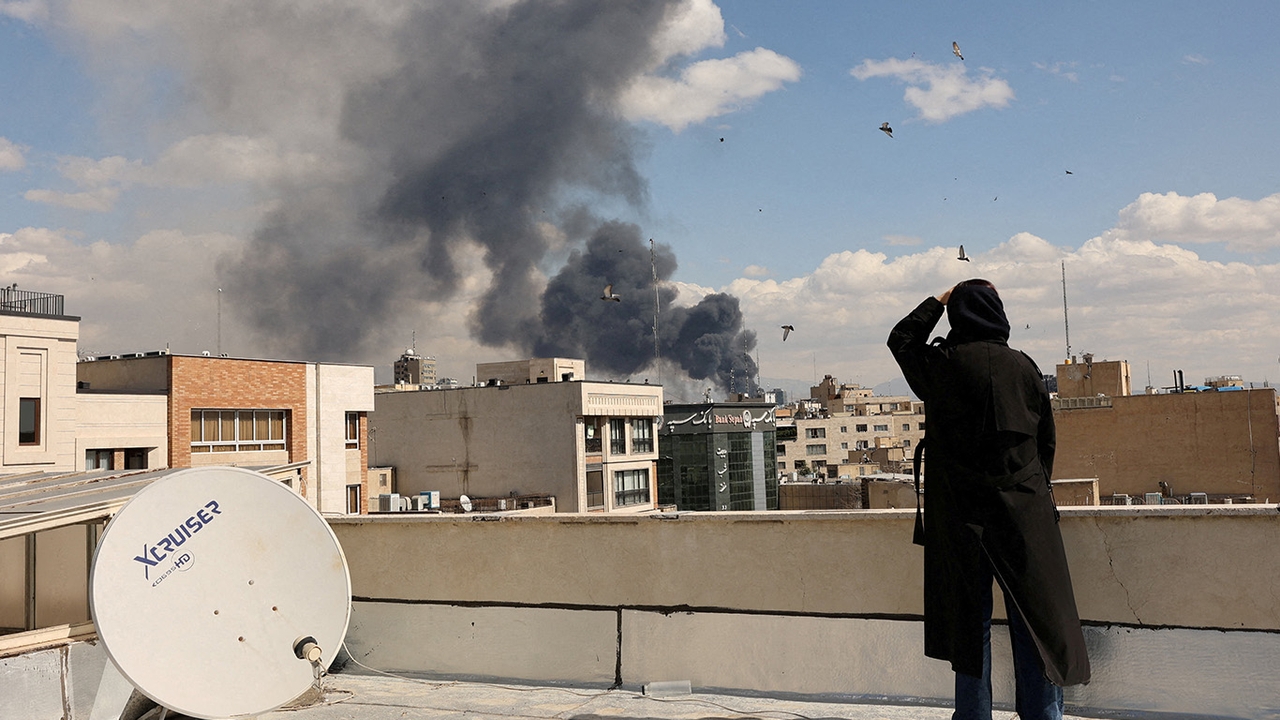
The Middle East conflict has flared up again between the United States, allied with Israel, in attacking Iran. Although the damage occurs far from Thailand, if the situation escalates or prolongs, it will inevitably affect both the country and the general public.
Dr. Amorntep Jawala, Assistant Managing Director and Research Division Executive at CIMB Thai Bank. He analyzed three potential conflict scenarios: 1) Limited tension without impact on oil supply, with oil prices expected at 70-80 US dollars per barrel; 2) Closure of the Strait of Hormuz, affecting exports of oil and LNG—one-fifth of global supply—potentially driving crude oil prices to 90-100 US dollars per barrel; and 3) Prolonged war with intensified clashes and infrastructure destruction, pushing the world into a risk-off mode and possibly raising oil prices to 120 US dollars per barrel.
He believes the most likely scenario is the first, with tensions remaining limited. However, Thailand faces concerns during its government transition, creating a "fiscal vacuum" that complicates response efforts. Budget constraints, an oil fund burdened with debt beyond its ceiling, and public debt nearing fiscal discipline limits mean the government cannot subsidize pump prices as before. Consequently, the public will immediately bear the full impact of rising living costs.
Additionally, if Thailand enters a technical recession amid political instability, it could lead to a credit rating downgrade, increasing the country’s borrowing costs (bond yields).
/* No translatable content; fragment */ Burin Adulwatana, Managing Director and Chief Economist at Kasikorn Research Center. He told Thairath Money that although the likelihood of escalated war is not high, he expects the conflict to conclude within two weeks and not extend beyond a month. In the short term, Thailand faces several direct impacts.
“We do not expect oil prices to spike above 100 dollars as seen in past crises due to shortages. Currently, many countries produce large oil quantities. Thus, we do not foresee such extreme price hikes. In the short term, we expect Iran will not close the Strait of Hormuz because its main income depends on oil exports. China relies on Iran for 15% of its oil, and since Iran exports over 90% to China, both sides depend on each other. Therefore, Iran is unlikely to close the strait,” Burin said.
Impact on the baht exchange rate: Wachirawat Banchuen, Senior Financial Market Strategist at Siam Commercial Bank. He stated that in the short term, as the war continues, the baht is likely to depreciate further due to Thailand’s net oil-importing status. In the baseline scenario, the baht could trade between 31.25-31.75 baht per US dollar. In a worse case with prolonged war and oil prices exceeding 100 US dollars per barrel, the baht could weaken to 32.50-33.00 baht per US dollar amid global risk asset sell-offs.
In the prolonged war (worse-case) scenario, Thai bond yields could rise due to:
1) The conflict causing a rapid and sustained rise in oil prices, fueling inflation and increasing inflation expectations, which in turn push bond yields higher. The Bank of Thailand's Monetary Policy Committee may also raise interest rates to curb inflationary pressure.
2) Capital outflows from emerging markets as global investors reduce exposure to risky assets. In the first two months of the year, capital inflows into Thai bonds reached 41 billion baht, indicating the potential for reversal.
When circumstances are beyond our control, only the cash on hand can be planned for. Dr. Amorntep advises that with no clear government support measures, the private sector must adapt quickly by focusing on three main points.
Investors and the general public have increasingly turned to gold amid the conflict news, causing prices to jump. However, theory advises holding gold at no more than 20% of portfolios to manage risk without overconcentration. During such times, investors should closely monitor developments and avoid letting short-term volatility derail portfolio goals.
Read personal finance and financial planning news with Thairath Money to help you "Have Good Finances and a Better Life".https://www.thairath.co.th/money/personal_finance
Follow the Facebook page: Thairath Money at this linkhttps://www.facebook.com/ThairathMoney