

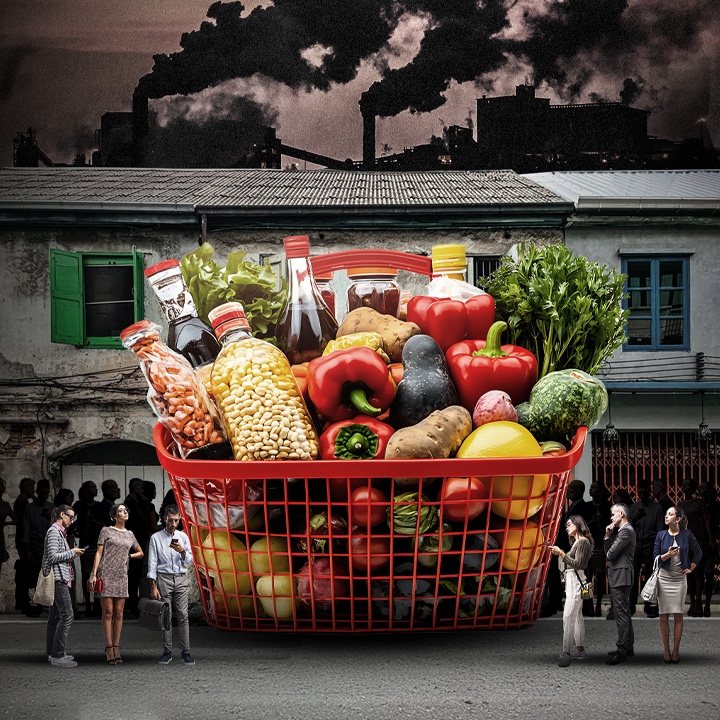
When the government began ordering state agencies and state enterprises to work from home to reduce energy consumption and asked the private sector to help conserve energy, such measures might seem minor in daily life.
However, economically, this is often a signal used by the government when it needs to reduce energy consumption in the system to manage rising energy cost risks.
Because when global oil prices start fluctuating due to geopolitical tensions, the impact usually goes beyond gas stations. Energy is a fundamental cost for the entire economic system.
When energy prices rise, other costs typically follow, such as
Economic history repeatedly shows that every energy crisis eventually leads to a cost-of-living crisis.

In fact, looking at the energy price structure reveals that the oil prices consumers pay today do not fully reflect the total energy costs.
Data from the Ministry of Energy indicates that retail oil prices in Thailand for several types are still supported by the Fuel Fund.
For example,
In other words, the energy prices consumers see today still have some "government support mechanisms" in place.
At the same time, the latest status of the Fuel Fund remains net negative by about 786 million baht, although the oil account shows a positive balance of over 36.9 billion baht, the LPG account is still negative by more than 37.7 billion baht.

These figures reflect that the government is using the Fuel Fund as a tool to slow the shock from global energy prices to prevent costs in the economic system from rising too quickly.
Especially diesel prices, which are a major cost for transport and logistics; sharp increases in diesel prices usually affect product prices broadly. However, this price support mechanism has limits since the fund cannot subsidize prices indefinitely. If global energy prices remain high for a long time, the government may face tougher choices, such as
That explains why, during energy crises, many countries subsequently face increased pressure on citizens’ cost of living.
While the war shows no end and energy prices remain volatile, what people can truly control may not be oil prices but their personal financial plans. Here are five ways to manage your money during volatile economic times, based on banking sector advice.
1. Stay aware of your cash flow.
Many do not have the problem of "insufficient income" but rather don’t know where their money goes. Check clearly each month how much money comes in,
.
2. Prioritize debt correctly.
With rising living costs, high-interest debt is the biggest strain on cash flow. Debts to address first include
If your burden tightens, refinancing or restructuring debt may help reduce interest and extend repayment periods.
3. Set aside an emergency fund.
In a volatile economy, the unexpected can always happen. A basic rule is to have at least six times your monthly expenses saved. While this fund may not instantly increase wealth, it helps keep life stable when income problems arise.
4. Diversify savings and investments.
In uncertain times, risk diversification is crucial. Don’t keep all your money in one asset type. Spread it among
Portfolio diversification reduces volatility when the economy shifts direction.
5. Don’t stop long-term planning.
The economy may fluctuate, but life goals should not stop with the economy.
Whether it is
planning from today builds a shield against tomorrow’s uncertainties.
In a world full of uncertainty, those who cope best may not be the best economic forecasters, but those who have prepared their own financial plans in advance.
Source: Ministry of Energy, Fuel Fund Office, Siam Commercial Bank.
Read personal finance and financial planning news with Thairath Money to help you achieve "Good Finances, Good Life."https://www.thairath.co.th/money/personal_finance
Follow the Facebook page: Thairath Money at this linkhttps:// www.facebook.com/ThairathMoney