

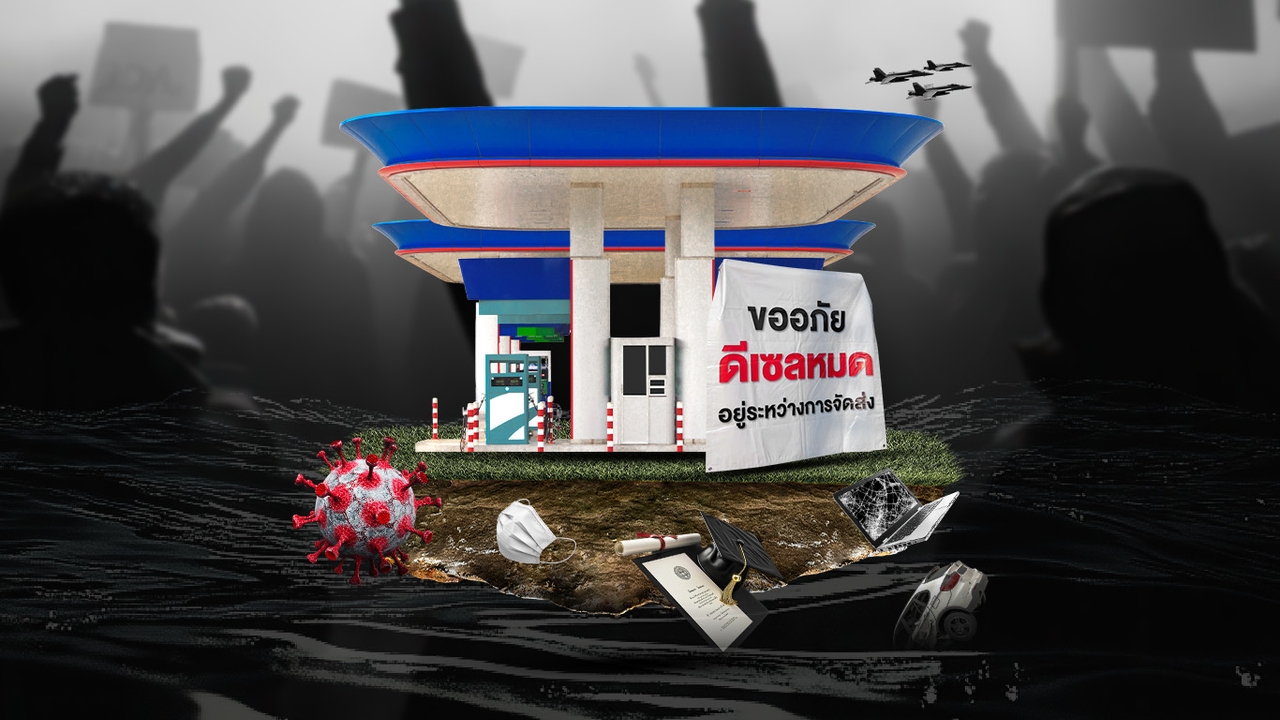
“Some generations grow up with opportunities... but Gen Y grew up with crises.” Tags: ["Gen Y", "economic crises", "generation"]
This phrase may sound like a complaint, but it reflects the truth deeply felt by those born between 1980 and 1997. Many work hard, learn quickly, and adapt well, yet after many years, their savings seem stagnant. Why does the stability their parents spoke of always seem to move further away?
Looking at the life map of Gen Y reveals that their journey isn't a straight line but rather an obstacle race over economic pitfalls repeatedly.
Gen Y’s youth was full of volatility, even before stepping out of university gates.
A time that should have been “building a career” turned into “survival.”
We were taught to “save,” but in reality, we barely had any long “upswing” periods to breathe. When the world collapsed, we collapsed too, spending years struggling back.
Just when we thought COVID was over, the economy recovering and politics stabilizing, reality proved otherwise with "inflation and fuel crises." As of 27 Mar 2024...
These aren’t just numbers at the pump; they are a "storm" battering the wallets of salaried workers and SMEs nationwide. Experts warn the world stands at a crossroads with "no middle path." If the Middle East war prolongs and the Strait of Hormuz is closed, oil prices may remain above $100 per barrel for a long time. For Thailand, which depends on energy imports accounting for 6.5% of GDP, this is bad news.
It is estimated that every $10 increase in global oil prices immediately drags Thailand’s GDP down by 0.15%. Consequences include:
More frightening than expensive oil is the "irreversible price mechanism." Many economists analyze that if fast food prices rise from 50 to 60 baht, they won’t return to 50 baht even when oil prices drop, because upstream costs have been reset system-wide.
For middle-aged Gen Y, burdened with aging parents and growing children, this is a harsh test. Annual salary increases of just a few percent are being squeezed by soaring living costs. Simply calculating the 6 baht per liter fuel increase could add over 7,000 to 10,000 baht annually in expenses without buying anything extra.
In summary, this oil crisis is shattering the "illusion" of job stability. Once-promising positions and expected bonuses may no longer suffice in a world where living costs fluctuate with global political situations.
Advice for Gen Y and SMEs at this hour might be...
Finally, the earlier question—why after so many years of work does it feel like always "starting over"—might not be because we’re incapable, but because we live in a fast-paced, turbulent era where old economic structures can't keep up or adapt quickly enough.
Sources: Ministry of Energy, Consumer Council, oil prices referenced from PTT (OR) and Bangchak, Bloomberg, SCB EIC, Kasikorn Research Center.
Read personal finance and financial planning news with Thairath Money to help you "achieve financial wellness and a better life."https://www.thairath.co.th/money/personal_finance
Follow the Facebook page: Thairath Money at this link:https://www.facebook.com/ThairathMoney