

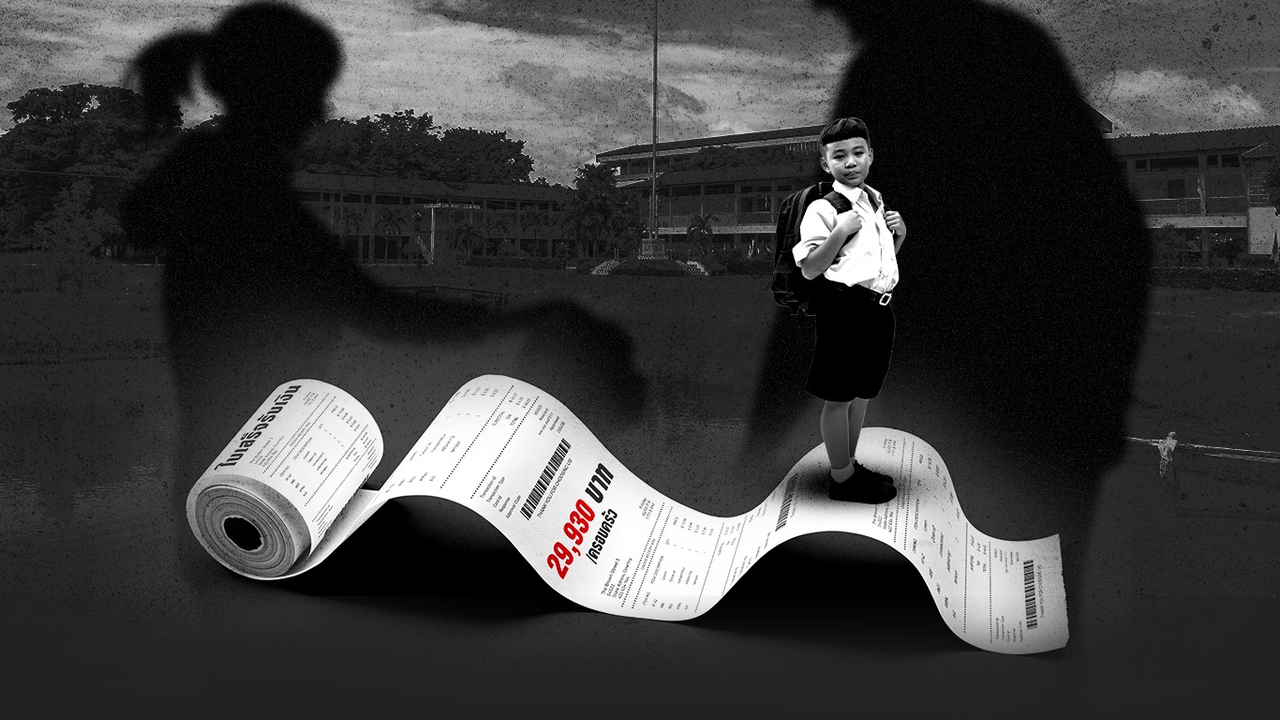
The atmosphere of the new 2026 school year opening is superficially painted with images of new school uniforms and complete learning supplies, but behind this lies an education cash flow forecasted to reach as high as 66.376 billion baht.
In reality, this conceals a painful truth for Thai middle-class families: sending children to school today no longer just means providing education, but stepping into a new cycle of debt that parents and guardians cannot easily escape.
A spending behavior survey of parents by the Center for Economic and Business Forecasting at the University of the Thai Chamber of Commerce found that spending value grew sharply by 6%, the highest level in 17 years since the survey began, with average household expenses reaching 29,930 baht.

This increase does not reflect improved purchasing power among parents but results from unusually severe “education inflation.”
More than 48.3% of parents admit that higher payments are due to soaring prices of goods and fuel following market supply and demand laws. When all households simultaneously buy school supplies during the opening season, prices inevitably rise.
This clearly reflects the reality this year: “We are paying more to get the same items for our children,” especially textbooks and shoes, which nearly 85% of households say are unavoidable expenses requiring full replacement.
Historically, public schools were a financial safe haven for middle-class families seeking affordable quality education. However, 2026 data shows this gap is alarmingly narrowing, with public (special program) schools averaging expenses as high as 33,874 baht, surpassing regular private schools.
Another contradiction is that parents bear the burden of "education fees and donations" at prestigious public schools where total tuition and expenses can approach nearly 100,000 baht.
Education has thus become a fixed cost that parents feel cannot be reduced, creating a concerning situation where “some households have no savings but must find tuition money” to maintain their children’s learning quality and social standing.

Bnomics by Bangkok Bank analyzes that the school opening day is the true test of daily life economics, as parents face clear opportunity costs—money spent on tuition comes at the expense of significantly reduced personal happiness.
Additionally, many families tap into future resources today (intertemporal choice) by borrowing or pawning assets (21.7%) to send children to desired schools despite insufficient current income.
This reflects the human capital investment principle, where parents believe education enhances their children’s future earning potential, despite its high risk and uncertain returns.
More shocking than the expense figures is parents’ contradictory feelings: 59% believe the current Thai education system does not meet labor market needs, and 61% worry their children will be unemployed after graduation. Modern parents thus reluctantly accept rising debt and costs just to buy "guarantees" in a system they are beginning to distrust.
The strongest demand in 2026 is for the government to introduce additional education tax deductions (71.4%) and direct subsidy support, because when tuition receipts turn into "invoices," the country’s key challenge is not just getting children into school but preventing education ambitions from destroying Thai families’ financial stability permanently.
Source: Center for Economic and Business Forecasting, University of the Thai Chamber of Commerce; Bnomics by Bangkok Bank.
Follow the Thairath Money Facebook page at this link.https://www.facebook.com/ThairathMoney