

In today's era, employee wellbeing has become a critical issue directly impacting work efficiency and an organization's competitive edge. Financial stress in particular represents a hidden cost that affects productivity, turnover rates, and business performance.
The Personnel Management Association of Thailand (PMAT), in collaboration with the Stock Exchange of Thailand (SET), organized a seminar titled "Employee Wellbeing for Sustainable Competitiveness: Where Employee Wellbeing Meets Business Value," bringing together HR, financial, and organizational psychology experts, along with workshops and case studies from over 200 organizations for immediate application after the event.
Rongrak Panapawutikul, Deputy Manager and Head of Legal and Enterprise Risk Management at the Stock Exchange of Thailand, stated that Thailand's capital market has consistently valued human capital, especially in service industries where personnel are the primary drivers of success. Caring for employees is a vital part of ESG practices in the social dimension, encompassing quality of life, financial health, and mental wellbeing. He emphasized that employee wellbeing is not a cost burden but an investment that retains talent and strengthens sustainable organizational growth.
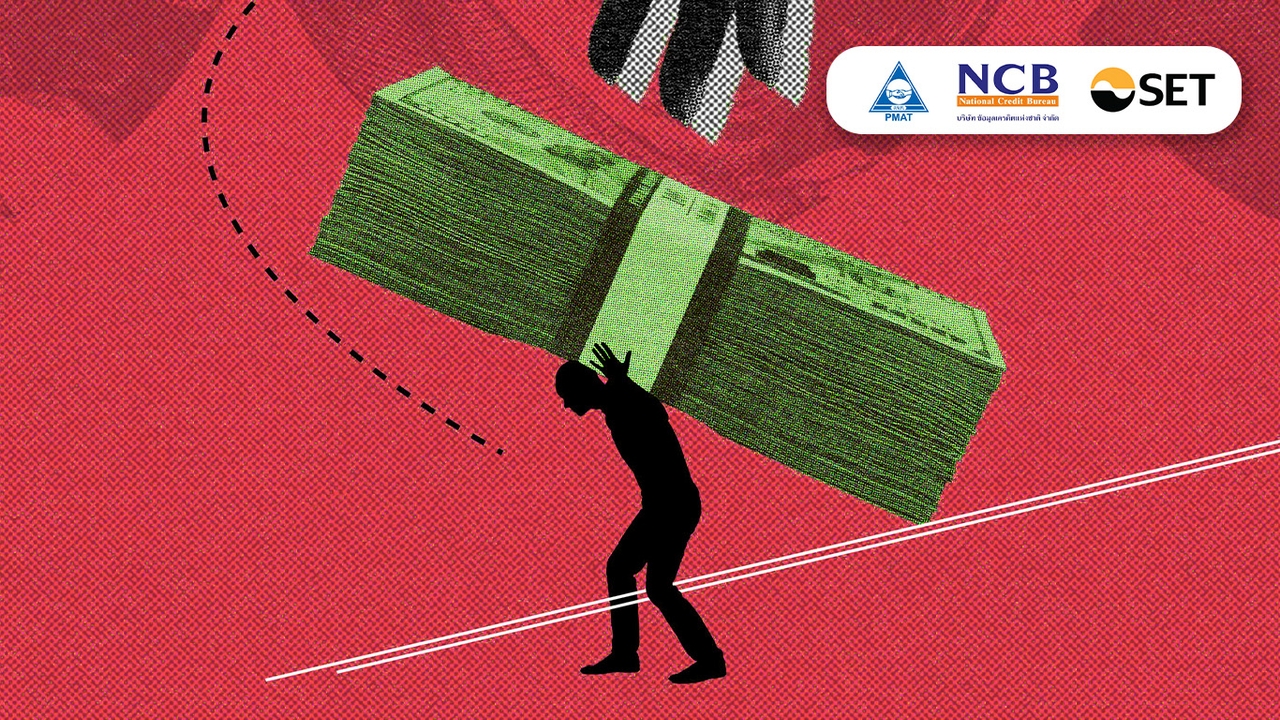
Currently, many workers face a condition known as “The Burden Bearer” who must shoulder heavy responsibilities caring for both elderly parents and children simultaneously, creating immense pressure—especially financial issues, which are a national concern.
A Bank of Thailand survey found that 52.7% of working-age people carry debt, with an NPL ratio of 27%, underscoring the urgent need to address financial wellbeing.
Mental wellbeing is also a critical factor. Bangkok ranks fifth among 100 global cities for the hardest-working populations. Work-related stress leads to fatigue and burnout.
Reports show that 7 out of 10 Thai workers suffer burnout, directly impacting focus, skills, and reducing organizational productivity. Therefore, addressing employees' financial and mental wellbeing is an urgent priority for organizations.
Meanwhile, during a special keynote titled “The State of Employee Wellbeing: Global Trends and Why It Matters to Business” presented by Worawat Suwakhonth, President of the Personnel Management Association of Thailand (PMAT) and Chief People Officer at Siam Commercial Bank Public Company Limited, he outlined global trends in employee wellbeing that Thai leaders should heed. In an era where organizations rapidly invest in AI, automation, big data, and process improvements to gain competitive advantages, one factor quietly undermining productivity and performance is "human energy," the key operating system. Without energized people, even billion-baht investments in strategy and technology cannot succeed.
Data from 2024 reveals a startling picture: only 1 in 5 employees worldwide (20%) are engaged with their organizations, meaning 4 out of 5 do not fully apply their potential. Furthermore, WHO statistics show that lack of engagement costs the global economy $10 trillion annually and results in 12 billion lost working days due to anxiety over life, debt, and mental health. Additionally, 40% of employees experience work-related stress.
Thailand's situation is even more challenging due to a fully aging society with 25% elderly population, causing a continuous decline in the working-age population alongside a shortage of future skills. Increasing work hours is not the solution; instead, organizations and HR must modernize work methods to enable smarter work, leveraging technology and agility to reduce routine tasks and allow employees to focus on higher-value activities.
Wellbeing is not just a benefit but a Business Strategy
Physical Wellbeing: The foundation of energy through health.
To effectively drive wellbeing, organizations must shift evaluation metrics from participation rates or satisfaction scores to business outcomes like talent retention, innovation speed, and stress reduction, enabling psychological safety. Employee silence—fear to speak truth or challenge—is an expensive organizational cost.
Management must empower managers and supervisors, closest to employees, to own wellbeing initiatives. Leadership roles should be assessed not only by short-term performance but by creating environments that sustain team wellbeing and energy, tracked annually via executive dashboards.
Amid AI disruption eliminating jobs and rapidly changing roles, future winners will not be those with the highest AI investment but those capable of rapidly developing new capabilities and agility to adapt personnel by skill. Both require employee wellbeing across all five dimensions. Thus, prioritizing human wellbeing as a core business strategy is key to sustainable performance today.
Followed by an in-depth session on the critical dimension of
“Hidden Costs of Financial Stress” presented by Suraphon Opasathien, Assistant Executive of the National Credit Bureau (NCB). He revealed the stark reality of Thailand's debt situation and its direct impact on HR management. Starting with the organizational perspective on life and work, KPIs measure performance, but failure to meet targets can translate in reality to "kill this people immediately," meaning immediate dismissal. Looking at the broader economy, "Thailand Inc." has a GDP of approximately 19 trillion baht but carries accumulated debt of 16 trillion baht, generating massive annual interest burdens. This crisis has been building since the major 2011 floods.
Most Thais decide to incur debt because it is "tax-exempt, easy to borrow, and low-interest." Economic stimulus policies like first-car, first-home, and rice-pledging programs have further encouraged borrowing. The IMF and World Bank once asked what future risks are feared most; the answer was a second round of first-car programs, reflecting the debt-driving behavior rooted in those three factors.
Though household debt to GDP appears to have declined to 85.9%, this reflects denominator changes rather than improvement—debt amounts remain stable while repayment capacity decreases.
Credit bureau records show 13.6 trillion baht in debt out of 16.4 trillion total household debt; the remaining 2.8 trillion baht lies outside the bureau, mainly in cooperatives (2.2 trillion) and student loans (Government Student Loan Fund), which have strict measures requiring HR departments to deduct repayments from employee salaries.
Analyzing consumer loan growth, housing loans grew only 2.4%, auto loans declined 7.4%, resulting in total system loan growth of just 0.8% year-on-year. This reflects Bank of Thailand's efforts to keep debt-to-GDP at 80% by slowing debt growth and accelerating GDP growth, making easy borrowing unrealistic. Conversely, nano finance loans grew 54% despite high interest rates of 33%, posing significant borrower risks.
Employee debt problems may be a silent threat undermining organizations
Non-performing loans (NPL), defined as payments overdue for 91 days or more, have steadily increased since Q1 2022 after the COVID-19 crisis. If a person has just one NPL account out of five, they are classified as a bad debtor. From an HR perspective, when employees seek help with debt, crucial questions are:
and "What was the money used for?" If they claim to have guaranteed others’ loans, responsibility must be seriously examined. Suraphon further explained that personal loans have an NPL ratio of 11 accounts per 100, alongside the growth of Buy Now Pay Later services promoting overconsumption. High-end installment loans have an NPL ratio of 18 per 100 accounts. Credit cards have 893,500 accounts classified as bad debt out of 24 million total credit cards, many unused for over two years. There have been proposals to regulate credit card advertising and warnings as strictly as cigarette packaging.
Auto loans show 877,000 vehicles repossessed due to default. Overall, the credit bureau system has 9,657,000 NPL accounts worth over 1.3 trillion baht, nearly 10% of total system debt. Additionally, there are over 1.9 million accounts with 1–3 overdue installments awaiting classification as NPLs, including 430,000 vehicles pending repossession—half are pickup trucks essential for livelihoods. Among occupational vehicles, motorcycles have 2.5 million current, 192,000 at risk, and 965,000 classified as bad debt. Pickup trucks total 2.5 million, with only 180,000 current and 489,000 as NPLs. To address this crisis, the Bank of Thailand introduced Preventive Debt Restructuring (DR) measures requiring financial institutions to offer debt extension or restructuring once a borrower misses one installment, acting as a "dam" to delay legal action. DR volumes surged from 291 billion baht in Q2 2024 to 1.7 trillion baht currently. Failure of this dam would flood Thailand's economy with bad debt.
Not only employees but employers, especially SMEs as legal entities, face severe challenges. Of 2.4 trillion baht in SME loans, 10.9% are NPLs and 4.95% are at risk, meaning 16% of SMEs have debt problems. These warning signs are critical for management and HR to acknowledge and prepare for the evolving economic landscape.
For financial, insurance, and wealth management news, visit Thairath Money to "Achieve Financial Wellness and Better Life" at
https://www.thairath.co.th/money/personal_finance
Follow the Facebook page: Thairath Money at
https://www.facebook.com/ThairathMoney