

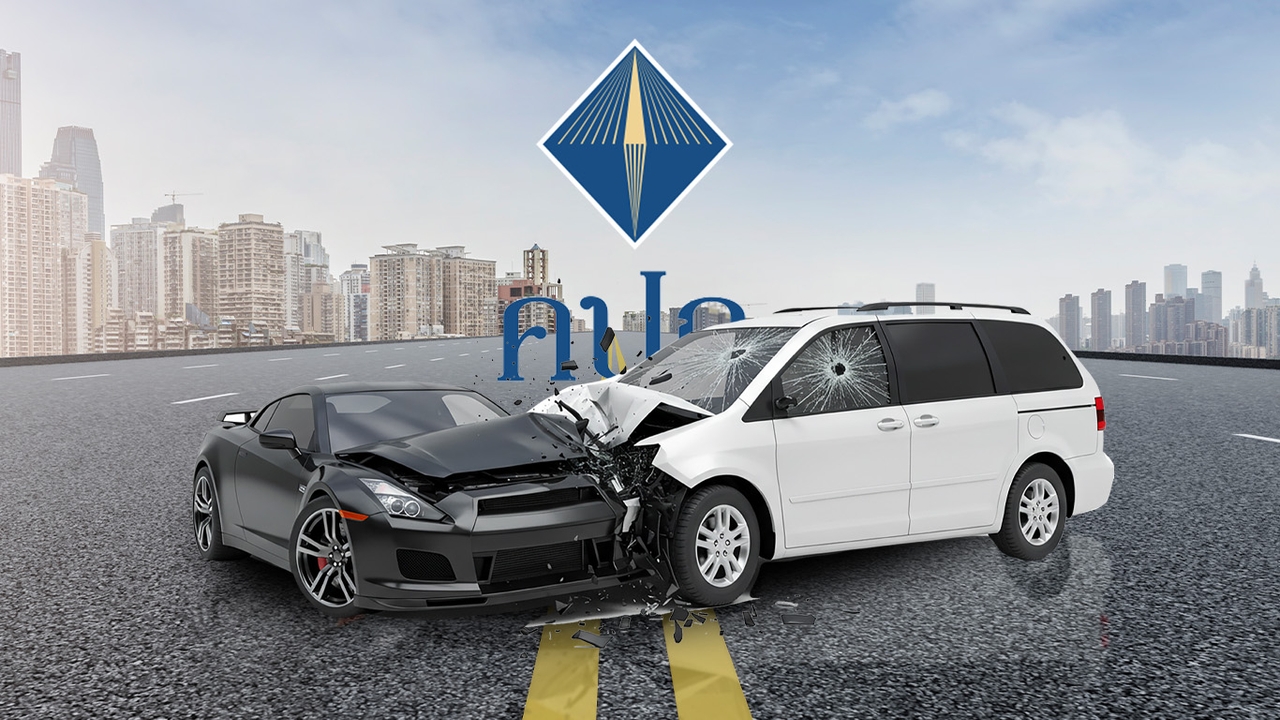
How many road accidents occur each year in Thailand? In 2025, nearly 900,000 cases were reported. Many news stories show drivers involved in collisions lack compulsory motor insurance (P.R.B.). When responsible for damages, even if the offender does not flee, they often cannot pay, causing widespread problems for families and victims.
Mayurin Sutthiratpan, Special Expert at the Office of Insurance Commission (OIC). She explained that the problem of vehicles without compulsory motor insurance has existed for a long time. Data from the Department of Land Transport shows Thailand has over 45-46 million registered vehicles, but only 35 million are insured. This means many vehicles lack insurance. OIC statistics reveal that in road accidents, 40-50% of vehicles are uninsured, resulting in victims receiving less compensation than they should or facing high out-of-pocket costs.
"We don't know the exact number of vehicles on Thai roads, but the Department of Land Transport reports 45-46 million registered vehicles, while compulsory motor insurance policies number only 35 million. So, there is a gap, meaning that at accident scenes, 40-50% of vehicles have no insurance," Mayurin said.
Given the vast number of vehicles in Thailand, it is difficult for any agency to manage all of them. Therefore, to ensure every vehicle is in the system and insured, in the first quarter of 2026, the OIC in cooperation with the Department of Land Transport will impose a rule forbidding policy cancellation after vehicle tax renewal, except if the vehicle is deregistered or the insurer is changed.
Additionally, technology will be employed, such as license plate recognition cameras that immediately check insurance status. If a vehicle is found uninsured, information will be forwarded for law enforcement. Currently, the OIC is discussing with the Department of Land Transport and the Royal Thai Police on system planning, data linkage, and procedures to create an ecosystem to manage this issue. Challenges include multiple owners of roadside cameras—such as the Department of Highways, police, and Bangkok Metropolitan Administration—requiring coordinated data sharing.
The goal is that by the end of 2026, every vehicle must have insurance, but this remains challenging due to various issues requiring cooperation across agencies. For example, although laws impose penalties, enforcement is not yet strict. Compulsory motor insurance applies to all vehicles, including motorcycles and large vehicles. Owners face fines up to 10,000 baht if uninsured, and users of uninsured vehicles face similar penalties.
To address these problems seriously, the OIC plans to pilot projects by 2026 creating model roads and communities where all vehicles entering areas such as schools, industrial estates, and government offices must have at least compulsory motor insurance (with motorcycle premiums around 300 baht). The aim is to enforce that only insured vehicles may legally drive on roads.
Read personal finance and financial planning news with Thairath Money to help you "achieve good finances and a better life."https://www.thairath.co.th/money/personal_finance
Follow the Facebook page: Thairath Money at this linkhttps://www.facebook.com/ThairathMoney