

In an economic slowdown that has reduced consumer purchasing power, the insurance market—especially auto insurance—is fiercely competitive, with companies fighting for customers by offering "lower premiums." However, beyond competing on sales, companies must manage to generate "profits" for sustainable growth.
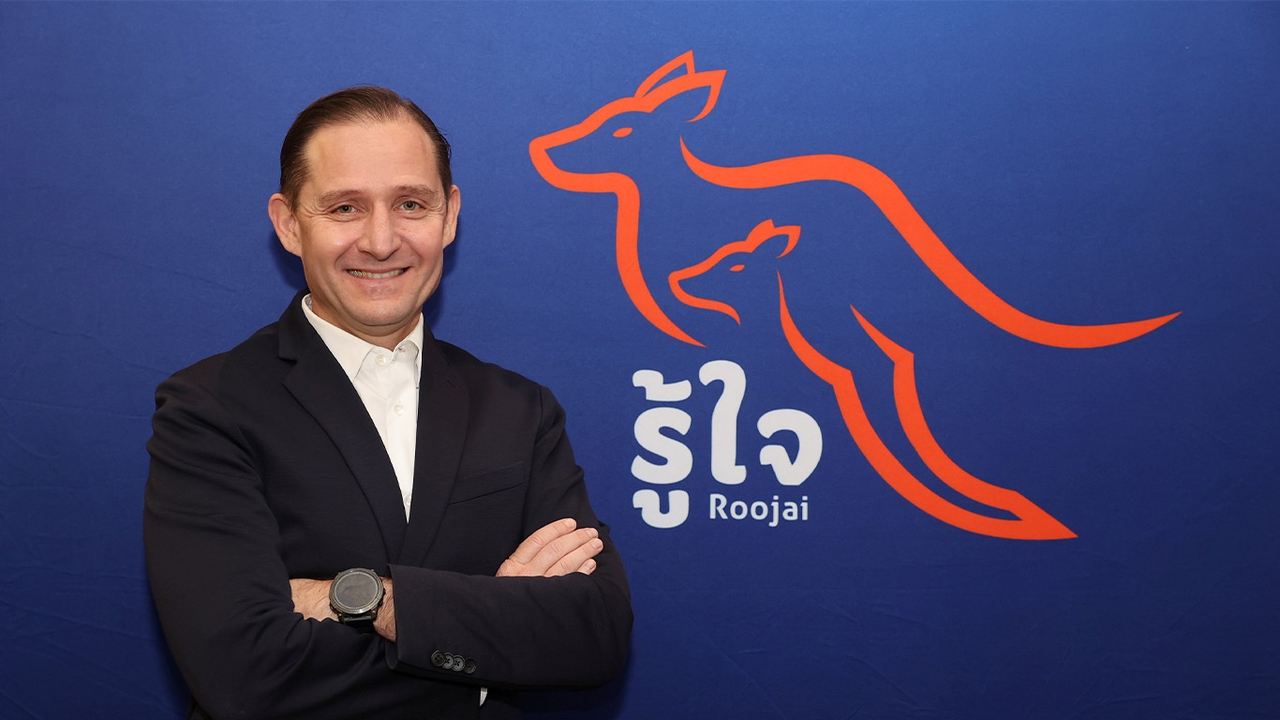
Nicolas Faget, Chief Executive Officer and Founder of the Roojai Group, said the Thai insurance market still holds significant growth potential. Roojai has been operating in Thailand for over 10 years, initially as an online insurance broker before evolving into a digital-structured non-life insurance company. It currently serves more than 370,000 customers.
In terms of total premiums, the first half of 2026 saw 1.6 billion baht in premium income and a net profit of 212 million baht (expected to continue growing from 2025’s total premiums of 3.3 billion baht). The high net profit level is attributed to maintaining the Loss Ratio below 65% for five consecutive years.

Additionally, the company employs an efficient underwriting model. Recently, artificial intelligence (AI) has been integrated across all business processes, including customer outreach, risk assessment underwriting, insurance fraud screening, customer service, and claims handling. This is expected to enhance service speed and convenience, though key steps still require human staff for oversight and approval, such as underwriting and claims. The company invests 100 million baht annually in digital infrastructure.
Kornkrit Kamruangrit, Chairman and Independent Director of Roojai Insurance Public Company Limited, added that maintaining the Loss Ratio below 65% for five years results from appropriate premium pricing based on comprehensive statistical data analysis before underwriting. The company also screens customers by risk factors such as driving behavior, vehicle model, and location, which lowers the Loss Ratio and allows passing reduced risk costs on to customers in the form of lower premiums.
Regarding the overall outlook for 2026, Nicolas said, although the auto insurance sector in Thailand faces increased risks from disasters, these remain manageable. Premiums are expected to grow well, benefiting from higher premiums on electric vehicle insurance compared to conventional fuel vehicles. Additionally, the company is consulting with the Office of Insurance Commission (OIC) to accelerate two initiatives.
First, the introduction of a digital compulsory motor insurance (P.R.B.) expected to be priced at 560 baht. Premium reductions stem from the company’s model cutting commission costs by 12%.
Second, enabling monthly installment payments for auto insurance premiums. Currently, no company offers direct monthly payment options; most require intermediaries such as credit card companies. Roojai has proposed to OIC to begin pilot testing this via a Sandbox framework.
By 2026, the company plans to expand its non-motor insurance business, including travel insurance and personal health insurance (PMI). The goal is to increase non-motor insurance to 20% of the portfolio by 2030, up from about 3% today. It also expects a 6% market share in Thailand’s auto insurance market, estimated at approximately 10 billion baht out of a total market premium of 160 billion baht.
Read personal finance and financial planning news with Thairath Money to help you "achieve good finances and a better life."https://www.thairath.co.th/money/personal_finance
Follow the Facebook page: Thairath Money at this linkhttps://www.facebook.com/ThairathMoney