

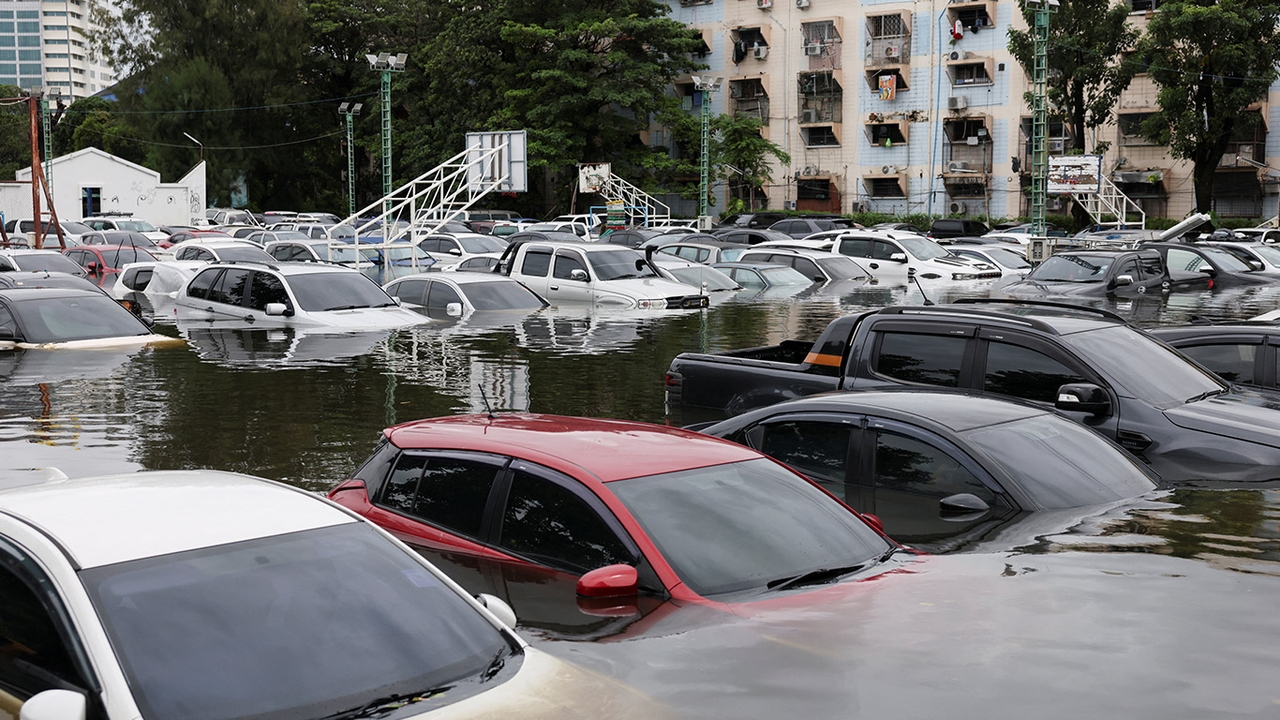
During the major floods at the end of September 2026, many people saw numerous cars submerged in water. Although water levels have since somewhat receded, the next concern is how much those with insurance can claim for damages.
Thairath Money has compiled information on car insurance claims related to damages from the recent major floods.
Amid the severe flooding causing extensive car damage, the Office of Insurance Commission (OIC) has issued a reminder emphasizing that life safety must come first. Therefore, people need not worry about gathering evidence of damage immediately. Once in a safe place, check which insurance coverages apply and notify the insurance company promptly to expedite the claim process (remember to request the claim number).
Car insurance policies covering flood damage generally come in three types: voluntary motor insurance type 1 (first-class insurance), type 2+ (second-class plus), and type 3+ (third-class plus), provided the policyholder has purchased additional natural disaster/flood coverage.
Regarding damage to the vehicle itself, the OIC uses a guideline assessing floodwater levels reaching the vehicle in five categories:
- Level A: Water reaches the car floor mats; repair costs approximately 8,000 to 10,000 baht.
- Level B: Water reaches the seats; repair costs approximately 15,000 to 20,000 baht.
- Level C: Water reaches below the dashboard; repair costs approximately 25,000 to 30,000 baht.
- Level D: Water reaches above the dashboard; repair costs of 30,000 baht and above.
- Level E: The entire car is submerged, considered total loss, with compensation paid according to the insurance policy terms.
For electric vehicles (EVs), damage assessment must consider both the battery and the vehicle body, along with the specific manufacturer and model requirements.
Typically, if a car is damaged, insurance covers repairs to restore it to its pre-damage condition. However, flood damage involves two types of losses we should understand:
Partial Loss refers to cases where the car is damaged but can be repaired safely with available parts. The insurer covers the actual parts and labor costs according to the coverage terms.
Total Loss applies when damage is severe and repair costs reach 70% of the car's value on the damage date. The insurer will pay compensation based on the insured amount specified in the policy to the insured, beneficiary, or title owner, as applicable.
For example, if a car was purchased for 1,300,000 baht, insurers generally insure at 80% of its value, which would be 1,040,000 baht in this case.
If a flood occurs when the car's market value has depreciated to 1,000,000 baht, 70% of this is 700,000 baht. If repair costs reach 700,000 baht, it qualifies as a Total Loss. The insurer must refund the insured amount of 1,040,000 baht and pay the claim within 15 days after receiving complete documents.
Once the insurer pays this lump sum, ownership of the flooded vehicle or "wreck" usually transfers to the insurance company for further management.
If the car is fully owned by the insured (free of loans), the insured receives the full claim amount. However, for many who still have hire-purchase loans or financing, the financial institution is usually the legal owner and is named as the "beneficiary" in the policy.
Therefore, when the insurer pays the claim, the funds must be transferred to the financial institution that holds the title, with two scenarios to understand.
If the claim amount exceeds the loan payoff, for example, a 700,000 baht claim versus a 500,000 baht payoff, after settling the loan, the financial institution must return the 200,000 baht difference to the insured.
If the claim amount is less than the loan payoff, for example, a 700,000 baht claim versus a 750,000 baht payoff, the insured must pay the 50,000 baht remaining loan balance.
Before planning finances, check with the insurance company or the bank holding your vehicle loan to confirm the remaining balance after the claim. Determine if the debt will be fully settled or if further planning is needed. For questions about insurance, contact your insurer directly or consult the OIC.
Read personal finance news and financial planning tips with Thairath Money to help you "Achieve good finances, achieve a good life."https://www.thairath.co.th/money/personal_finance
Follow the Facebook page: Thairath Money at this linkhttps://www.facebook.com/ThairathMoney