

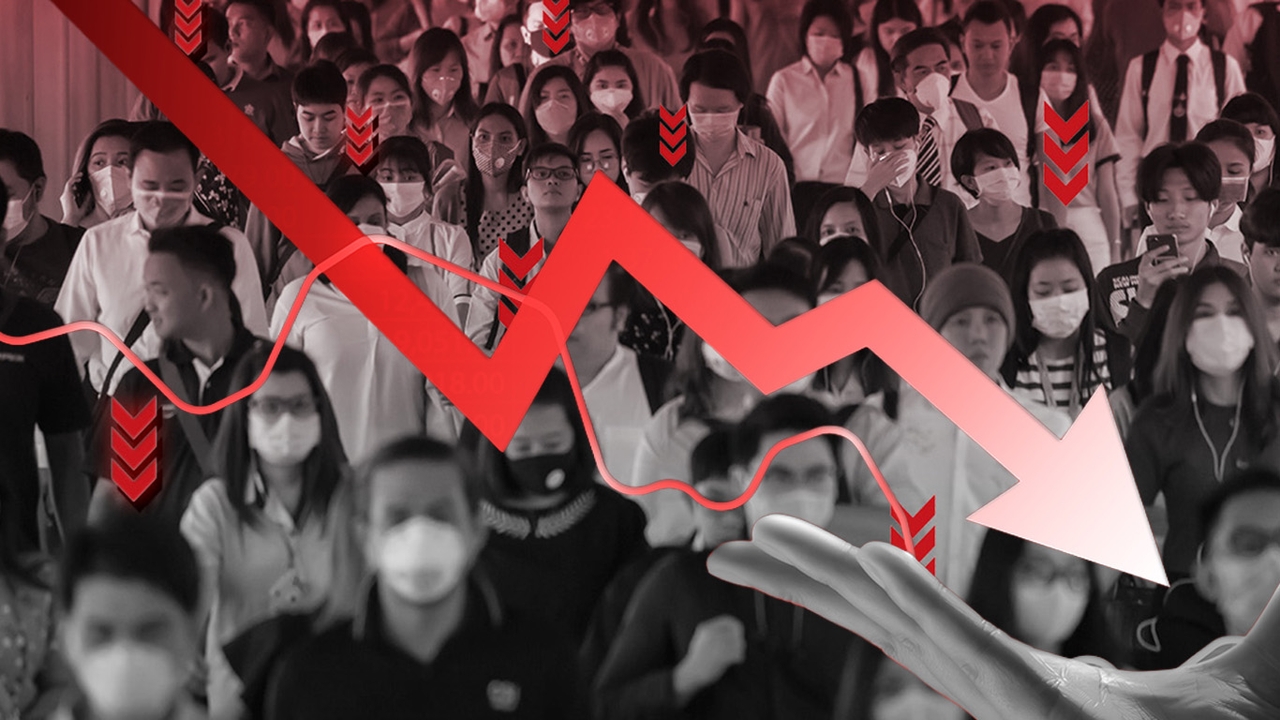
Thailand leads many countries in financial services, offering PromptPay for fast, real-time transfers and payments. Regarding savings, over 96.1% of Thais hold bank accounts. However, a deeper analysis shows that 91.9% of these accounts are used for spending, not saving as many assume. What do these data reveal about Thai financial behavior? Thairath Money explores the answers in this article.
How financially skilled are Thais? Let's examine survey results on financial skills, savings levels, and financial service usage among Thais in 2024 conducted by the Bank of Thailand (BOT). The BOT found that while 96.1% of Thais have bank accounts, only 56.1% use them specifically for saving. Meanwhile, more than 91.9% maintain accounts primarily for spending.
At the same time, most Thais still focus on saving through bank deposits, with investment and insurance product usage remaining very low. A key indicator that many Thais have insufficient savings is that only one in four believe they could live off their accumulated savings for more than six months if suddenly without income. Furthermore, only one in seven have a retirement savings plan and are able to follow through on it.
Why do Thais fall short of their savings goals and fail to realize their dreams? On a broad scale, inadequate savings stem from stagnant incomes. Recently, social media is abuzz about rising expenses — from fuel prices and street food costs to daily necessities — while incomes or salaries have not kept pace. Consequently, many resort to borrowing to cover living expenses.
This situation aligns with the latest data from the National Economic and Social Development Council (NESDC). NESDC reported that Thailand's household debt in Q4 2025 increased by 0.05% year-on-year to 16.44 trillion baht, pushing the household debt-to-GDP ratio up to 86.7% after stabilizing for two quarters. Personal loans grew rapidly by 4.24% in Q4 2025.
Looking at non-performing loans (NPLs), the situation has worsened. Data from the National Credit Bureau Company Limited (Credit Bureau) show that in Q4 2025, outstanding personal loan balances overdue by more than 90 days totaled 1.31 trillion baht, growing 7.6% YoY and accounting for 9.59% of total loans.
NESDC identifies key factors influencing Thailand's debt situation to watch closely:
1. Some young people exhibit shopping and spending behaviors influenced by online reviews and trends.
2. The emergence of branchless commercial banks (Virtual Banks) may contribute to increased borrowing risks.
3. Finfluencers affect Thai financial behaviors in the digital age. Caution is needed as some Finfluencers may lack sufficient financial knowledge, have conflicts of interest, or engage in hidden advertising. Incomplete or misleading information can lead followers to losses and increased debt burdens.
Overall, insufficient income limits saving capacity, and increasing debt may not be solely individual responsibility but also due to external factors restricting income growth. Therefore, the government must focus on key tasks such as promoting economic growth and policies to upskill and reskill Thai workers to avoid AI displacement, thereby enabling income growth.
Meanwhile, the government has introduced numerous measures to address household debt but may need more targeted approaches that effectively assist specific groups.
For individuals, improving financial planning is essential. This may start with adopting a "save before spending" mindset and creating an emergency fund covering at least 3-6 months of expenses to serve as a buffer during crises, thus avoiding reliance on high-interest loans that could lead to future bad debts.
Read personal finance news and financial planning tips with Thairath Money to help you achieve "Good Finances, Good Life" athttps://www.thairath.co.th/money/personal_finance
Follow the Facebook page: Thairath Money at this linkhttps://www.facebook.com/ThairathMoney