

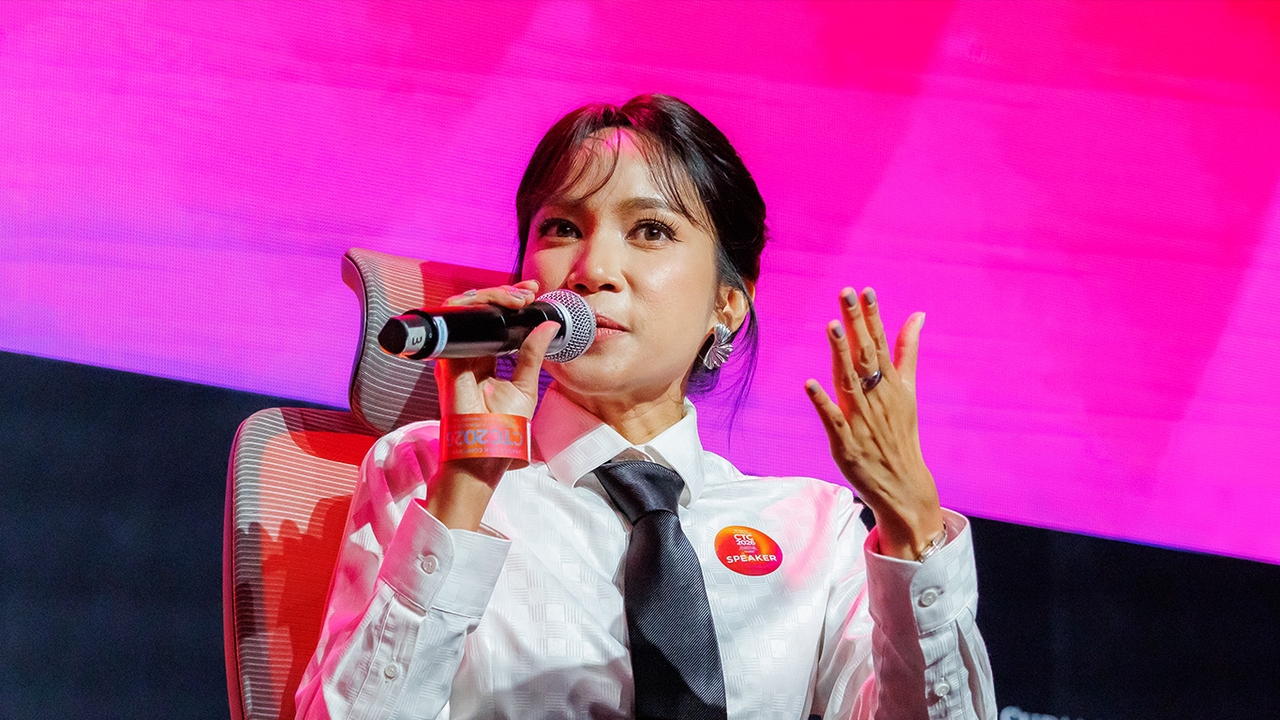
The panel discussion at the Creative Talk Conference 2026, or CTC 2026, themed "The Festival of Futuristic Minds: Visionaries Thinking Differently to Build the Future," invited Annabel Rattanamas Kotchanant, owner of the Annabel - Your Wealth Architect page, which has over 280,000 followers, to speak on "The Blueprint of Futuristic Wealth: Designing Your Own Financial Architecture," hosted by Sittipong Sirimasaksem, CEO and Founder of RGB72 and CREATIVE TALK, and founder of CTC, in a concise 45-minute session providing life guidelines for financial planning that many can adapt to their personal paths.

Annabel opened with an overview of the unprecedented volatility in the global economy. Over the past 15 years, the world has grown accustomed to low interest rates, but from now on, rates may no longer remain low. This marks a pivotal shift affecting everyone's investment portfolios by increasing financial costs for companies. Simultaneously, AI is transforming lifestyles in both positive and negative ways—creating new opportunities while posing risks to job security.
She also cited global conflicts impacting oil prices and inflation, noting that although Thailand seems distant from war zones, it has experienced severe and rapid effects. This reflects how interconnected today’s world is, where decisions by one nation’s leaders can immediately influence living costs here.
Annabel explained that the concept of “Wealth” has significantly evolved. Previously, wealth meant owning a house, land, and large bank accounts. Today, it encompasses broader aspects such as freedom in lifestyle, good health, work-life balance, and managing portfolios to survive crises rather than just maximizing returns. It also includes legacy—not only passing on money but also the family's mindset.
Therefore, she proposed four financial blueprints addressing current conditions: life capital, maintaining cash flow reserves, ownership of assets, and risk management.
Annabel summarized the “blueprint” concept for designing wealth in an era when people may live up to 100 years, focusing on four main areas:
1. Human Capital — Life Capital. She pointed out that Thais often underestimate the importance of continuously developing their own capabilities.
Annabel illustrated that having 100 million baht without knowledge, skills, experience, networks, credibility, and health won’t last long. However, possessing these components means one can always recreate that 100 million baht.
Even “credibility,” which is the hardest asset to build and maintain, requires care. Importantly, continuous learning is essential because the traditional education system—studying once at 18 and using it until retirement—is insufficient in today’s rapidly changing world.
2. Cash Flow. She said intangible wealth isn’t true wealth; humans need cash flow, not assets that are hard to liquidate. Holding cash is not wrong.
Annabel recommended that the cash reserve once deemed sufficient at three months is now insufficient. The minimum should be six months, ideally up to one year, calculated from essential monthly expenses excluding luxuries. This cash reserve must not be invested in stocks, crypto, or gold but kept separate.
3. Asset Ownership Mindset. True wealth arises when assets generate income without continuous effort or time.
She emphasized, “High income does not equal wealth.” A good salary without asset ownership results in all money flowing out. Many confuse owning depreciating items like luxury cars or vacation homes, which do not generate income, with owning income-producing assets like rental properties or dividend stocks.
For Thai investors, she advised studying ETFs to reduce concentration risk in individual stocks and using Dollar Cost Averaging (DCA) via automatic monthly deductions to remove emotional bias from investing.
She also explained the difference between "Rich" and "Wealth" intriguingly:
“Rich is what people see and admire, but Wealth is what people don’t see and don’t need admiration for. We have freedom and choice. You like one way, you do it that way,” Annabel said.
4. Risk Management. Annabel warned not to confuse Confidence with Certainty, as no one can know the future for sure—only probabilities exist.
She discussed upcoming financial system changes in the next decade, featuring Digital Wallets containing Digital Currency, Tokenized Deposits, and Tokenized Assets. She cited Central Bank Digital Currency (CBDC) initiatives seriously pursued by countries including the U.S. and China. These changes will democratize investment opportunities previously available only to those with tens of millions and enable faster, fee-free cross-border transfers.
Annabel offered current investment perspectives, urging investment with understanding and awareness of global trends rather than following fads or "stock tips from golf courses (or social gatherings)." If global trends emphasize Longevity, consider Health Tech stocks; if AI is discussed, understand it includes not just Semiconductors but also the Grid (power lines) and Quantum Computing. Regarding Thai stocks, banks may be attractive given current interest rates.
She stressed that investment today must also consider geopolitical factors, as national leaders’ decisions can instantly shift markets.
Annabel concluded that seeking future wealth isn’t about chasing crypto coins to multiply ten times but understanding the "source" of all change. For example, as the global financial system transforms, businesses related to payment systems and cybersecurity will benefit long-term. She recommends focusing on and staying with these trends long-term to grow wealth alongside the emerging future.
Read personal finance and financial planning news with Thairath Money to help you "Achieve Good Finance, Good Life" athttps://www.thairath.co.th/money/personal_finance
Follow the Facebook page: Thairath Money at this linkhttps://www.facebook.com/ThairathMoney