

In an era where volatility has become normal in investing, the term "wealth" is being reinterpreted—from aiming solely for maximum returns to preserving and managing assets for sustainable growth, security, and long-term peace of mind.
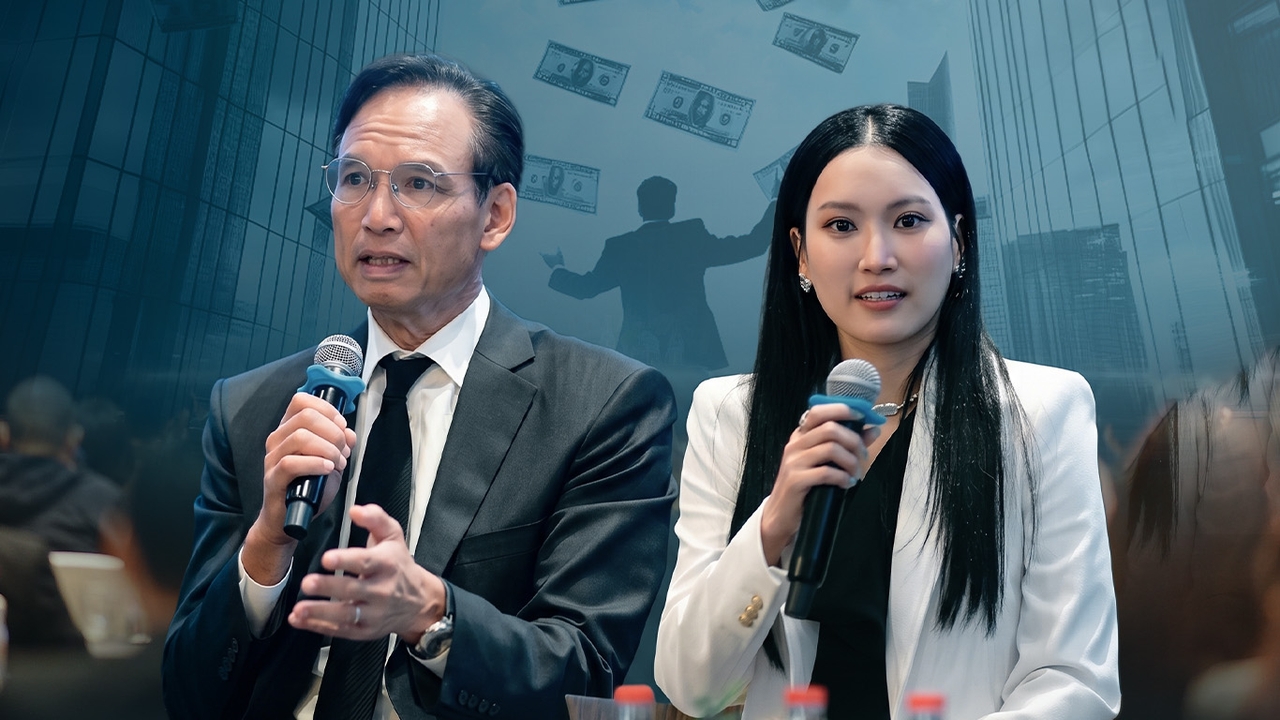
At the TFPA Wealth Management Forum 2026 seminar, during the panel discussion titled "Wealth Beyond Return - The New Era of Prosperity: A Modern Age of Wealth (Beyond Returns)"
Two leading experts, Korn Chatikavanij and Narida Manasomjit, shared insights to delve into the changing investment perspectives and the new definition of wealth as follows.
In a new world full of volatility, “wealth” may no longer be measured only by the amount of growing money. Their views reflect that today’s definition of wealth means protecting what we have built and living without worry.
Narida Manasomjit, Director of Regional Wealth Management Solution at ICHAM PTE LTD and owner of the Gee Money & More page, believes that while returns remain a part of investing, true wealth means our money must fulfill four main dimensions:
1. Safety—not the absence of risk but the willingness to accept risk with knowledge and the ability to assess the worst-case scenario.
2. Growth—investment must continue to grow to outpace inflation, exchange rates, and rising living costs.
3. Management system—sustainable wealth requires systems to manage everything from portfolio building and asset protection to using appropriate tools for wealth transfer.
4. Liquidity—the most critical factor, since no matter how many assets one has, if cash is needed but assets cannot be converted promptly, survival during a crisis is impossible.
Additionally, high-net-worth individuals, often business owners, have shifted their investment goals from asking "How much return can I get?" to protecting existing wealth, focusing on portfolios that grow faster than inflation and survive all conditions.
Former Finance Minister and Honorary Member of the Thai Financial Planners Association, Korn Chatikavanij, defines the ultimate outcome of wealth as "peace of mind." Truly wealthy people are "those without worries," though the degree of worrylessness varies by individual context.
This peace of mind arises when one no longer worries about investments, has sufficient liquidity, and can cover personal expenses.
Moreover, wealth aligns with the "philosophy of sufficiency economy," which in financial terms means "risk management" tailored to oneself, reflecting personal life expectations.
When wealth can be protected in various ways.
Narida points out that as high-net-worth investors move beyond maximizing returns, they focus on tools that can close risk gaps and manage taxes in preparation for wealth transfer.
For example, insurance—a tool accessible to the general public—though some Thais may view it negatively, is regarded in wealthy societies like Singapore as a premier risk elimination tool.
Its principle is to convert known costs, namely "insurance premiums," which are predictable and planned, into coverage for unpredictable risks.
Such as unforeseen events affecting life, especially if the person is a family or business pillar. Paying this controllable cost is worthwhile and essential for wealth protection.
For Korn, the biggest challenge in growing assets steadily is "discipline" and emotional control in all situations. He designed a systematic approach to enforce discipline by allocating most investment funds into mutual funds managed by professionals.
Another portion is set aside as a "lust relief portfolio," acknowledging his own trading hobby. This portfolio is meant solely for personal trading, with profits or losses accepted as part of the process.
This portfolio segregation helps preserve peace of mind and prevents personal emotions from harming the main wealth portfolio.
Read more personal finance and financial planning news with Thairath Money to help you "achieve good finance, good life" at https://www.thairath.co.th/money/personal_finance
Follow the Facebook page Thairath Money at this link: https://www.facebook.com/ThairathMoney