

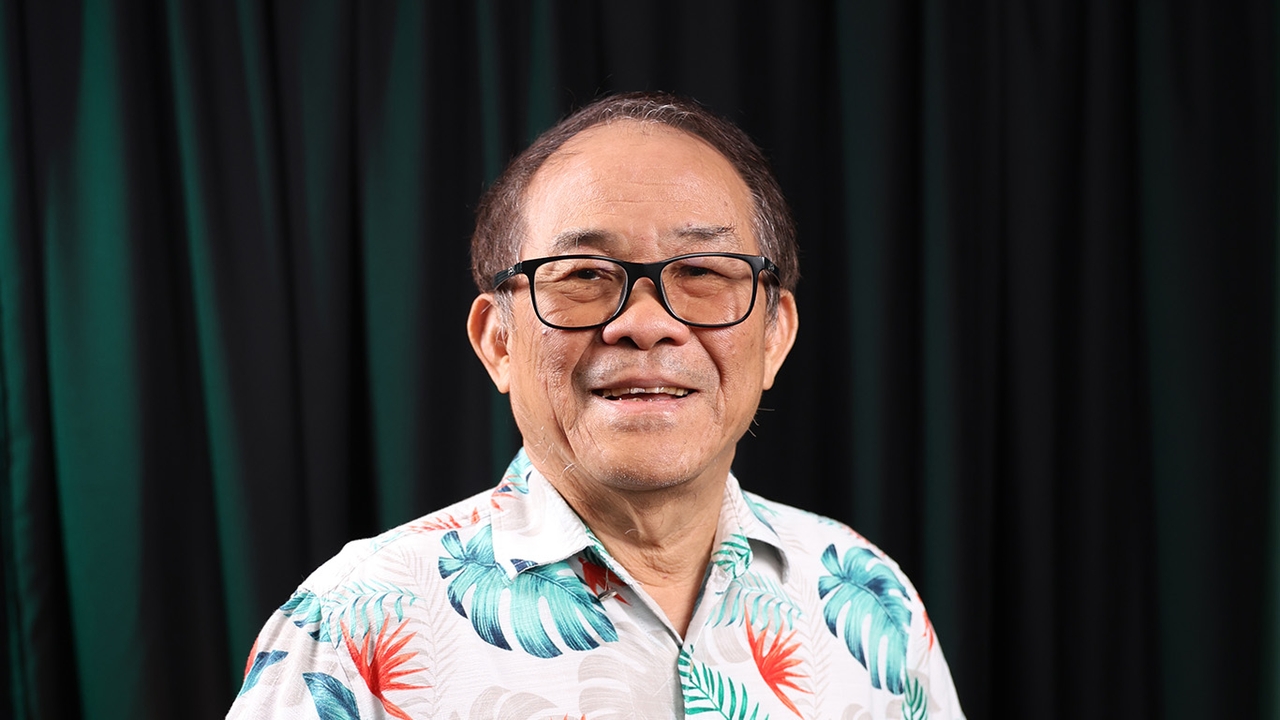
Having endured four stock market crises, his portfolio has still grown to be worth billions of baht...
What mindset has made Dr. Niwes Hemvachiravarakorn one of Thailand's most successful value investors (VI)?
Over more than 30 years in the capital markets, this man—the role model for VI investors—has weathered the Tom Yum Goong crisis, the dot-com bubble, the subprime mortgage crisis, and COVID-19. What's noteworthy is not just the returns but the "mindset" that enabled him to build wealth even during the most volatile market days.
Thairath Money had the opportunity to speak with Dr. Niwes on Money Secret EP.21 about lessons from his investment journey, his views on crises, modern portfolio management, and key qualities for investors seeking long-term success.
Throughout his 30-plus years in the stock market, Dr. Niwes has faced four major storms. Interestingly, his investment portfolio was hardly shaken and was able to generate returns during recovery periods.
Dr. Niwes explained that for long-term investing, crises are beneficial because nearly all stock prices fall sharply. Buying good companies at low prices during these times is key to creating huge profit opportunities.
This is evident from Dr. Niwes' portfolio performance across the four major past economic crises, proving that "true returns come not during the crisis year but in the years after the crisis has passed."
The Tom Yum Goong crisis (1997)
This was the most severe crisis, with both the economy and stock market collapsing simultaneously. The index dropped over 50%, but Dr. Niwes' portfolio still gained about 10%. Buying cheap stocks then allowed the portfolio to jump 50% the following year.
The dot-com crisis (2000)
US tech stocks crashed by as much as 90%, and the Thai market dropped over 40%. Despite the downturn, Dr. Niwes made approximately 20% that year, and his portfolio soared 70% the next year.
The subprime mortgage crisis (2008)
This US bad debt crisis spread globally, including to Thai stocks. That year, Dr. Niwes' portfolio lost 15%, but buying when the market halved led to 140% growth the following year.
The COVID-19 crisis (2019-2020)
The stock market suffered a sharp short-term sell-off; Dr. Niwes' portfolio dropped about 10%. However, by staying calm and continuing to invest, the portfolio rebounded 20% the next year.
A common theme across all crises is that major returns did not occur during the crisis year but after it had passed.
This means investors who maintain discipline, avoid panic, and dare to invest when most are fearful tend to reap the best returns during economic recoveries.
Dr. Niwes believes long-term investors should not fear crises but see them as times to buy good companies at lower prices—crucial opportunities to build future returns.
“Crises are good because we get to buy stocks cheaply... Nowadays I wait for a crisis. Honestly, I’m waiting. It hasn’t come yet. We love crises; we want them to come,” Dr. Niwes said.
Dr. Niwes views VI principles as still valuable, but market contexts have changed. For modern investing, he recommends abandoning the idea of playing stocks for quick riches and instead aiming for reasonable annual returns of 5-7% to beat inflation and protect wealth.
Nowadays, picking individual stocks is not always necessary. One can use mutual funds to diversify risk and focus on fundamentally strong stocks that regularly pay dividends, without worrying too much about market price volatility.
He also advises that portfolios should include international diversification, splitting funds into three main parts:
Dr. Niwes shared key insights that enable investors to survive and succeed, which include:
“Knowledge and discipline” – This goes beyond just picking good stocks. It requires understanding the overall investment landscape, diversification, analyzing management, business fundamentals, and financial data rationally.
Additionally, investors need “patience” and a long-term horizon to stay in the market for decades without quitting during downturns or sluggish periods.
However, even with skill and patience, “luck” is the final puzzle piece that creates pivotal turning points. Luck comes only to those prepared and who stay in the market long enough.
“A large part of big gains comes from luck, but you have to stay. Some people can’t endure and say it’s been bad for years, so they quit. But that day might be when luck arrives,” Dr. Niwes said.
For those interested in hearing Dr. Niwes’ full perspective, the complete interview is available on the programMoney Secret EP.21on Thairath Money channel.
You might discover that "investment success" doesn’t start by finding the best stocks but by developing the right mindset from the very first day you enter the capital market...
Read stock and investment news with Thairath Money at
Follow the Facebook page: Thairath Money at this link