

Thailand's coffee market continues to grow, becoming fiercely competitive. The key to long-term business sustainability is not just sales volume but building a truly strong and sustainable ecosystem.
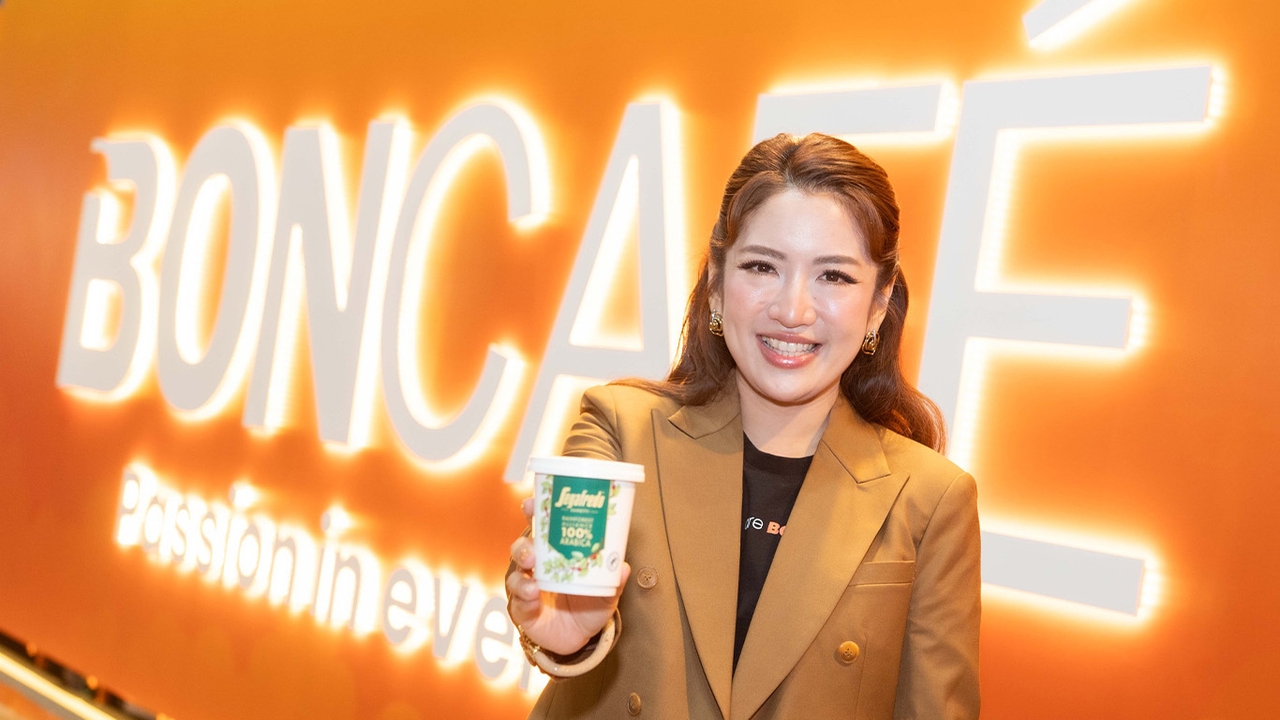
Usapan Inteewarawong, Chief Executive Officer of Boncafe Thailand Co., Ltd. She shared an interesting vision that despite Thailand's coffee market growing annually, challenges remain due to the relatively low daily coffee consumption per person compared to global levels, indicating significant growth potential.

At the same time, competition intensifies with new players entering continuously. To grow sustainably in this arena, Boncafe positions itself as an ecosystem connecting from upstream to downstream. Though the company does not own coffee plantations, it supports farmers as a "supporter" and "bridge" linking producers and consumers through transparent, verifiable sustainability principles, which are crucial.
When discussing sustainability, many associate it with organic farming. However, Boncafe sees organic farming in Thailand as limited by land title requirements, which are challenging in many areas. Therefore, Boncafe focuses on the Rainforest Alliance standard as a core, currently importing coffee from Vietnam via its Asia-wide network. This standard addresses farmers' livelihoods and environmental care, with every baht and kilogram purchased contributing back upstream, creating a cycle where consumers directly participate in protecting the planet.

A key strategy is making sustainability economically "tangible." Usapan points out that today's consumers are willing to pay for eco-friendly products if prices are reasonable and affordable. Boncafe strives to bridge the gap between regular products and those in the sustainability segment.
"In Europe, ESG and Carbon Footprint have become mandatory standards, but in Asia, they are still considered 'nice to have,' especially among B2B customers like five-star hotels and publicly listed companies that emphasize ESG and Carbon Footprint heavily," Usapan said.
The sustainability implementation plan is divided into three phases:
Short term: Focus on educating B2B customers about Certified Coffee and expanding awareness to B2C groups.
Medium term: Aim to upgrade the company's own roasting facilities to sustainability standards or find expert partners to strengthen capabilities.
Long term: Target all Boncafe coffee grades, even entry-level 4C (Common Code for Coffee Community), to be certified for sustainability standards.
Beyond coffee beans, Boncafe imports global coffee machine innovations such as Ceado, Eureka, and Mazzer featuring energy-saving technologies and zero waste to reduce material loss, effectively cutting shop costs. The factory has adopted solar power, practices upcycling in packaging, and uses Kaizen processes to organize and reduce waste while systematically tracking electricity and waste data to unify sustainability efforts across the organization.
"Boncafe Thailand places concrete importance on sustainability. According to Massimo Zanetti Beverage Group’s 2025 data, we are a major user of certificated green coffee beans, consuming over 125,000 tons annually, including 25% Rainforest Alliance Certified (31,250 tons), 1.5% Organic Certified (1,875 tons), and 3.5% Fairtrade Certified (4,375 tons)," Usapan stated.
This year, Boncafe targets 1.5 billion baht in revenue, growing from last year's 1.4 billion baht (double-digit growth), despite facing significant challenges from a war-driven 40% spike in raw material costs plus higher shipping and packaging expenses. The main challenge is managing costs without excessive price increases to consumers, since if eco-friendly product prices rise too much amid a tight economy, consumers may find them inaccessible.
Usapan added that with over 17 years of experience at Boncafe, she views coffee not just as a beverage but as a "solution" that must meet all customer needs—retaining existing clients and accelerating growth in new online channels. Besides coffee, the company is committed to strengthening its tea and non-coffee beverage segments equally.
"No matter the shade of green, it means starting to help the planet. Sustainability doesn't require waiting for perfection but beginning action and communicating honestly to balance business growth with preserving the planet for future generations sustainably."
Boncafe Thailand is also leading the coffee business into an eco-conscious era, showcasing quality coffee experiences focused on environmental care through the "Boncafe Go Green Certified Coffee Workshop." As a leader in one-stop coffee and beverage solutions, it delivers Rainforest Alliance global standards to hotels and leading coffee shop partners across Thailand, reaffirming its role behind customers' success for over 35 years with tangible sustainability at its core, notably at the "World of Coffee Bangkok 2026" event.
Follow the Facebook page: Thairath Money at this link https://www.facebook.com/ThairathMoney