

How can forest restoration proceed sustainably if local residents still face livelihood challenges?
The "Nan Sandbox" model brings together government, business, and community cooperation to connect natural resource stewardship with livelihood creation, advancing both forest conservation and people’s quality of life simultaneously.
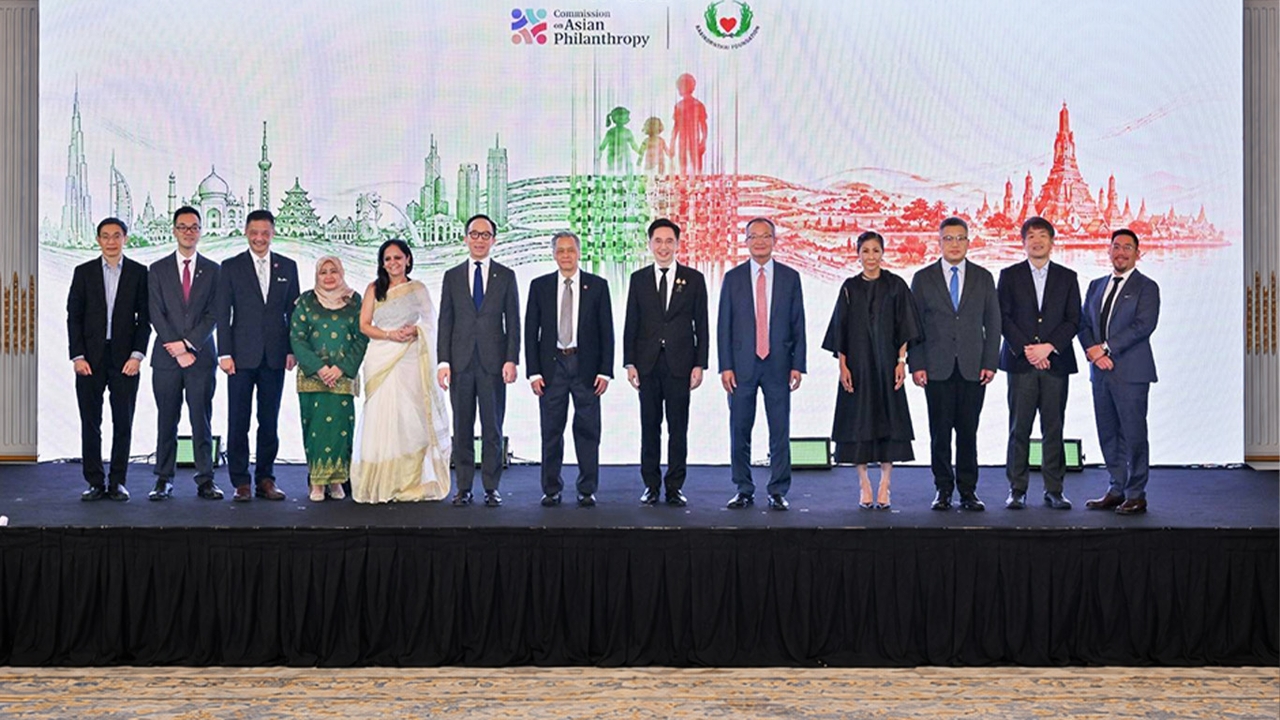
Bandunur Lamsam, Honorary Chairman of Kasikornbank, presented this approach at the "Asia’s Philanthropic Future: Catalyzing Growth and Partnership" event. The event, organized by the Kasikornthai Foundation in collaboration with the Asian Philanthropy Commission, took place on 17 Oct 2026 GMT+7 at the Mandarin Oriental Hotel in Bangkok as an official side event of the IMF-World Bank Group Annual Meetings 2026, with over 100 policymakers, charity leaders, and business executives attending.
The forum encouraged viewing philanthropy beyond mere financial donations, emphasizing the use of capital, expertise, business networks, and community relationships to address social issues and support long-term national development.

Bandunur explained that the Nan Sandbox project leverages business sector expertise to build partnerships with government and local communities, linking forest restoration with sustainable livelihoods, youth education, and local healthcare.
This approach ties forest encroachment solutions to improving community quality of life, positioning the project as a replicable model for other regions in Thailand.
Another collaboration involving Nan province is the pilot implementation of "Natural Capital Accounting" jointly by the World Bank, Kasikornthai Foundation, and the National Economic and Social Development Council (NESDC).
. Chen Guangzhe, Vice President for Planet at the World Bank Group, highlighted the important collaboration between the World Bank, Kasikornthai Foundation, and NESDC in piloting Natural Capital Accounting in Nan province. "Philanthropy has a unique capacity to pilot innovations, nurture community relationships, and generate the empirical evidence necessary to attract broader public and private funding," Chen stated.
The event also featured a high-level panel discussion including Arturo Franco, Director of Group Strategy at the World Bank; Dr. Somkiat Tangkitvanich, President of the Thailand Development Research Institute (TDRI); NG Boon Heong, CEO of Temasek Foundation; and Siti Kamariah Ahmad Subki, Managing Director and Trustee of Yayasan Hasanah Foundation. Panelists agreed that philanthropy’s true value extends beyond funding, emphasizing leveraging non-monetary assets like business networks and community trust to coordinate resources and support government operations. They concluded that scaling successful local pilot projects into sustainable systemic solutions requires early collaboration among private sector, communities, and government to establish viable long-term financing strategies.

Kobkarn Wattanavrangkul, Chairperson of the Kasikornthai Foundation, stated that good intentions can achieve broader impact when supported by sound systems. Through Kasikornthai Foundation’s work and partnership with the Asian Philanthropy Commission, regional knowledge is brought to discussions tailored to Thailand’s context, leveraging extensive networks and experience to address the country’s most critical social challenges.
. Dr. Gabriel Leung, Director of the Institute of Philanthropy, and Ichiro Kabasawa, Executive Director of the Nippon Foundation, co-convenors of the commission, emphasized shared empirical evidence and regional networks established by the Asian Philanthropy Commission, outlining how these strengthen collaboration and action across Asia.
In a keynote address, His Excellency Professor Dr. Yossapon Wongsawat, Deputy Prime Minister and Minister of Higher Education, Science, Research and Innovation, presented the country’s development needs (demand side), highlighting the critical role of philanthropic cooperation. He stressed key areas including nature conservation and grassroots community development, where flexible private sector capital focused on long-term outcomes can effectively support and expand government initiatives. He also underscored the importance of research institutes, universities, and innovation agencies in linking philanthropic support to tangible results through talent development and scalable solutions.
. Dr. Xiao Liming, Secretary General of Tencent Charity Foundation, illustrated the use of core digital technologies to connect communities and reduce collaboration costs across sectors, strengthening societal resilience long-term through strategic partnerships between business, government, and social organizations.
The event also launched an official Thai-language Interim Report from the commission, highlighting the potential of philanthropic capital in the region to support national development agendas.
The commission’s estimates show that donations within the commission’s jurisdiction reached $190 billion (approximately 3.9 trillion baht) in 2024, with a projected cumulative value exceeding $1 trillion (about 35 trillion baht) over the next decade.
The report also provides contextualized data and practical playbooks for policymakers and Thai charitable organizations to better align philanthropy with national development goals.
The philanthropic challenges addressed at this forum range from fundraising to designing collaborations, ensuring that community-level successful projects have sufficient resources and support to sustain long-term progress.