

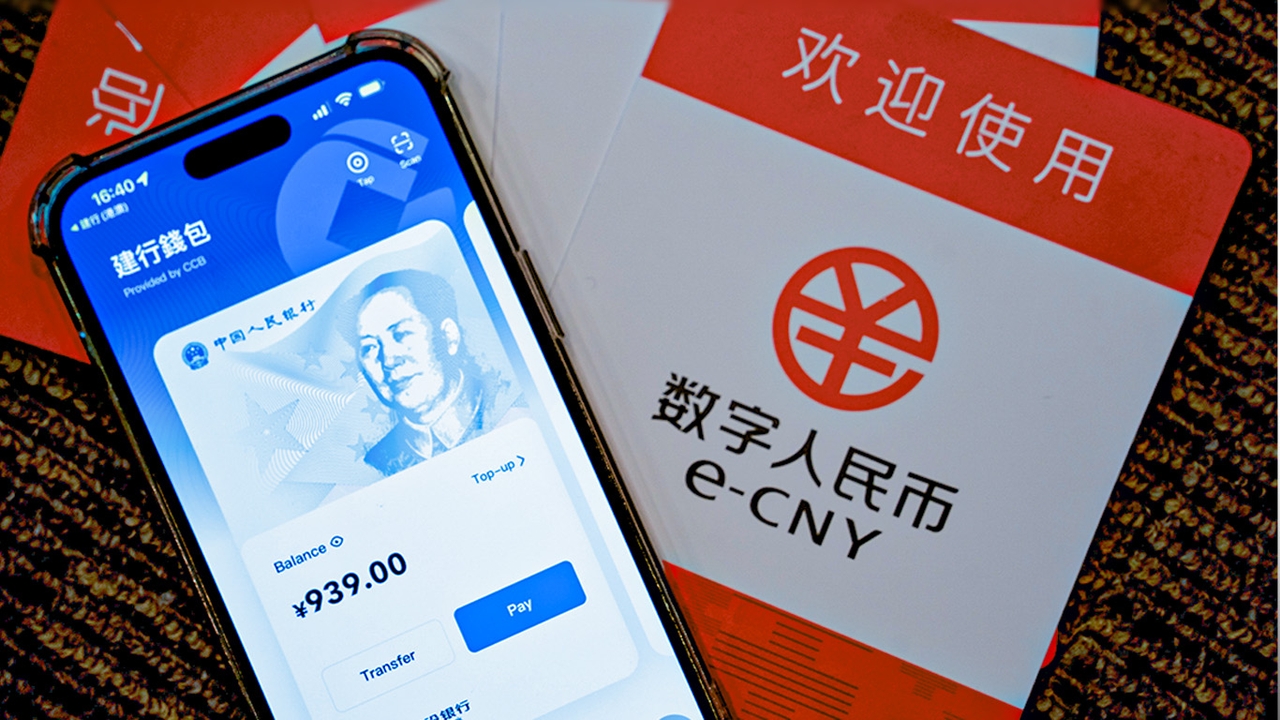
The People's Bank of China (PBOC) is advancing the expansion of the "Digital Yuan" (e-CNY) and has announced adding 12 more banks as service providers, led by China CITIC Bank, China Everbright Bank, China Guangfa Bank, and Shanghai Pudong Development Bank, along with other financial institutions. This brings the total number of banks authorized to provide digital yuan services to 22.
The PBOC stated in a release that this push to expand the central bank digital currency (CBDC) network aims to increase access to digital yuan services and meet the public's demand for a payment system that is "secure, convenient, and efficient."
This move follows a significant regulatory change, namely the reclassification of the digital yuan as part of M1, which gives e-CNY the status of an "interest-bearing digital deposit." This also allows commercial banks to count these balances as deposits for lending purposes. This approach aligns financial institutions’ incentives with promoting e-CNY and reduces conflicts with their existing financial products.
Meanwhile, e-CNY is positioned not as a direct competitor to major platforms like Alipay but as a "sovereign layer" infrastructure supporting the payment system, featuring benefits such as offline usability and lower fees.
The 12 new financial institutions joining the e-CNY platform include seven national joint-stock commercial banks and five regional commercial banks (including Bank of Ningbo). This ends the semi-monopoly of the former "Big Six" state-owned banks, creating a full network of 22 banks that significantly expands access points for both retail users and businesses.
These 12 new institutions will strengthen e-CNY’s infrastructure, particularly in international expansion. Some banks, such as Huaxia Bank and SPD Bank, are advancing use on the mBridge platform, which supports real-time cross-border payments without relying on the SWIFT system.
However, China's efforts to integrate the digital yuan into the real economy have progressed gradually since its launch in 2019, as most consumers already conduct transactions conveniently and at low cost via platforms like Alibaba’s Alipay and Tencent’s WeChat Pay.
This policy coincides with China’s tightening of cryptocurrency regulations, including bans on stablecoins, contrasting with the U.S., where former President Donald Trump showed support for cryptocurrencies and opposed central bank digital currencies like the Digital Dollar.
According to the latest PBOC data, as of the end of November 2025, the cumulative transaction value reached 16.7 trillion yuan (approximately 2.3–2.4 trillion U.S. dollars) from over 3.48 billion transactions, marking more than an 800% increase since 2023. The role of e-CNY is also expanding seriously into cross-border payments, with transactions on the mBridge cross-border platform exceeding 55 billion U.S. dollars, of which e-CNY accounts for about 95%.
The PBOC indicated it will continue systematically expanding participating institutions under market and legal principles, aiming to create an "open, inclusive, and fairly competitive environment" to support the digital currency’s development. This reflects a major step forward: the digital yuan or e-CNY is no longer just a pilot project but evolving into a financial network actively integrating e-CNY into the real economy.
Read more
Follow the Facebook page: Thairath Money at this link -