

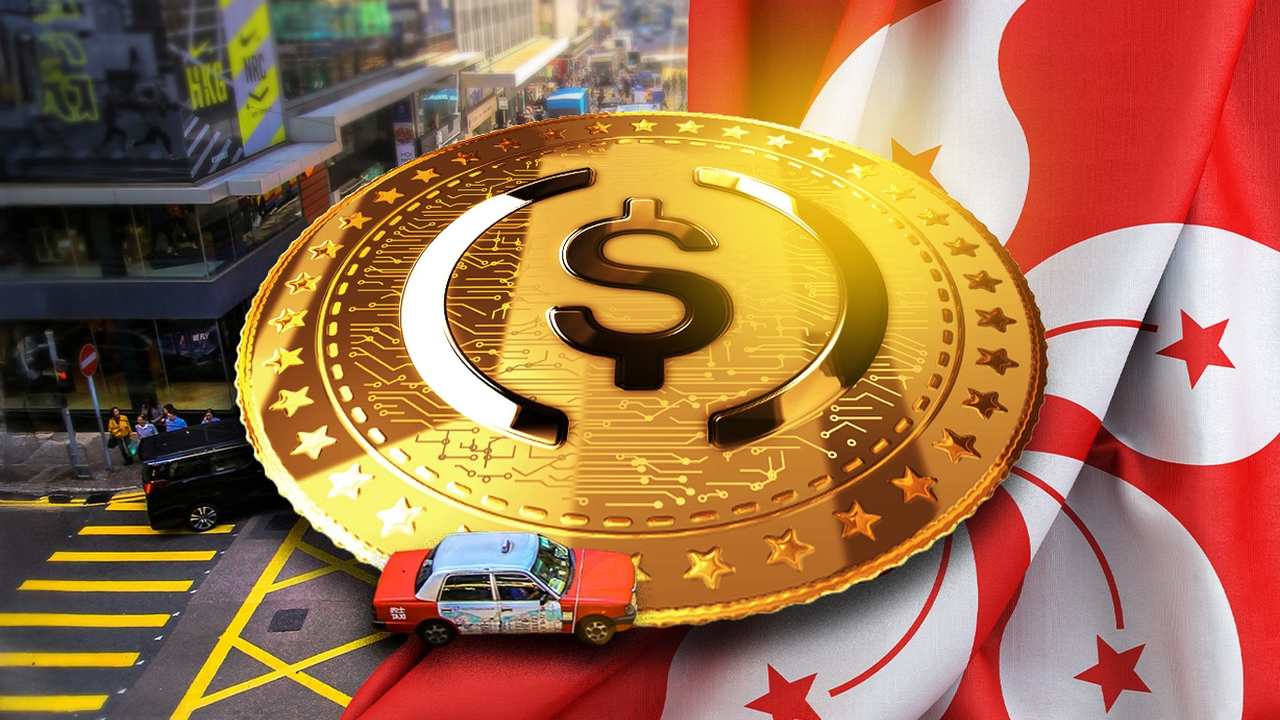
Last week, the Hong Kong Monetary Authority (HKMA), the region's central bank, approved its first-ever "Stablecoin Issuer" licenses, granting them to HSBC Holdings and Anchorpoint, a company formed through a partnership of Standard Chartered, Hong Kong Telecommunications, and blockchain gaming firm Animoca Brands.
This paves the way for these two banking giants to issue digital tokens pegged 1:1 to the Hong Kong dollar on a public decentralized ledger. Regulators stated that the licensees are expected to begin issuing stablecoins between mid and late 2026 after completing preparations.
These new licenses are part of Hong Kong’s ongoing development of a digital asset regulatory framework, following the government’s 2022 announcement to position the city as a global crypto hub. The Securities and Futures Commission began issuing licenses to crypto exchanges in 2023, while stablecoin regulations under HKMA have been effective since last year.
Under Hong Kong’s framework, stablecoin issuers must hold reserves equivalent to 100% of the circulating stablecoin value. Regardless of whether stablecoins are issued within Hong Kong or elsewhere but pegged to the Hong Kong dollar, they must obtain a license from the HKMA.
Globally, efforts to regulate stablecoin issuance are increasing. Recently, the US passed legislation to control such assets, accelerating other countries to establish rules for these crypto assets amid financial regulators’ warnings that stablecoins could pose systemic risks.
Hong Kong’s stance differs from the stricter regulations in mainland China. In February, the People’s Bank of China issued a statement banning unauthorized yuan-pegged stablecoins. Pan Gongsheng, governor of China’s central bank, has warned of stablecoins’ risks, even as he acknowledged their potential to revolutionize the international financial system.
Since 1983, Hong Kong’s currency has been pegged to the US dollar. From China’s geopolitical perspective, stablecoins in Hong Kong represent potential to "reduce reliance on the dollar" in regional Asian trade. Currently, about 40% of global dollar demand stems from its use as an intermediary currency in international trade where the two parties’ currencies are not directly exchanged in large volumes. Technology may eventually provide a way to move beyond this reliance.
In traditional international trade, Hong Kong dollars must first be converted into US dollars, then into other currencies. Banks involved add exchange rate margins, charge high fees, and transfers often cannot be completed within the same day.
Therefore, under the new structure, many inefficiencies and costs would be eliminated. In theory, shops in Mong Kok could accept payments directly in Hong Kong dollar stablecoins (such as Anchorpoint’s HKDAP).
For example, Ant Group would use the Whale blockchain platform as the currency converter, locking HKDAP in Hong Kong and facilitating immediate payment in Thai baht from reserves in Bangkok. Transactions would settle directly without using SWIFT or relying on the US dollar.
Bloomberg columnist Andy Mukherjee analyzed that Chinese authorities will closely watch how HSBC and Standard Chartered proceed before allowing trials in China. If these stablecoins prove usable for daily life and regional trade, they might become a model for future "private yuan-pegged currencies."
Follow the Facebook page: Thairath Money at this link -https://www.facebook.com/ThairathMoney