

Thailand makes another effort to link digital assets with the real economy, especially the tourism sector, a key engine driving the Thai economy, through the project “TouristDigiPay” which enables foreign tourists to convert their digital assets into baht for spending in Thailand.
The key concept of this project is not to promote cryptocurrency as a cash replacement in Thailand but to create additional channels to bring purchasing power from global digital asset holders into the Thai economy by leveraging Thailand's already well-established digital payment infrastructure, such as the Thai QR Code system.
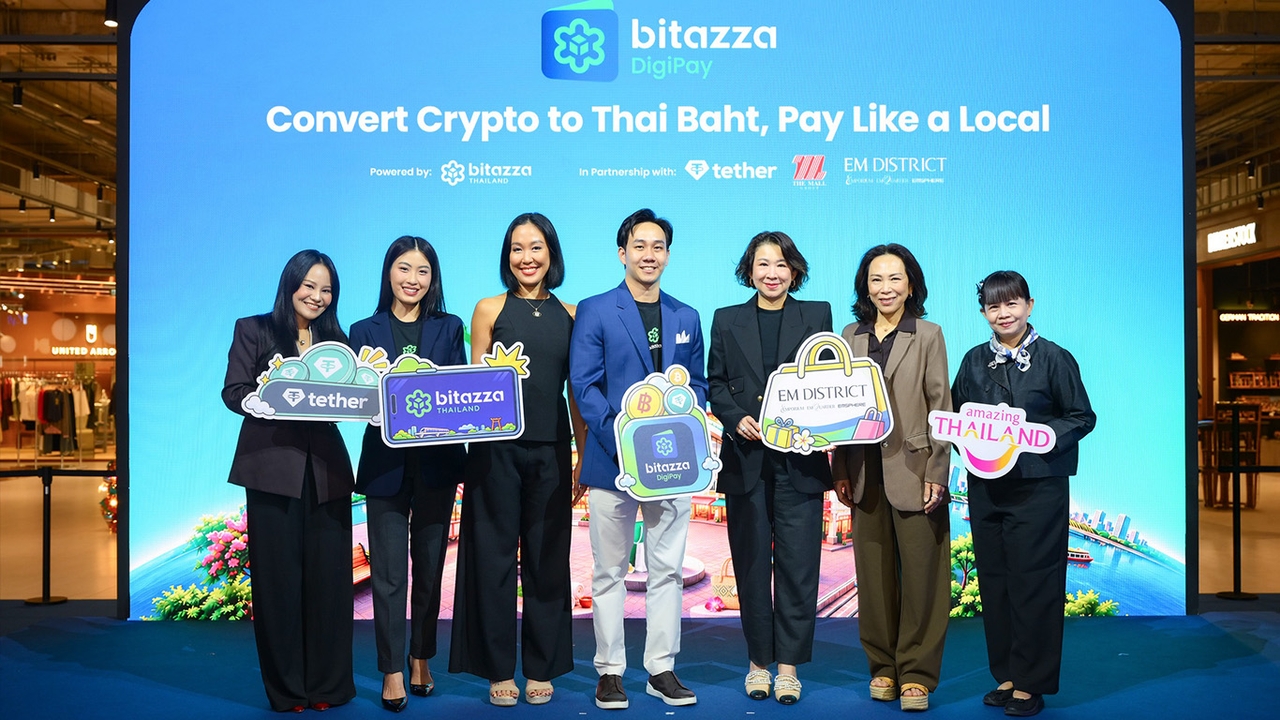
Most recently, on 24 Nov 2026 GMT+7, Bitazza Company Limited or Bitazza Thailand, a Thai digital asset brokerage business, announced the official pilot launch of the “Bitazza DigiPay” application on the Android operating system under the TouristDigiPay project of the Securities and Exchange Commission (SEC).
Bitazza is the first digital asset business in Thailand approved to participate in this SEC testing project as of 9 Sep 2026 GMT+7.
In the initial phase, Bitazza DigiPay will be available on Android for foreign tourists who meet the TouristDigiPay project criteria, with ongoing development to support additional usage platforms in the future.
This service launch is still part of a testing phase, where acceptance by tourists, practical usability, payment system efficiency, and risk management capabilities will be monitored.
TouristDigiPay is a pilot project applying digital asset technology to support Thailand's tourism sector, allowing qualified foreign tourists to exchange their digital assets for baht, which can then be spent via electronic money (e-money) systems.
This process connects licensed digital asset providers with authorized e-money providers, enabling tourists to pay for goods and services by scanning QR Codes on their mobile phones, while Thai merchants receive payments in baht as usual.
An attractive aspect of this model is that merchants do not need to alter their payment systems to accept digital assets specifically, nor face risks from cryptocurrency price volatility, as digital assets are converted into baht before payment processing.
At the same time, the service operates under the SEC's testing framework, connected to e-money providers regulated by the Bank of Thailand, and complies with anti-money laundering, user identification, transaction verification, and risk management requirements.

One opportunity of the TouristDigiPay project is to access a new segment of tourists holding digital assets, potentially becoming an additional source of purchasing power for Thailand's tourism sector in the future.
Thanawat Sutanthivorakun, CEO of Bitazza Company Limited, said that over the past seven years, the company has focused on developing products and services that connect digital assets with everyday use. Participation in TouristDigiPay extends from enabling Thai people to access global digital assets to linking global digital asset holders with the Thai economy.
The company sees DigiPay as a tool to channel foreign tourists' purchasing power into the Thai economy, benefiting operators at various levels, from large tourism businesses to local shops.
Meanwhile, Taweechai Pureetip, CEO and co-founder of T2P Company Limited, an e-money provider and Bitazza DigiPay's payment system partner, observed that Thailand already has a widely used digital payment infrastructure among citizens and businesses.
The main challenge is how to make the system easily and safely accessible to new users like foreign tourists, while maintaining strict user identification, transaction verification, and risk management according to regulatory standards.
The growth of the digital asset industry has not been limited to investment and speculation but also includes using technology for value transfer and financial transactions.
Bunyawi Playpun, country manager for Thailand and Indochina at Tether, issuer of USDT, one of the world's major stablecoins, said the growth of stablecoins reflects global users' demand to access and transfer value via digital technology. However, deploying these assets in the real economy still requires integration with local financial systems and providers.
For Thailand, strengths include widely used payment infrastructure and a strong tourism industry, making the connection of global digital asset networks with domestic payment systems an opportunity to expand the benefits of technology to consumers and businesses.
Meanwhile, Worapot Tharasirisakul, blockchain technology and financial innovation expert at the Thailand Future Design Institute (FIT), believes that the success of innovation is not measured solely by technology novelty but by its ability to solve problems and create real benefits for users.
Connecting digital assets to Thailand’s existing payment systems, under proper regulation and risk management, may be a long-term approach to generating economic value from blockchain technology.

Beyond expanding payment options for foreign tourists, another key point is whether TouristDigiPay can broaden customer bases and distribute purchasing power to Thai businesses.
Sirada Traijakwanich, Chief Growth Strategy Officer at Bitazza Company Limited, said the company aims to link its global digital asset network with Thailand’s tourism, food, leisure, and lifestyle sectors.
Currently, Bitazza collaborates with EM District as a strategic partner to enhance foreign tourists' shopping and spending experiences, and is open to partnerships with other businesses including hotels, restaurants, malls, travel platforms, lifestyle businesses, SMEs, and local shops.
Meanwhile, Dr. Lisa Pattviwatsiri, Chief Digital Officer at King Power, views TouristDigiPay as a testing ground for financial innovation that could lead to new service models and consumer experiences, especially in retail, tourism, and hospitality industries, which must adapt to digital-age traveler behaviors.
However, adopting new technology requires attention to consumer needs, safety, and risk management to generate tangible economic value.
This approach aligns with the Tourism Authority of Thailand’s direction under the "Value is the New Volume" concept, emphasizing quality tourism, increased spending per visitor, and income distribution to local operators rather than solely increasing tourist numbers.
Read stock and investment news with Thairath Money to help you achieve "Good Finance, Good Life" athttps://www.thairath.co.th/money/investment
Follow the Facebook page: Thairath Money athttps://www.facebook.com/ThairathMoney